
List of Kanban Certifications in 2026 | Top Kanban Training Programs
Updated on Jan 13, 2026 | 4 min read | 13.18K+ views
Share:
If you’ve ever stared at a cluttered board - wondering, why work keeps piling up despite everyone being busy - you already know why Kanban matters. It’s not just about sticky notes or digital boards - it’s about creating flow, spotting bottlenecks early, and making delivery more predictable. But here’s the catch: understanding Kanban basics won’t set you apart in a crowded field. That’s where certifications step in. They don’t just validate your knowledge - they prove you can apply Kanban to real-world complexity - whether it’s one team or an entire portfolio. In this blog, we’ll break down the most valuable Kanban certifications, showing you how each can sharpen your skills, boost your credibility, and accelerate your career in today’s fast-moving landscape.
Master the Right Skills & Boost Your Career
Avail your free 1:1 mentorship session
What are the Most Valuable Kanban Certifications?
The visual representation of the interconnected tasks aids the teams in understanding the required workflow, resolving any blocks along the way, and improving the service that is provided. Out of the available certifications, four stand out as being most prominently wanted by employers, namely.
Accredited Kanban Trainer (AKT) certification
Team Kanban Practitioner (TKP) certification
- Professional Scrum with Kanban (PSK) Training
- Kanban System Design (KMP-I) Training
- Kanban Management Professional (KMP-II) Training
Kanban Coaching Professional (KCP) certification.
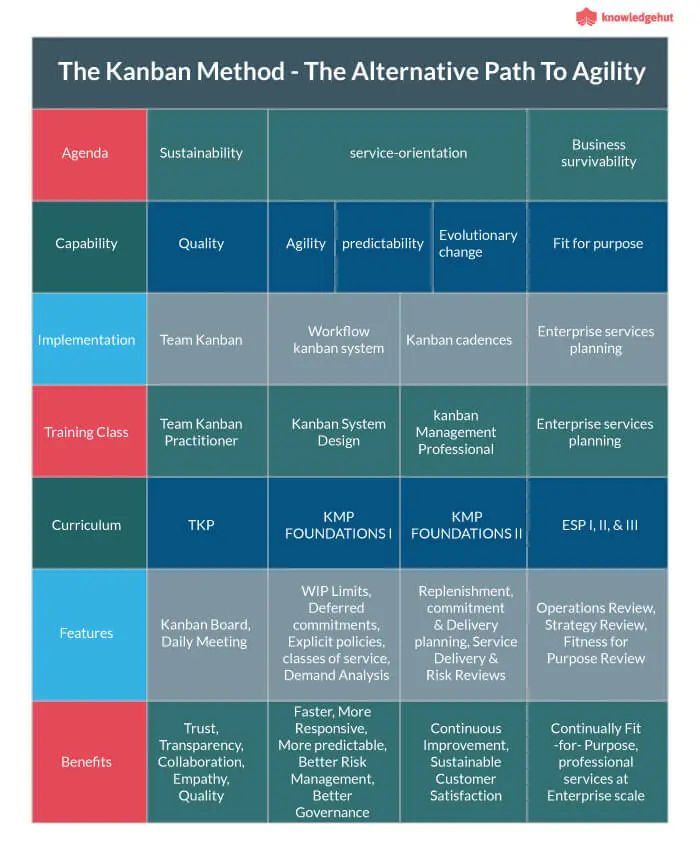
Source: learnkanban
1. Accredited Kanban Trainer (AKT) Certification
This is the certification that gets you ready for providing certified Kanban training classes using the appropriate training materials for the course. AKT certified professionals are the ones who have completed the training course with application review and case study requirements. These trainers are generally attached to specific Kanban training organizations and are commissioned to teach a certain number of students each year. AKTs also offer private Kanban classes to clients.
Many accredited AKT certified individuals also take up jobs in other capacities within the organization. The employers are interested to hire such individuals in the team as they might come in aid when the organizations decide to carry out Kanban training for the other employees at a later date.
Benefits of AKT Certification
The ability to deeply understand and impart knowledge about the Kanban methods in practice.
Adeptness at handling all the major types of Kanban systems and knowing the appropriateness of each system.
A higher number of job avenues as the individual is qualified to work both as a trainer with an organization and as a project manager.
In the highly competitive business environment, an AKT professional is hired to empower the teams to make them reach the finish of life faster.
2. Team Kanban Practitioner (TKP) Certification
This certification is needed when you want to get the team working under your control with an improved level of collaboration and efficiency. Generally, all experience levels are welcome for getting TKP certified, and there are no requirements for prior experience or training.
The best individuals to attend this certification course are the managers and Team members who want to get started by understanding the key concepts of Kanban.
Benefits of TKP Certification
Getting the workload organized enough to be handled with greater ease leads to faster completion.
Improving visibility of the goals and the pathway of attainment of the aims and objectives.
Facilitating better communication within the various levels of the team.
Greater ability to manage unforeseen and calculated risks leading to higher efficiency in management.
A higher degree of collaboration within the team among both the new members and the existing participants leads to better ability at velocity estimation.
3. Professional Scrum with Kanban Training
The Professional Scrum with Kanban (PSK) credential - issued by Scrum.org - is customized for practitioners who wish to strengthen their Scrum expertise with Kanban’s flow-oriented practices. This program specifically illustrates how Scrum teams can apply tools such as cycle time analysis, WIP (Work-in-Progress) limits, and cumulative flow diagrams to achieve greater consistency and throughput - unlike standard Kanban courses. Learners are guided on how to map workflows, regulate work in progress, and address bottlenecks - all while staying aligned with Scrum’s core values. For project managers handling hybrid setups - PSK provides a practical bridge between Scrum’s empirical approach and Kanban’s emphasis on flow. This results in smoother releases and clearer communication with stakeholders.
Key Benefits of PSK Training
- Integrates Scrum’s evidence-based framework with Kanban’s workflow optimization.
- Strengthens forecasting and delivery accuracy through Kanban metrics.
- Improves workflow visualization while helping teams resolve constraints quickly.
- Increases agility, enabling teams to react to changing business demands faster.
- Builds transparency and shared accountability across team members.
- Minimizes waste and ensures a steady stream of customer value.
4. Kanban System Design (KMP-I) Training
For professionals aiming to master Kanban - the Kanban System Design (KMP-I) certification from Kanban University is regarded as the ideal entry point. Rather than offering a rigid framework, the course empowers participants to design a system that works in their own context - whether building from scratch or enhancing what already exists. Core ideas such as - start with your current process, visualizing the flow of work, and limiting work in progress form the backbone of the program. Learners see how these principles translate into effective, tailored systems through practical simulations, real-world case examples, and group exercises. KMP-I provides a reliable foundation for boosting efficiency while ensuring team alignment and shared focus for project managers dealing with the challenges of scaling agile.
Benefits of KMP-I Training
- Builds a strong starting point for creating or improving Kanban systems.
- Enables gradual, non-disruptive change within existing workflows.
- Makes processes visible, improving coordination and communication.
- Equips leaders to spot and address bottlenecks with precision.
- Produces systems customized to organizational realities.
- Supports long-term frameworks that scale smoothly and adapt over time.
5. Kanban Management Professional (KMP-II) Training
The Kanban Management Professional (KMP-II) certification represents the advanced stage of Kanban University’s learning path and is intended for those who have already completed KMP-I. Unlike the foundational program - KMP-II focuses heavily on leadership and the organizational dynamics of adopting Kanban at scale. The course prepares project managers to extend Kanban systems across teams, business units, and departments, while also embedding practices such as structured feedback loops, risk management, and continuous improvement. Another core element is the use of advanced metrics - including service-level expectations and delivery rate analysis - that allow managers to connect delivery performance directly to business outcomes. In essence, KMP-II equips professionals to not only manage workflows but also drive cultural and strategic change across an enterprise.
Benefits of KMP-II Training
- Provides the skills to extend Kanban practices across teams and departments.
- Strengthens leadership abilities and organizational change management expertise.
- Encourages evidence-based decisions through advanced Kanban analytics.
- Increases system resilience and adaptability in uncertain environments.
- Equips managers to handle cross-project dependencies with confidence.
- Positions professionals as enterprise-level leaders advancing agility and innovation.
6. Kanban Coaching Professional (KCP) Certification
Kanban Coaching Professional (KCP) certification is the highest position attained by a Kanban coach. This is the certification that evaluates the existing formal training, knowledge, and experience of the professionals who are involved in the coaching of the Kanban initiatives. Professionals often go for Kanban courses online to ace certification exams.
KCPs are held as the most skilled professionals to lead the initiative of change toward the Kanban methods for an organization. The eligible candidates for KCP are Kanban practitioners, trainers, consultants, change agents, and managers.
Why Kanban Certifications?
Kanban certifications provide a great way to upskill and develop knowledge in the Kanban framework. Certification will formally recognize that you understand the principles and practices associated with Kanban and the best practices for leading successful Kanban projects. The global and transferable nature of obtaining a Kanban certification increases career prospects and job mobility, especially for IT Project Management professionals looking to take on higher-level positions.
Earning the accreditation is a valuable addition to any professional portfolio, allowing the progress of learning in an increasingly digital world. Additionally, employers often favor those who have certifications over those without them when making hiring decisions, recognizing the importance of having formal qualifications, which can lead to improved performance at work.
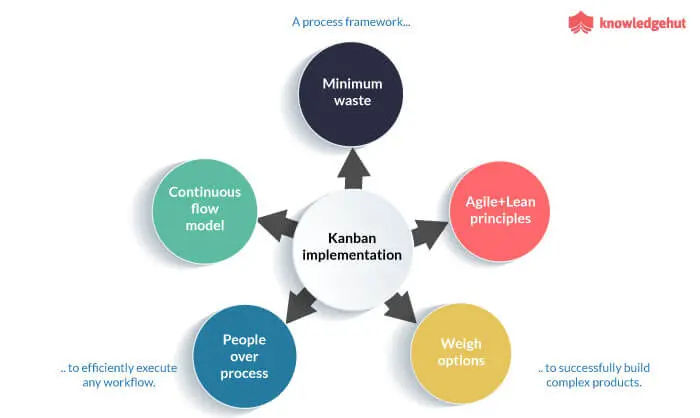
Kanban is a system that helps businesses to better manage their workflows and increase efficiency.
A Kanban certification can help individuals to learn the Kanban system and how to apply it to their own work.
Kanban certifications are offered by a number of different organizations, including the Kanban Academy and the Lean Kanban University.
- Individuals who are certified in Kanban can expect to see a number of benefits, including improved workflow management and increased efficiency.
- There are a number of different levels of Kanban certification, from beginner to expert, so individuals can choose the level that best suits their needs.
Become a project management expert with our online PMP certificate course. Start your journey to success now!
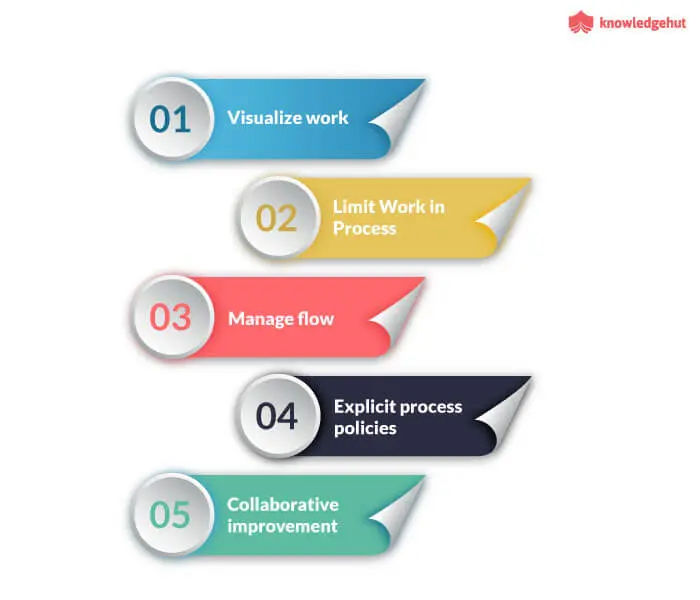
Key Principles of Kanban
Kanban's key principles are designed to optimize the workflow process, providing businesses with an efficient way to manage their operations.
1. Managing Work by Limiting the Progress
The main principle of Kanban is managing work by limiting progress. This means limiting the work in progress and creating short feedback cycles to limit delays while providing transparency into process performance. This approach automates decision-making and makes explicit who is responsible for each task within a project.
By controlling how much work is completed at each stage, teams can prioritize tasks, reducing delays and ensuring that only tasks with high value are completed earlier in the cycle. Ultimately, this results in improved productivity and customer service through faster delivery times.
2. Work Flow Process Visualization
Using visualization, Kanban helps improve team communication and collaboration as tasks and projects become easy to track and understand. Through this visual management process, team members can easily identify what needs to be done and what tasks have been completed, making it clear who is accountable for each task.
In addition, with the ability to offer flexible planning, teams can adjust resources where they need them most to get efficient results. All of these benefits lead to better performance across the business while reducing stress and costs, both essential components of success.
3. Management of the Flow
One of the key principles of Kanban is managing the flow of work. This means identifying and limiting how much work can progress at any given time. The aim is to ensure that no matter where they are, all tasks are actively progressing so they can be completed efficiently. The practice is built around the concept of visualization, which allows team members to view their current workloads at a glance.
Whenever an obstacle arises or resources start running low, managers can identify potential bottlenecks and adapt quickly to prevent them from slowing down production. These strategies help teams manage their workflow and deliver results on time and within budget.
4. Making the Process Policies Explicit
Making the process policies explicit is one of the key principles of Kanban. It involves creating operational guides, making them accessible, and actively applying these to your workflow. By being intentional and clear with policy guidelines, teams are able to get on the same page quickly in terms of how processes should be managed.
Everyone can access this information and use it as guidance, no matter their role or perspective. Articulating policies allows organizations to identify opportunities for improvement and make changes where they may be needed. Making the process policies explicit is essential for efficient and successful Kanban implementations.
5. Implementation of Feedback Loops
Feedback loops are essential to the Kanban framework, allowing for continuous and adaptive management. They dictate that every request for service or information should receive a response in due time and allow teams to adjust plans gradually without affecting progress or potentially causing chaos. Feedback loops allow team members to engage in frequent and meaningful conversations to address any issues that may arise.
By providing feedback on outcomes and performance levels, they ensure the highest service quality standards are met while still encouraging agile workflows. As part of this process, management should consider shortening cycle times when needed, assigning tasks more efficiently with greater tracking options, and introducing self-serve options so that all tasks have a designated place in Trackers or on boards - ensuring visibility across teams.
Final Thoughts
There are many reasons to consider pursuing Kanban certification. The most valuable Kanban certifications can help you stay ahead of the curve in an agile world, give you a competitive edge in job markets, and provide opportunities for career advancement. So, whether you are just starting your agile journey or looking to take your career to the next level, Kanban certification could be the right move for you.
Since Kanban is an alternative method to approach the Agile processes, the framework is highly efficient in catalyzing ongoing improvements and leading to higher effectiveness of the work. Kanban assimilates well with other approaches like Scrum and traditional methods, which is one of the major factors adding value to Kanban-certified professionals. Go for Agile Scrum with Atlassian JIRA certification training and stay ahead of the mass.
Frequently Asked Questions (FAQs)
1. Which Kanban certification is best?
Choosing the right Kanban certification can be a challenge. Thankfully, various institutions offer numerous certifications so that professionals may effectively tailor their education to match their specific career goals. Many certified professionals seek additional training which builds on existing knowledge or prepares them for long-term success. Depending on the intended career goal, the best designation will vary. Generally speaking, certifications differ based on the in-depth study of Kanban principles and practices; more senior designations are often associated with more complex Materia.
2. How much is Kanban certification?
Kanban Certification typically ranges from $500 to $3,000, depending on the chosen certification package. With a nominal fee, you receive training materials, access to self-assessment activities, and one or two instructor-led courses and assessment exams.
3. What are the most valuable Kanban certifications?
Team Kanban Practitioner (TKP) certification, Accredited Kanban Trainer (AKT) certification, Kanban Coaching Professional (KCP) certification, Kanban Management Professional (KMP) certification are the most valuable Kanban certifications. They are the most prominent ones wanted by the employers.
4. Is Kanban certification worth it?
Yes - Kanban certifications are valuable because they validate your ability to improve workflow, reduce bottlenecks, and scale agile practices effectively. They also boost career prospects by signaling credibility to employers and clients.
5. Does Kanban need a Scrum Master?
No, Kanban doesn’t require a Scrum Master role. However, organizations often blend Scrum and Kanban, in which case a Scrum Master may help guide adoption, facilitate flow, and remove systemic blockers.
6. What is the most recognized Kanban certification?
The Kanban Management Professional (KMP) track from Kanban University is highly recognized worldwide. For blended frameworks, the Professional Scrum with Kanban (PSK) certification from Scrum.org also carries strong industry weight.
1639 articles published
KnowledgeHut is an outcome-focused global ed-tech company. We help organizations and professionals unlock excellence through skills development. We offer training solutions under the people and proces...
Get Free Consultation
By submitting, I accept the T&C and
Privacy Policy
Ready to learn about Agile Certifications Roadmap?