
- Home
- Blog
- Business Intelligence And Visualization
- Why Text Is Added to Data Visualization Presentation
Why Text Is Added to Data Visualization Presentation
Updated on Nov 06, 2022 | 9 min read | 9.94K+ views
Share:
Table of Contents
View all
Data visualization of data through graphs like charts, infographics, plots, animations, etc. The process helps translate information into a visual context to make it easier for the human brain to understand. Data visualization aims to help you identify patterns, trends, and data sets. It is one of the most significant steps of the data science projects after the data gets collected, processed, and modeled for multiple purposes.
Data visualization works on visual information display that helps communicate complex data relationships and insights for the human mind to understand them. Organizations leverage data visualization to convey organizational hierarchy and structure. Moreover, data scientists and analysts use the process to identify and explain patterns and trends. You can understand it by undertaking a Business Intelligence and Visualization for Beginners course at KnowledgeHut.
Data visualization presentations are common in organizational processes, and include texts in the form of labels, captions, and annotations. Now, the question is – why is text added to a data visualization presentation?
We will discuss why text holds utmost significance in the presentations and explain data visualization uses in detail below.
In the sections that follow, we'll go through why language is so important in presentations and how data visualization is used.
Last Few Days to Save Up To 90% on Career Transformation
Ends December 1 – Don't Miss Out!
Why Is Text Added to Data Visualization Presentation?
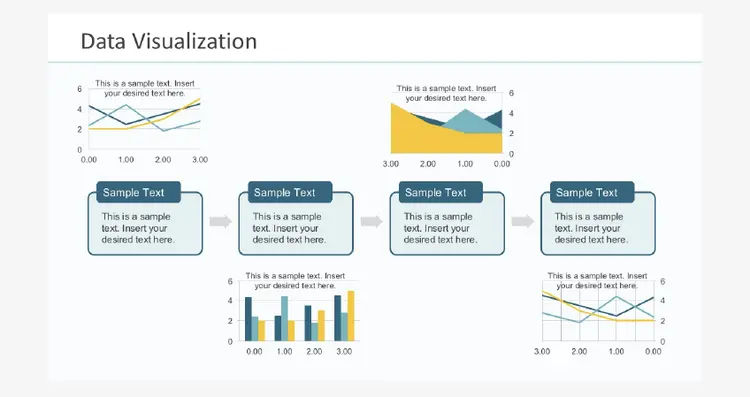
Text in data visualization helps the audience understand data and gain valuable insights. Moreover, you can provide additional information on the raw data shown in the presentation. It can also help highlight the significant features or points of data that require attention.
Text helps explain data, write equations, integrate captions, and label significant bits of information. If you are skeptical about text and its role in a data visualization presentation, the following points will help you understand the context.
1. Introduction
You require text to help set the readers on a clear understanding path related to your data visualization presentation. The introduction will give the readers a preview of what the graphical representation aims to show in the presentation charts. Not everyone has a technical background, and a person with zero knowledge of technology will find it tough to understand a presentation in the first go. So, adding an introductory text will help the person understand the crux of the information before giving it a read.
2. Explanation
You can also use text data visualization to clarify things with a message at places where they get highlighted through graphic representations. You can also add information that may be too specific for inclusion in the introductory part of the presentation. Visual representations require explanations, and the best way to detail their significance is by adding text to data visualization presentations.
3. Labeling
For readers to understand information in your presentation better, you might label it with a variety of terms and numbers. The best ways to provide crucial information are through labels because they aid readers in understanding representations. So, it explains why text analytics visualization is vital in presentations.
4. Reinforcement
A few bits of information are significant to data visualization presentations that make you repeat them multiple times. So, how do you repeat the information bits without using the same graphical elements? The answer to this is text addition that will also help increase the likelihood of the graphic getting understood by the readers.
5. Highlight
You must highlight vital data to make the readers understand its role in the presentation. You can use text to highlight the required information and call the readers’ attention to them. Moreover, text highlights make the presentation charts look attractive and readable for everyone.
6. Sequence
How do you show the readers a way to examine your visualization content? The process is tricky, and the best way to make it successful is by visualization of text data. Text can instruct the reader section to navigate the presentation graphics.
7. Recommendation
Recommendations are best explained through texts and help inform the readers about the future score of the presentations and the organizational processes with them.
You can recommend what should be done or avoided via text on the data visualization presentation.
Role of Text in Data Visualization
Now that we know why text is added to data visualization presentations, let us look at its role in graphical representations.
The ideal method for displaying data visually using graphs, charts, or word clouds is to visualize text data. Additionally, it summaries the material, identifies patterns and trends among documents, and offers insight into the most pertinent terms.
Here is a breakdown of the roles text plays in data visualization.
1. It Helps Summarize Contexts
Texts allow you to highlight key terms and categorize them by topic, sentiments, etc. and save hours of reading time. You cannot read multiple online contents in a short time. But you can seek help from the word cloud feature on the data visualization dashboard and understand the text data in a few minutes. So, text added to a data visualization presentation is the best way to summarize contexts.
2. It Makes the Data Easy to Understand
Visual data holds the utmost significance in data presentations because humans can process images faster than text. However, you may find it tough to understand complex datasets. So, text visualization helps simplify data and communicate ideas and concepts to the readers. It is the best way to offer information in the shortest possible manner.
3. It Helps Find Insights into Qualitative Data
Text visualization enables you to get an overview of products, features, and topics that hold significance for your clients, customers, or stakeholders. It helps you learn the pain points and the areas of improvement to understand what you are doing right and where you have gone wrong in a specific project.
4. It Discovers Hidden Patterns and Trends
The text helps you identify, analyze, and visualize insights in presentations to detect fluctuations and errors and find the root cause to eliminate them. So, text analytics data visualization is the best way to track all hidden trends and patterns in data sets and other raw information.
How To Add Text Effectively in A Data Visualization Presentation?
You might be aware of the purpose of the text in a data visualization presentation. However, if you want the audience to comprehend your presentation right away, you must also be able to integrate multiple texts into it successfully.
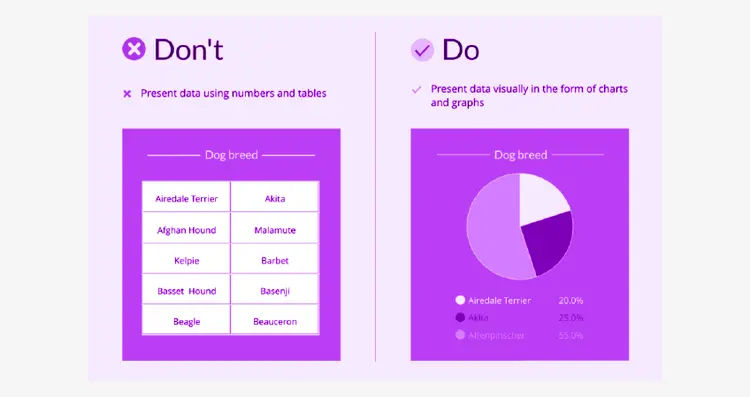
Here is a breakdown of steps to follow to add text to a data visualization presentation effectively.
1. Summarize Steps with The Chart's Caption
Chart Captions are the best way to introduce the content because they help summarize the key ideas in a presentation. Avoid unnecessary adjectives and articles, and write short and crisp chart captions to grab the readers’ attention.
2. Reduce Lengthy Data Labels
You can use data labels to describe values related to charts in a presentation. Try to avoid rotated, lengthy, or broken data labels and use the slanted ones to enhance the readability feature.
3. Place The Data Legends in the Correct Spots
You must also ensure that the legend order syncs with the data plot of your presentation. Legends are the best resort to understanding data charts and must get placed in the presentation without cluttering spaces. So, you must arrange them according to the data plots.
4. Use Tooltip for Additional Information
You can use a tooltip if you want to add more information to a specific data plot. Tooltips help reveal additional information by appearing above specific data plots and keep the presentation chart clutter-free.
Pros And Cons of Text in A Data Visualization Presentation
Text is one of the most significant elements in data visualization presentation. However, the process has some pros and cons, as discussed below.
Pros
1. The text in data visualization makes the presentation understandable for the readers.
2. It helps provide information on the given data.
3. It helps to highlight significant points in the presentation.
Cons
1. Overdone texts can make the presentation look messy and cluttered.
2. Excess use of texts may sound overwhelming to the readers.
3. If you solely use texts, you might not be able to communicate your ideas.
Unlock new career opportunities with our ecba training course. Gain the essential skills and knowledge to excel in the business analysis field. Enroll today!
Conclusion
Text is a significant part of data visualization presentation because it provides valuable insights into the information for the readers. You can undertake KnowledgeHut’s Business Intelligence and Visualization for Beginners’ course to understand more about the process. Text and data visualization go hand in hand that help explain organizational structure and processes in the best possible manner. So, learn how to utilize text analytics data visualization and make your presentation stand out among the crowd.
Frequently Asked Questions (FAQs)
1. Why is text added to data visualization presentation?
Text in data visualization makes it easy for readers to understand the presentation. Moreover, you can also use text to provide additional information related to charts, graphs, and other topics.
2. What is the importance of using visualization and summarizing your findings?
Data visualization gives a clear understanding of what the information means. The process gives a visual context to the presentation content that makes it easier for the readers to understand it and summarize their findings.
3. How is data visualization used?
Data visualization helps to visually represent data in the form of visual elements like graphs, charts, map data, etc. It is used to provide better insights to the readers about significant content.
103 articles published
Mansoor Mohammed is a dynamic and energetic Enterprise Agile Coach, P3M & PMO Consultant, Trainer, Mentor, and Practitioner with over 20 years of experience in Strategy Execution and Business Agility....
Get Free Consultation
By submitting, I accept the T&C and
Privacy Policy