
- Home
- Blog
- Project Management
- Project Closure Process: A Complete Guide 2026
Project Closure Process: A Complete Guide 2026
Updated on Apr 24, 2026 | 7 min read | 21.3K+ views
Share:
Table of Contents
View all
- What is Project Closure?
- How do you Know When a Project is Done?
- Why Project Closure is Important in Project Management?
- Types of Project Closure
- What are Project Closure Phases?
- Steps of Closing a Project
- Project Closure Checklist
- Steps of Closing a Project
- Best Practices of Project Closure
- Templates for Closing a Project
- Wrapping Up
The project closure process marks the final stage of a project, where everything comes together after careful project planning and execution. It ensures that all tasks are completed, deliverables are reviewed and approved, and any remaining responsibilities are properly wrapped up. This phase also involves closing contracts, releasing resources, and documenting the overall journey of the project. Teams take time to capture key learnings, organize important records, and reflect on what worked well and what could be improved. It is not just about ending a project, but about finishing it in a structured way while recognizing the efforts and achievements of everyone involved.
Ultimate PMP Formula Cheat Sheet
Get a quick, exam-ready PMP cheat sheet with all essential formulas and key concepts in one place.
What is Project Closure?
Project completion is achieved when the predetermined goals and deliverables of a project have been accomplished. This involves fulfilling all the criteria specified in the project scope, adhering to the allocated budget, and meeting the project's deadline. By doing so, the project ensures the attainment of desired results while effectively managing available resources and constraints. Meeting these criteria signifies the success of the project, serving as a significant milestone for the project team and other stakeholders, marking the end of their efforts.
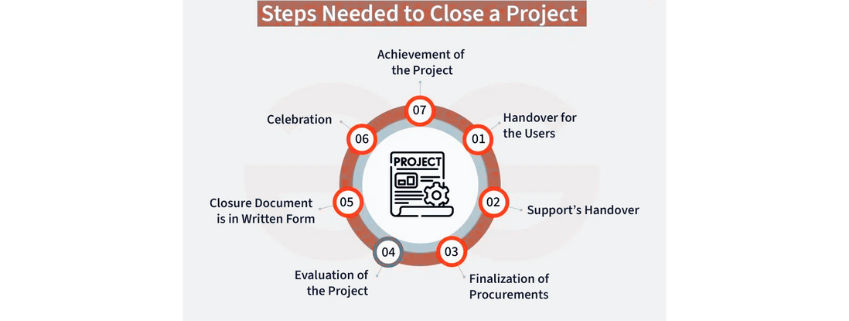
Source: geeksforgeek
How do you Know When a Project is Done?
Evaluation of the accomplishment of the stated objectives and deliverables is often required to determine whether a project is complete. Here are some typical signs that a project has been completed:
- Achievement of Project Goals: The primary goals of the project, as identified during the planning stage, should be completely attained. This covers the performance of particular tasks, the achievement of desired results, and the accomplishment of project objectives.
- Deliverables Completed: All project deliverables, including finalized and prepared handover reports, goods, software, or any tangible outcomes, must be ready. If these deliverables adhere to the criteria and quality standards that have been set forth in the project plan, your project is done.
- Project Scope: The project remained within its bounds and did not deviate from them. Any modifications or additions have been appropriately examined and authorized, and all the scheduled work and tasks within the scope should have been finished. If that’s the case, you can take your project as done.
- Budget Adherence: The project must be finished within the allotted spending limit. In order to make sure that project costs and expenses match the budgeted financial resources, they should be efficiently monitored and managed.
- Deadlines Respected: The job must have been completed within the allotted period or by the deadlines set. The completion of all tasks and activities should be timely, and any changes to the timetable should have been duly announced and accounted for.
- Stakeholder Acceptance and Sign-Off: The project has to have official approval from all necessary parties. This shows that the project's stakeholders are pleased with the results, deliverables, and overall performance and that they view the project as having been effectively finished.
Remember that the specific indicators of project completion may vary depending on the nature of the project and the requirements of the stakeholders involved.
Why Project Closure is Important in Project Management?
Project closure is a crucial component of project management for a number of reasons.
Here are some reasons a project conclusion is crucial:
- Ensuring Project Completion: Project closure guarantees that all project operations are finished according to schedule. It enables you to tie up any remaining threads, complete the deliverables, and officially conclude the project. This step is essential for indicating that the project has met its goals and is prepared to go on to the next stage.
- Evaluation of Project Performance: Project closure offers the chance to compare the project's accomplishments to its original objectives and aims. You may determine what worked well, what could have been better, and areas that need improvement by evaluating performance. The organization may continuously develop and learn thanks to this feedback loop.
- Taking Note of Lessons Learned: A project closure meeting is an excellent opportunity to take note of and document the lessons learned. It lets the project team consider the difficulties encountered, the solutions used, and the best practices found. The organization as a whole may then benefit from these insights by improving project outcomes going forward and avoiding making the same mistakes again.
- Resource Release: Project closure enables the efficient release of project resources, including staff, inventory, and money. You can shift team members to different projects or roles and more effectively use resources by formally terminating the project. This guarantees the best possible use of the organization's resources.
- Stakeholder Satisfaction: Project closure offers a chance to interact with stakeholders and make sure they are happy. It enables the evaluation of project results, the resolution of any outstanding issues, and the gathering of stakeholder experience feedback. You may improve connections and keep a good reputation by taking care of the requirements and expectations of your stakeholders.
- Compliance and Legal Considerations: Upon project completion, there may be legal or compliance standards that must be met in some businesses or projects. Project closure ensures that these commitments—like conserving project records, adhering to legal requirements, or receiving required approvals—are fulfilled.
Project closures can make a difference in your project management operations; courses like the best Project Management certifications will open doors for more lucrative projects and opportunities.
Take a deep dive into the trending KnowledgeHut's Project Management Courses
Types of Project Closure
Not all projects will end the same way. Depending on how things unfold, your project closure might fall into one of a few different categories. Knowing which type you’re dealing with helps you close things up more effectively and with the right mindset.
1. Normal Closure
This is the ideal scenario where your project has run its course, met its goals, delivers its desired outcomes, and officially closed. These projects are closed after a handover, a final report, and hopefully, a little celebration too!
2. Premature Closure
In some cases, projects may be stopped midway because either priorities shift, funding dries up, or the business need disappears. But even if the work wasn’t fully completed in these instances, it’s still very important to close things off the right way to avoid confusions down the line.
3. Perpetual Closure
These are the 'never-ending' projects. Either scope creep, unclear goals, or lack of deadlines can keep them going way past their duration. Eventually, someone has to step in, evaluate the situation, and formally declare the project done - even if it wasn’t perfect.
4. Failed Closure
When a project falls far short of its objectives, it may be shut down and classified as a failure. It’s tough, but closure is still very crucial. It gives your team a chance to review what went wrong, document lessons learned, and move on constructively.
Each closure type comes with its own set of emotions, processes, and learnings. But they all deserve a thoughtful, respectful wrap-up.

Source: sketchbubble
What are Project Closure Phases?
To achieve a thorough and efficient closure, a project undergoes certain phases. The following are the stages of project closure that are generally acknowledged; however, they may differ depending on the project and organization.
- Conducting Project Reviews: To gauge the general success of the project, this phase comprises conducting project reviews or assessments. It entails assessing if the project's goals were achieved, looking at the project's measurements and KPIs, and recognizing the project's achievements, difficulties, and potential improvement areas.
- Documenting Lessons Learned: During this phase, the project team records important takeaways, best practices, and suggestions for the next projects. It aids in information transmission, enhances project management techniques, and helps prevent making the same mistakes twice.
- Giving Project Deliverables to Operational Teams or Stakeholders: If relevant, this step entails giving project deliverables to the operational teams or stakeholders who will use or maintain them. Enabling a seamless transfer of responsibility also entails offering the appropriate training, paperwork, and support.
- Closing Financial Accounts: The financial accounts for the project are closed at this point. It entails completing financial transactions, making good on unpaid debts, and balancing budgets. It guarantees that all project finances are accurately recorded and closed off.
- Formal Project Closure: The project is formally closed at this phase. It entails finishing administrative chores, such as organizing records, preserving project material, and formal termination or project closure in project management software. This stage denotes the project's official completion and the start of post-project activity.
Each of these stages helps to create a well-organized process for project closure, enabling an in-depth evaluation of project performance, knowledge transfer, financial closure, and a smooth transition to post-project activities. You may check out PMP certification online to learn more.
Steps of Closing a Project
Completing a project involves more than just checking off boxes and moving on. Clarity, recognition of effort, and the foundation for future success are all provided by a strong closure process. Here's how to properly close your project:
Step 1. Confirm Deliverables Are Completed
Examine the project's initial goals and scope first. Have all of the deliverables been completed? Were the requirements for quality met? This is your opportunity to confirm that everything that had been promised was indeed fulfilled.
Step 2. Get a formal sign-off
It's time to obtain formal confirmation once you are certain the work is finished. This could originate from your internal sponsor, a stakeholder, or the client. The project is then deemed closed, and responsibility is transferred with a formal sign-off.
Step 3. Make Project Resources Available
This covers the budget, personnel, and equipment. Grant your team time away so they may focus on other projects or tasks. Now is the time to effectively end any contracts or vendor agreements that may exist.
Step 4. Perform a Final Review or Reflection
Bring your team together and consider what worked. What didn't work? What would you do differently the next time? The goal of this step is to acquire information that can aid in everyone's growth, not to place blame.
Step 5. Document Everything
Having thorough closure documentation helps future teams avoid the same mistakes—or mimic the same successes—from lessons learned to final metrics. Additionally, it aids in audits and project reviews.
Step 6. Celebrate and Appreciate
Lastly, remember to acknowledge the team's efforts. A modest celebration or even a heartfelt 'thank you' can make a big difference in raising spirits and fostering an appreciative culture.
In addition to allowing for future projects to proceed more smoothly and successfully, a thoughtful closure demonstrates respect for the work completed and the individuals involved.
Project Closure Checklist
A project closure checklist helps ensure that all necessary tasks are completed during the project closure process. While specific checklists may vary depending on the project and organization, here are some common items to include:
Finalize Deliverables
- Verify that all project deliverables have been completed and meet the required quality standards.
- Obtain the necessary sign-offs and approvals from stakeholders.
Conduct Project Reviews
- Evaluate project performance against predefined objectives, metrics, and key performance indicators.
- Analyze project successes, challenges, and lessons learned.
- Identify areas for improvement and recommendations for future projects.
Hand Over Project Outputs
- Coordinate the transfer of project outputs to operational teams or stakeholders.
- Provide the necessary training, documentation, and support to ensure a smooth transition of responsibilities.
Complete Administrative Tasks
- Archive project documentation, including project plans, reports, and relevant communication.
- Update organizational records and project management systems to reflect project closure.
- Close any open contracts or agreements related to the project.
Communicate Project Closure
- Inform stakeholders, team members, and relevant parties about the formal closure of the project.
- Share key project outcomes, achievements, and lessons learned.
Celebrate and Recuperate
- Take the time to acknowledge and celebrate the project's success and the efforts of the project team.
- Recognize and appreciate the contributions of stakeholders and team members.
Remember, this checklist serves as a general guide, and you can customize it to suit the specific needs of your project. It helps ensure that important tasks are not overlooked and facilitates a comprehensive and effective closure process.
Steps of Closing a Project
Closing a project involves several essential steps to ensure a smooth and effective conclusion. The steps include:
- Stakeholder Feedback: Seek feedback from project stakeholders to assess their satisfaction and gather valuable insights for future improvements.
- Resource Reconciliation: Review and reallocate project resources, ensuring that they are appropriately released and utilized for upcoming initiatives.
- Risk Assessment: Evaluate any outstanding or potential risks that could impact the project even after closure and develop strategies to mitigate them.
- Final Communication: Prepare a comprehensive project closure report summarizing key achievements, lessons learned, and future recommendations.
- Team Recognition: Show appreciation to the project team members for their hard work and dedication, acknowledging their contributions and celebrating their success.
- Continuous Improvement: Facilitate a post-project review to identify organizational and procedural enhancements that can be implemented to enhance future project outcomes.
Remember, these steps can be adapted and tailored to suit the specific needs and requirements of your project.
Best Practices of Project Closure
When it comes to project closure, following best practices can contribute to a successful and effective conclusion. Some commonly used project closure steps:
- Closure Checklist: Develop a detailed project closure checklist template that outlines all the necessary tasks and ensures nothing is missed during the closure process.
- Post-Implementation Review: Conduct a post-implementation review to assess the effectiveness of project deliverables and their impact on the organization or end-users.
- Client Transition Plan: Create a transition plan specifically tailored to guide clients or end-users in adopting and integrating the project outputs into their operations.
- Vendor/Supplier Evaluation: Evaluate the performance of vendors or suppliers involved in the project and provide feedback to improve future collaborations.
- Communication Strategy: Develop a comprehensive communication strategy to inform all stakeholders about project closure, including the project's outcomes, benefits, and any ongoing support or maintenance arrangements.
- Performance Assessment: Conduct a thorough assessment of the project team's performance and provide constructive feedback to enhance their skills and capabilities.
- Closure Ceremony: Organize a formal closure ceremony or event to celebrate the project's success, recognize team members' contributions, and foster a sense of accomplishment.
- Post-Project Evaluation: Perform a holistic evaluation of the project's overall success, taking into account not only deliverables but also factors such as stakeholder satisfaction, team collaboration, and adherence to project management processes. PRINCE2 training online will advance your project management career and prepare you to gain industry-agnostic project management skills.
Templates for Closing a Project
Here is an overview of the sections typically included in a project closure template. You can use this as a guide to create your own customized template. Here are the key sections commonly found in project closure example templates:
1. Project Information
- Project name
- Project manager
- Project start and end dates
- Project Objectives and Scope
2. Deliverables and Acceptance
- List of completed deliverables
- Confirmation of acceptance by stakeholders
- Outstanding deliverables (if any) and plans for completion
3. Project Performance
- Evaluation of project success criteria
- Assessment of project goals and objectives achieved
- Analysis of key performance indicators
4. Lessons Learned
- Documentation of lessons learned during the project
- Best practices identified
- Areas for improvement and recommendations
5. Stakeholder Satisfaction
- Feedback from stakeholders on their satisfaction with project outcomes
- Stakeholder engagement and communication assessment
6. Resource Release and Transition
- Plan for releasing project resources
- Handover of project outputs to operational teams or stakeholders
- Training and support provided for transition
7. Financial Closure
- Summary of project expenses and budget Utilization
- Status of outstanding financial matters and their resolution.
8. Project Closure Communication
- Announcement of project closure to stakeholders
- Final project report or summary for distribution
Remember, these sections can be customized based on your specific project needs and requirements. Utilize these as a foundation and adapt them accordingly to create a project closure template that suits your project's unique circumstances.
Wrapping Up
In conclusion, project closure is a critical phase in project management that ensures the completion of all project activities and facilitates a smooth transition to the next phase or project. Consider how a racer feels on the last lap of a race, so close to the finishing line--- a project manager and their team share the same sentiment during project closure.
By following best practices, such as finalizing deliverables, conducting project reviews, documenting lessons learned, and effectively communicating closure, they can maximize project success, capture valuable knowledge, and foster stakeholder satisfaction.
A well-executed project closure plan process allows for the evaluation of project performance, the proper release of resources, the closure of financial accounts, and the celebration of achievements. It sets the stage for continuous improvement and paves the way for future successful endeavors. For more clarity, a KnowledgeHut certified project management certification can help you understand the brevity of project closure better.
Contact our upGrad KnowledgeHut experts for personalized guidance on choosing the right course, career path, and certification to achieve your goals.
Frequently Asked Questions (FAQs)
What is project closure in project management?
Project closure is the final phase of a project lifecycle where all deliverables are completed, approved, and formally handed over. It ensures that the project meets its defined objectives, budget, and timeline. This phase also includes documentation, stakeholder sign-off, and resource release.
Why is project closure important?
Project closure ensures that all work is officially completed and nothing is left unfinished. It provides an opportunity to evaluate performance, capture lessons learned, and improve future projects. It also helps maintain accountability and ensures stakeholder satisfaction.
What are the key steps involved in project closure?
Key steps include verifying deliverables, obtaining stakeholder approval, releasing resources, documenting lessons learned, and closing financial accounts. Additionally, a final review and proper documentation ensure a smooth transition and future reference.
How do you know when a project is truly complete?
A project is considered complete when all deliverables are finished, objectives are met, and stakeholders have provided formal approval. It should also stay within scope, budget, and deadlines. Completion is confirmed through sign-offs and final evaluations.
What is a project closure report?
A project closure report is a comprehensive document summarizing project performance, outcomes, and lessons learned. It includes key achievements, challenges, financial data, and stakeholder feedback. It serves as a reference for future project planning.
What are the different types of project closure?
Projects can close in different ways such as normal closure, premature closure, perpetual closure, and failed closure. Each type reflects how the project ended based on goals, timelines, or external factors. Understanding the type helps in handling closure effectively.
What is stakeholder sign-off in project closure?
Stakeholder sign-off is the formal approval that confirms the project has met expectations and requirements. It indicates acceptance of deliverables and marks the official completion of the project. Without this, closure is considered incomplete.
What is the difference between project completion and project closure?
Project completion refers to finishing all deliverables, while project closure involves formally ending the project. Closure includes documentation, approvals, and evaluations. It ensures the project is officially concluded in a structured manner.
What is a project closure checklist?
A project closure checklist is a structured list of tasks that ensures all closure activities are completed. It includes deliverable verification, documentation, approvals, and communication. It helps avoid missing critical steps.
How can project managers ensure effective project closure?
Project managers can ensure effective closure by following a structured process, maintaining clear communication, and documenting everything properly. Engaging stakeholders and conducting reviews also play a key role in successful closure.
454 articles published
Kevin D. Davis is a seasoned and results-driven Program/Project Management Professional with a Master's Certificate in Advanced Project Management. With expertise in leading multi-million dollar proje...
Get Free Consultation
By submitting, I accept the T&C and
Privacy Policy