
- Home
- Blog
- Cloud Computing
- Top 8 Benefits of Cloud Computing in Healthcare
Top 8 Benefits of Cloud Computing in Healthcare
Updated on Nov 22, 2022 | 5 min read | 11.63K+ views
Share:
Cloud computing offers resources and data to computers and other devices on demand. It is a form of computing based on the internet. The cloud model typically involves providing these resources as a service over the Internet, using either the World Wide Web or another Internet-based protocol.
Cloud computing has been used in healthcare for a long time. It helps with the management of Electronic Health Records (EHRs). Cloud services are becoming more prevalent in healthcare because they allow providers to manage their workloads effectively and provide excellent patient care.
Cloud computing can provide better access to healthcare information, which can benefit providers and patients. Cloud computing can also reduce administrative costs and increase efficiency in healthcare organizations by focusing more on patient care rather than just maintaining IT infrastructure. A Cloud Computing Certification for Beginners can introduce you to the fundamentals and industry trends.
Master the Right Skills & Boost Your Career
Avail your free 1:1 mentorship session
How is Cloud Computing Used in Healthcare?
Cloud computing uses resources (e.g., servers and storage) delivered as a service over a network (typically the internet). The data acquired by healthcare professionals is stored in one place, making it easier to access and share. As a result, you don't have to worry about managing all your information on your own.
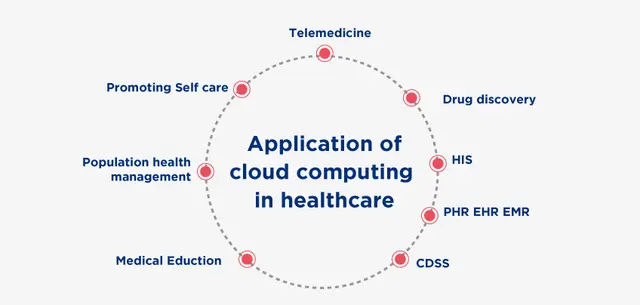
Cloud computing has been used in healthcare for many years now. The use of cloud computing in healthcare has enabled more accessible access to data. It has been used to store medical records and other patient data. Cloud computing also helps with the sharing of information between doctors and hospitals.
However, with the advantages of using cloud computing comes downsides. Cloud computing in healthcare pros and cons include the lack of experts designated to the professional, an ecosystem filled with restrictions, and increasing security challenges. Therefore, finding backing for cloud computing in healthcare is essential.
Key Benefits of Cloud Computing in Healthcare
Cloud computing has many benefits for healthcare organizations. It can help them to reduce costs and increase efficiency. It also assists them in improving the quality of care by providing access to data from anywhere in the world. To know more about how it benefits healthcare, you can opt for Solution Architect training courses which offer an array of advantages regarding cloud computing. Let's look at the advantages of cloud computing in healthcare.
1. Increased security
One of the essential benefits is increased security. Cloud providers are responsible for maintaining the security of data stored in their systems. They have to invest more time and money into securing their systems than an individual company. Cloud computing increases security by keeping data in multiple locations and making it accessible from anywhere with an internet connection. It is done in several ways, such as storing data on a remote server or encrypting all data transferred over the internet.
2. Reduced costs
Cloud computing is an affordable way to provide healthcare services. The cost-savings of cloud computing are a significant benefit for many healthcare providers. Cloud computing solutions offer lower up-front costs with the option to scale up or down as needed. It is a substantial benefit for many healthcare providers with limited budgets who must carefully manage their resources. The cost-effectiveness of cloud computing is also a significant benefit because it reduces the need for expensive hardware or software updates often needed when using traditional IT systems.
3. Increased scalability
Scalability refers to how easily a company's IT infrastructure can be expanded when it needs to grow. Cloud computing is scalable because it allows companies to set up virtual servers on demand and use them as needed. Apps used in cloud computing include mobile apps, IoT devices, big data analytics, and EHRs. These ensure that browsing becomes more effortless and doesn't include any fuss. One of the growing risks of using cloud computing is cloud migration which is handled through stratification of the process. Cloud migration can help organizations improve their data security, increase workforce productivity and simplify their IT infrastructure.
4. Data Storage - efficient electronic medical record-keeping
Electronic Medical Records (EMRs) have been around for decades, but only recently have they become more efficient. It is primarily due to the development of cloud-based storage systems. Cloud-based storage systems are a great way to store EMRs because they are accessed from any device at any time. It makes them more efficient and easier to use than ever before. Data storage is a critical component of the healthcare industry. It is used to store electronic medical records, which are essential for diagnosing and treating patients.
5. Speed
Speed is an essential factor and, by far, one of the most sought-after areas when it comes to cloud computing. The faster the speed, the more convenient the facilitation of clinical trial management. Cloud computing offers the advantage of tremendous pace, which is utilized in healthcare. It can provide faster access to data and information. Doctors can have instant access to patient records and other medical information without waiting for it to be delivered by mail or fax. With minimal intervention, cloud computing offers updates on info.
6. Artificial Intelligence and Machine Learning
Cloud computing provides access to more data and storage where ML-driven applications and AI thrive. With a more flexible cloud architecture, hospitals and other organizations working with healthcare can utilize more advanced AI-driven tools. Access to more data is always beneficial for AI as it helps it improve and perform more effectively.
7. Interoperability
Cloud computing allows easy access from any location at any time. Doctors can easily access patient records from their homes or office without going into the hospital or clinic where they work. The benefits of interoperability are numerous. For instance, it can help providers to better coordinate care for patients with chronic conditions. It can also help providers to identify gaps in care and provide more personalized treatment plans.
8. Collaboration - collaborative patient care
Collaboration is a factor in the success of any organization. It is also a critical factor in the success of healthcare. Collaboration is defined as the process of operating together towards a common goal. The healthcare industry has been slow to adopt collaborative practices, but it is now starting to catch on. The benefits are clear: better patient care, improved efficiency, and reduced costs. The importance of cloud computing in healthcare talks about the effectiveness of technology in this field.
Conclusion
Cloud computing is a great way to manage your workload and provide better patient care. It's also a cost-effective solution for healthcare providers. The benefits of cloud technology in healthcare are many, as is evident. Cloud Computing is the way to go for your healthcare organization. Cut costs and increase patient care with a low-maintenance, reliable, and easy-to-manage cloud solution. Leverage a secure option without needing additional hardware and more storage capacity. Join the thousands of healthcare providers who are using cloud services today using the KnowledgeHut Cloud Computing Certification for Beginners.
Frequently Asked Questions (FAQs)
1. Why does healthcare need cloud computing?
Cloud computing has been around for decades, but it has only recently become popular in the healthcare industry. Cloud computing stores patient data and other sensitive information in a secure environment. This way, the data is not stored on individual devices or computers, which could be lost or stolen otherwise.
2. How is cloud computing transforming the healthcare industry?
Cloud computing is doing its best to transform the healthcare industry by providing a data storage and management platform. A cloud is a powerful tool for storing and managing data, which is why it is an integral part of the healthcare industry. Cloud computing provides a platform for storing, accessing, and analyzing data from various sources, such as medical records, lab results, patient histories, etc. It enables doctors to make better decisions about diagnosis and treatment. It also allows new technologies to change how we diagnose and treat patients.
3. What is the future of health informatics that is on cloud set-up?
Cloud computing has many benefits for healthcare providers. It allows them to store their data in one place, which makes it easier for them to access the information they need. It also allows them to share data with other providers without worrying about security risks or privacy concerns.
4. What are some of the risks of cloud computing for a healthcare provider organization?
The risks of cloud computing for a healthcare provider organization are not as well-known as the benefits. Hence, it is essential to understand them before adopting this technology. The first risk of cloud computing for a healthcare provider organization is that they will lose control over their data.
Healthcare professionals will not be able to access their data if they need it in the future or if there is an emergency. The second risk of cloud computing for a healthcare provider organization is that they will have less control over data storage and access. There may be security breaches or other issues with how their information is handled by the company providing them with cloud services.
243 articles published
Kingson Jebaraj is a highly respected technology professional, recognized as both a Microsoft Most Valuable Professional (MVP) and an Alibaba Most Valuable Professional. With a wealth of experience in...
Get Free Consultation
By submitting, I accept the T&C and
Privacy Policy