
- Home
- Blog
- Project Management
- How Long to Study for PMP Certification Exam: A Complete Guide
How Long to Study for PMP Certification Exam: A Complete Guide
Updated on Jul 24, 2025 | 9 min read | 18.2K+ views
Share:
Table of Contents
View all
Project management has always been a critical job in the business world, and it is only becoming more so as time passes. Employers will require 87.7 million people to work in Project Management-related jobs by 2027. To meet this growing demand, 71 percent of worldwide firms now have a project management office, up from nearly 15% in 2007. Individuals with project management skills have a bright future ahead of them.
If you're thinking about pursuing the Project Management profession, you're probably curious about the many tasks and duties you'll have once you've obtained your certification. We'll look at what project managers do in detail, including important tasks and how long to study for PMP certification so you can decide if it's the perfect job for you.
Know more about importance of Project Charter.
Ultimate PMP Formula Cheat Sheet
Get a quick, exam-ready PMP cheat sheet with all essential formulas and key concepts in one place.
What is PMP?
The Project Management Institute's (PMI) PMP certification is a professional certificate. Its popularity continues to drive the demand for Project Management professional training course. The PMI certification is the most well-known and widely accepted professional project management certificate in the world. For hiring, almost all of the world's leading companies and organizations prefer certified PMPs.
PMP certification is a validation for a specific degree of knowledge in the project management sector, not proof of expertise or competency. However, to become a PMP certified professional, PMI requires relevant experience or education.
What is New PMP Exam?
The PMP test is divided into 3 parts known as domains, and understanding these is crucial for effective PMP certification preparation time. The three domains on the PMP test are as follows:
- People
- Process
- Business Environment
The PMP test consists of 200 questions. 175 of the 200 questions are scored, while 25 remain unscored (pre-test questions). Each domain consists of a set number of exercises that will put applicants to the test on various skills.
| Domain | No of Tasks | Test Percentage | Skills Tested |
|---|---|---|---|
| People | 14 Tasks | 42% |
|
| Process |
17 Tasks | 50% |
|
| Business Environment |
4 Tasks | 8% |
|
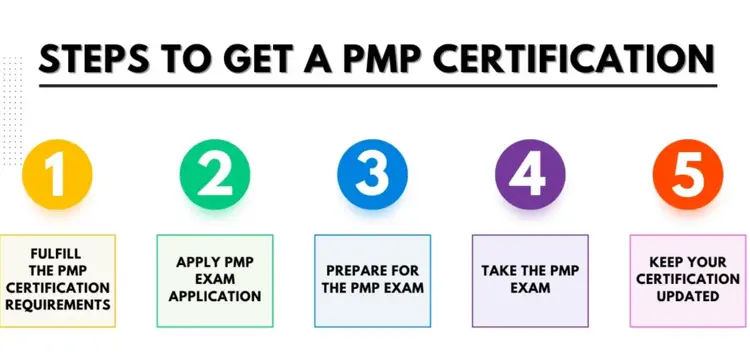
Steps to Apply for PMP Exam
Education Edge To be eligible to take the exam, you must first require training. To apply for certification, you must have 35 hours of authorized PM training. Understanding key concepts may take longer than necessary if you have not received training on the PMP syllabus.
Step 1: Check Your Eligibility
| Any with a graduation Degree with 36 months of experience leading projects AND 35 hours of project management training | Any with high school diploma or an associate's degree, with 60 months of experience leading projects AND 35 hours of project management training |
Step 2: Submit relevant information supporting your experience and training
Step 3: Visit pmi.org and start the application process. Save the application.
Upon reviewing your application, the conduction body will determine whether you are qualified and then charge you PMP exam fee as mentioned below.
- Member Price: US$405
- Non-Member Price: US$555
Your test can be scheduled at a testing site near you (or online), once you've been approved to take it.
Top Cities where KnowledgeHut Conduct PMP Certification Training Course Online
Discover the leading KnowledgeHut's Project Management Courses
How Long to Study for PMP?
Now that you know the four key steps in PMP preparation, let’s break down the most critical phase—your actual study time.
While the exact number of hours varies by individual, a widely accepted benchmark is around 150 to 200 hours of dedicated study time. This includes everything from reading prep materials and practicing mock exams to reviewing weak areas. Spread over a 10–12 week timeline, this translates to roughly 2–3 hours per day—a pace that's intensive yet manageable for working professionals.
If you're following the path outlined above—completing training in the first two weeks—you’ll have close to 10 weeks left for focused self-study. That’s when you’ll dive into PMP guides, exam simulators, and review sessions.
Here’s a practical breakdown:
- 35 hours: Instructor-led or self-paced PMP training (mandatory)
- 40–60 hours: Studying the PMBOK® Guide and other reference materials
- 50–60 hours: Practicing mock exams and reviewing answers
- 15–20 hours: Revising tricky concepts and filling knowledge gaps
Remember, it’s not just about hitting a time target—it’s about understanding and retention. Don’t rush through materials just to “clock hours.” Instead, schedule weekly check-ins to assess your comfort level across PMP domains.
Whether you’re planning a 6-week sprint or a 3-month roadmap, consistency is key. Make every study session count, and you’ll be well-prepared to clear the exam with confidence.
Time Required for PMP Exam Preparation
Wondering how long does it takes to study for the PMP exam. To get ready for the PMP test, you must complete the following steps:
Step 1: Collect Information
- When you decide to apply for a PMP, the first thing you need to do is gather all the relevant information.
- You can learn about the best study materials and various training courses available for your 35-contact-hour training course.
- You can only devote one week to this.
Step 2: Attend the Training
You cannot apply for the PMP exam unless you have completed your official project management course and received your 35 contact hour certification.
This should also take no more than a week.
If you intend to attend a boot camp, the training is usually completed in three or four days. Nevertheless, suppose you are enrolled in a course online. In that case, I strongly encourage you to finish the PMP training as soon as possible, even if you only have accessibility for a single year.
Step 3: Prepare for the PMP Exam
If you’re curious about how long to study for PMP exam and which sections demand the most attention, this is where you will make the more significant portion of your PMP test preparation session.
You will need to read a minimum of one PMP reference guide for exam study; however, I suggest reading two to get a varied viewpoint. This will assist you in comprehending and remembering topics from the PMBOK Guide.
After that, you must work on some questions and take mock examinations. This will assist you in identifying knowledge gaps and preparing for the exam. If you believe you are not prepared, review the ideas and fill up any gaps in understanding. Three months of preparation at three hours each day should be sufficient to prepare you for the Project Management Professional certification test.
Step 4: Attempt the Test
The PMP exam lasts four hours and consists of 200 multiple-choice questions. The exam is scheduled based on individual preparedness when the preparation is finished. Some people would instead schedule the exam right after studying, while others prefer to take their time.
PMP Study Plan
Based on one of the most significantly asked questions, “How long does it take to study for the PMP exam?” a systematic and targeted study plan is required to prepare for the Project Management Professional (PMP) accreditation. Here are five study strategies for the PMP Study Plan:
1. Set a Target Date for Taking the PMP Exam
If you want to achieve, you must first set an achievable goal! Decide when you will take the PMP exam. The PMP Study Plan begins with this stage of the process. This does not imply that you should go ahead and book your PMP exam. Simply set a time when you will be prepared to appear for the PMP test. It all depends upon your timetable, accessibility, and commitment; however, I suggest 3-4 months for how long to study for PMP for a typical full-time professional.
A standard PMP Training consists of 35 hours of project management learning. However, you will spend additional time completing PMP practice examinations, reviewing notes, memorizing formulas, reviewing tricky areas you did not comprehend well on the first try, and so on.
As a result, PMP preparation usually takes 70-85 hours to complete. If you consider only attending evening classes, on holidays, or weekends, we predict that you will be able to devote approximately 6 hours per week to PMP preparation. This adds up to a total preparation period of 12-14 weeks.
2. Make a Study Schedule
In the initial phase, you might be curious about how long does it takes to prepare for the PMP exam. This is where an aligned, well-curated study plan can help out.
Following your study plan, you may schedule 6 hours of learning per week. For example, you may study for two hours on Monday, two hours on Wednesday, and two hours on Sunday. If you want to make the weekend free, swap Sunday practice with Thursday. The days you learn for the PMP may vary weekly, but try to set aside at least 6 hours of learning time per week.
The PMBOK handbook contains ten knowledge categories and two introduction sections. The amount of content and the span of time required to finish those sections will vary but try to finish one portion per week. In total, 12 portions will be completed over the course of 12 weeks.
3. Take Notes During Your PMP Preparation
Throughout the PMP Training, there will be numerous concepts, PMP formulae, tips, and so on. Before beginning classes, print down the manuals and take notes while studying for the PMP. How long to study for PMP is a common question, and while the duration varies, the key is consistent and focused preparation.
Take specific notes in areas where you discovered valuable data. These notes will come in handy once you've completed the course. Throughout the last weeks of planning, you will go through the notes to refresh your memory of earlier lectures.
If your PMP exam preparation resources offer a PMP cheat sheet, review it throughout your PMP study to help you recall the key points. If you do not possess a PMP cheat sheet, you can make your own by writing down the crucial points during your PMP study.
4. Practice as Much as Possible
The most crucial suggestion I can provide you for clearing any certification test is to practice as often as possible. It is not just a recommendation for the PMP certification test. The secret to success on any type of exam is to prepare with as many practice tests as necessary.
Several PMP certification candidates search the internet for Free PMP Problems. However, most of these exams may be outdated, providing incorrect answers or explanations. Free PMP resources not only offer comprehensive PMP exam content but also confuse you throughout your PMP preparation. Hence, be cautious if you plan to use free PMP material throughout your PMP preparation.
5. Examine your Incorrect Answers
When you've done your PMP prep, go over the incorrect answers you chose during quizzes and practice PMP exams. Your wrong replies reveal your flaws. Examine the specific areas where you made the most mistakes. Studying the same part a second time can reinforce your knowledge and lower your chances of making mistakes on the actual PMP exam.
Resources and Tips to Prepare For The Updated Exam
PMP Exam Tips
- Master the PMBOK Handbook: The PMP exam is heavily based on the PMBOK Guide. Take advantage of this and use the guide as a road map for your study. How long to study for PMP is a common concern, and starting with the handbook before moving on to further study materials will help you gauge your pace. This approach deepens your understanding by studying one PMBOK Guide process per day, helping you create a focused study plan. Concentrate on grasping concepts fully, as the PMP exam tests your ability to apply theories in context. Many questions provide enough information to find the correct answer but may include distractions to challenge your focus.
- Allow Enough Time for Each Topic: The PMBOK Guide by PMI has a wealth of material, and each section is highly affected by the one before it. That is why, before moving on to the next section, you must ensure that everything in the previous one is clear to you.
- Try PMP Exam Prep Workshops: If you prefer a classroom atmosphere or require more one-on-one engagement, PMP test prep seminars are a fantastic solution. These are excellent opportunities to meet other aspiring project management professionals in your area, in addition to networking through a PMI membership. Another advantage of these seminars is that they usually satisfy the 35-contact-hours requirement for applying to take the PMP test.
- Join Discussion Forums and Study Groups: Group sessions and discussion boards can be quite beneficial in helping you prepare for the PMP exam. As an active participant in study groups and discussion forums, you may assist others in passing the exam, get your issues and questions handled, learn more about a variety of beneficial resources, and cut down on the time it takes to prepare for the exam.
- Use Exam Simulators to Prepare for the PMP Exam: PMP simulators are online versions of practice PMP exams. They put the candidate through a series of questions that are identical to those on the PMP exam. They also seek to simulate the exam environment so that you become used to the timing and pressure. They're a good way to see how prepared you are and help you gauge how many hours to study for PMP effectively.
PMP Exam Resources:
- Flashcards: Flashcards are a great way to learn the language and ideas that will be covered in the exam quickly. Here you can find a fantastic flashcard tool. You may find it easier to utilize the cards if you print them out.
- KnowledgeHut: The knowledgehut Project Management professional training course will help you improve your project management self-efficacy and delivery strategies, preparing you to manage a variety of projects of varying sizes, scopes, and budgets. Their very engaging instructors will walk you through the whole PMP Exam preparation process. Their subject matter experts are industry specialists who know how to make their topics interesting to produce a memorable and valuable learning experience.
- Set the Time-table Now!: Now that you know how long you'll need to study for the PMP, you may make a study schedule for yourself. Remember that the sooner you begin studying for the exam, the more likely you are to pass; nonetheless, you should not spend more than 3-4 months studying. Your memory will fail you, and you may lose interest in the situation altogether. Last but not least, it's not about how much time you spend studying, but about how well you understand the materials.
How to Monitor Your PMP Study Progress?
Tracking your PMP exam prep is just as important as studying itself. Without monitoring your progress, you risk spending too much time on familiar topics and missing weak areas that could cost you on exam day.
Start by breaking down the PMP Exam Content Outline (ECO) into smaller sections: People, Process, and Business Environment. As you study each domain, log your hours and score your understanding on a scale of 1–5. This will help you identify where to double down and where you can ease off.
One of the most effective progress-monitoring tools is a study journal or spreadsheet. Use it to track:
- Topics covered
- Hours spent
- Practice test scores
- Mistakes made
- Follow-up actions
Another powerful strategy is to take weekly mock tests or topic-specific quizzes. Analyze your results: are your scores improving week over week? Are the same knowledge areas consistently pulling you down? This insight allows you to pivot your plan in real time.
Don't just track what you studied—track how well you retained it. After every study session, do a quick self-check: could you teach this concept to someone else? If not, revisit it.
Finally, set mini-goals with deadlines. For example, “Complete the ‘Process’ domain by next Thursday” or “Score 75%+ on my next mock test.” These bite-sized wins help maintain motivation and momentum.
Consistent tracking turns your PMP journey from overwhelming to manageable—and significantly boosts your chances of success.

Roles and Responsibilities of Project Manager
- Project managers (PMs) are in charge of planning, organizing, and supervising the execution of strategic projects for an organization while ensuring that they are finished on schedule, within budget, etc.
- Project managers can alter an organization's direction by directing complicated initiatives from start to finish, reducing costs, maximizing corporate efficiencies, and increasing revenue.
- The PMP profession is ever evolving to keep pace with changing requirements, nature of solutions, and the complexity of collaborations to successfully deliver projects, and the PMP exam tests a candidate’s preparedness for and depth of understanding of a wide range of concepts.
- No wonder then, that it takes extensive preparation, study plans, mock tests, and more to clear.
- How long to study for PMP can vary depending on individual experience and study habits, but enrolling in a top PMP bootcamp is an effective way to enhance your preparation.
- By integrating theoretical learning with practical exercises and real-world case studies, top PMP bootcamps provide a holistic approach to project management education.
- Let’s look at what goes into preparing for the PMP Exam.
Revolutionize your team's productivity with Agile Management training. Embrace change and achieve success like never before.
Conclusion
To know how long to prepare for the PMP exam, you should study hard for the exam irrespective of how vast your project management experience or education is. PMP exam Prep includes a variety of resources that can be obtained through a class, self-study, or a study group to help you prepare for the Project Management Institute's PMP Certification Exam.
PMP candidates are strongly advised to invest in PMP preparation. The majority of successful PMP candidates study for the exam for an average of 35 hours or more. This is because the Project Management Institute's PMP exam is the world's leading Project Management certification, consisting of 180 multiple-choice questions that demonstrate your leadership skills and experience in project management. Preparing for the exam is the key to ensuring that you qualify and pass it.
Frequently Asked Questions (FAQs)
1. How long do I need to study for the PMP exam?
The answer to "How Long to Study for PMP" usually ranges from 3 to 6 months. This timeframe allows for mastering key project management concepts, utilizing quality prep resources, and consistently taking practice tests to identify and improve on weaker areas.
2. Can I prepare for PMP in 30 days?
Preparing for the PMP exam in 30 days is challenging but achievable with a strong project management foundation. Focus on a rigorous study plan, prioritize key topics, solve problems, and take mock exams. Success largely depends on your prior knowledge, learning methods, and daily study commitment.
3. How hard is the PMP exam?
The complexity of the PMP exam depends on your prior experience, familiarity with project management principles, and study approach. Many find it challenging due to its thorough coverage of concepts and the need to apply them in real-world scenarios, requiring strong analytical and problem-solving skills.
4. How many hours does it take to complete PMP?
Completing the PMP certification typically requires around 35-50 hours of focused study, though this can vary based on your prior experience and familiarity with project management concepts. Consistent daily study and practice are key to mastering the material.
5. How many attempts are allowed for the PMP exam?
You are allowed three attempts within one year from the date your PMP application is approved. If you fail all three attempts, you must wait one year before reapplying.
454 articles published
Kevin D. Davis is a seasoned and results-driven Program/Project Management Professional with a Master's Certificate in Advanced Project Management. With expertise in leading multi-million dollar proje...
Get Free Consultation
By submitting, I accept the T&C and
Privacy Policy