
- Home
- Blog
- Project Management
- Top 14 Helpful PMP Exam Day Tips in 2026
Top 14 Helpful PMP Exam Day Tips in 2026
Updated on Jan 19, 2026 | 8 min read | 12.87K+ views
Share:
Table of Contents
View all
Appearing for the PMP® exam can be nerve-wracking, especially on the exam day. Condensing all your project management experience and knowledge into less than 4 hours is overwhelming.
Apart from your preparation, your energy, confidence, and mindset play a huge role in how you appear for the exam. Staying calm if faced with an unknown question, taking breaks at the right time, and other strategic plans can help you on the day of the exam.
In this blog, we will show you different tips to stay calm on the day of the exam, and other strategies to keep your mind relaxed. Before we dive into those tips, let’s look at the PMP exam format first.
If you’re looking for PMP exam day tips or a better way to prepare, try our project management professional online course.
Ultimate PMP Formula Cheat Sheet
Get a quick, exam-ready PMP cheat sheet with all essential formulas and key concepts in one place.
PMP Exam Format
| Number of questions | 180 (5 not scored) |
| Duration | 230 minutes |
| Weightage of each domain | People (42%) Process (50%) Business Environment (8%) |
| Types of questions | Multiple Choice – Single Correct Multiple Choice – Multiple Correct Matching Limited fill in the blank |
| Breaks (online format) | 2 breaks of 10 minutes each, not included in the 230 minutes |
Here are some practical PMP test tips to help you stay calm and focused.
12 PMP Exam Day Tips for Exam Day Success
Source: yassinetounsi
The following PMP exam preparation tips will help you overcome nerves and approach exam day with confidence:
1. Sleep for good 8-hour the night before
As the saying goes, a tired body cannot host a relaxed mind. It is very important for you to be physically and mentally fresh during the exam. After all, you need to be focused for 4 hours and answer all the questions. You should try to avoid last minute cramming. Sleeping for 8 hours before the exam provides the needed rest to move new material from short-term to longer-term memory where it is needed. It’s one of the simplest PMP test tips you can follow.
2. Reach the exam center at least an hour earlier
It is important for you to reach the exam center a bit early. To be on the safer side, you should visit your exam center prior to the day of the exam. This would surely help you to gauge the right amount of time that is required to reach the center on the exam day as numerous factors like traffic and mode of commute might play an important role in reaching the center on time.
You need to go through a security check at the exam center itself. So, you should leave your home at a time which will help you to reach the exam center an hour before the exam.
3. Carry everything that you need
Even if you know what you can carry to the exam center, it is suggested to call the exam center on the previous day and confirm what is allowed. It is suggested to carry your identification with photo ID, and possibly a printout of your exam confirmation page.
4. You should eat moderately on the exam day
It is safe to keep yourself hydrated and eat moderately to avoid feeling drowsy during the exam. Also, don’t go to the exam center with an empty stomach. You would surely hate to have a stomach upset, headache, or some other food-related issue that might prove to be fatal for you while you need to be focused for a long duration during the exam.
Further, each break might take you 8 to 10 minutes of your time which includes the time needed for security check again before you enter the exam room.
5. Get an idea of the sample exam software interface
You need to watch a 15-minute video on the exam software interface so you are familiar with it before you begin to write your PMP® exam. This is not included as part of your exam duration. Watching this video before the exam will help you to know what to expect once you enter the Prometric exam center.
As part of your PMP Exam Day Tips, it’s highly recommended to review this tutorial carefully since it reduces last-minute anxiety, ensures you’re comfortable navigating the software, and allows you to focus entirely on answering the questions.
6. Brain Dump
Did you hear about the brain-dump strategy? It comprises of a list of stuff which you need to recall quickly during the exam, like quality tools, types of powers of a project manager, process sequences, and more.
As a PMP® aspirant you need to practice writing down this information on a piece of paper within 5 to 6 minutes. On the exam day, just take 5 to 6 minutes to write all the information on the piece of paper given to you by the staff deputed in the Prometric test center. This would act as a ready reference document for you during the exam and help you to remember the stuff whenever you need it.
7. Remember Flash Cards
Flash cards can be a real lifesaver on exam day. They’re quick, easy to flip through, and perfect for last-minute revision. Use them to brush up on formulas, definitions, and key concepts. Keep them light and simple. Don’t try to cram, just refresh your memory. A quick review of process groups or knowledge areas can do wonders. Whether you're at home or waiting at the center, a few minutes with flash cards can help calm your nerves.
8. Avoid Spending Too Long on Any One Question
It’s easy to get stuck on a tough question, but don’t let it eat up your time. If you're unsure, take your best guess, mark it, and move on. Some questions will be easier. You’ll want enough time for those too. If you spend too long in the beginning, you’ll feel rushed at the end. Keep a steady pace. Aim to get through everything, then come back to review. It’s all about staying calm and focused.
9. Review Your Marked Questions Thoughtfully
Marking a question doesn’t mean you got it wrong. It just means you want to look at it again. When you come back to it, take a moment to think it through. Trust your gut, as your first answer is the right one most of the time. Only change it if you’re sure. Don’t overthink or second-guess everything. Just breathe, re-read the question, and move ahead with clarity. This is your chance to tidy up before time runs out.
10. Use the Process of Elimination
Don’t know the right answer? That’s okay. Start by eliminating the ones that are clearly wrong. It becomes easier to choose the right answer from the remianing ones. Watch out for answers with extreme words like "always" or "never", they’re usually not correct. Look for the one that fits with PMI’s way of thinking, not just what you do at work. Even if you’re unsure, picking between two is better than guessing from four. This simple trick can really boost your score.
11. Request for headphones
Most of the exam centers keep headphones to block outside distractions. You can ask for one to your exam coordinator. While this might seem like a small detail, it’s actually one of the practical PMP Exam Day Tips that can significantly improve your concentration. Blocking surrounding noises allows you to stay calm, focused, and complete your exam on time without unnecessary stress.
12. You need to relax
A relaxed mind increases your chances of scoring more. Once you have done everything at your end, you just need to relax and go with the flow on your PMP® exam day. Dressing comfortably is extremely important since you need to sit down for 4 hours straight, help you to easily recall information, manage time, and answer 180 questions in time.
13. Time Management During the Exam
You have roughly 1.15 minutes per question. It's best to break your time into blocks. A good way is to aim at completing 60 questions in 75 minutes. Rely on the on-screen timer and progress trackers to monitor your speed. If you’re ahead, you can take a breather, but pick up pace if you’re behind.
Pacing yourself in such a manner will give you a steady rhythm, so fatigue doesn’t set in and hamper your performance.
14. Using Breaks Efficiently
The two breaks of 10 minutes each can be used as a performance booster, if used strategically.
Take the first break after you have completed 60 questions. This break can be used to stretch, hydrate yourself, and take a mental reset. Briefly stepping away can refresh your focus and reduce stress. Return back early without rushing yourself. Once you’re back, regain composure so you can resume without any stress.
Use the second break once you have completed another 60 questions. Recharge yourself before the final stretch, especially since you can’t revisit previous questions. Manage your timing wisely, so these breaks are used in a timely and strategic manner.
How to Use Brain Dump in Two Steps?
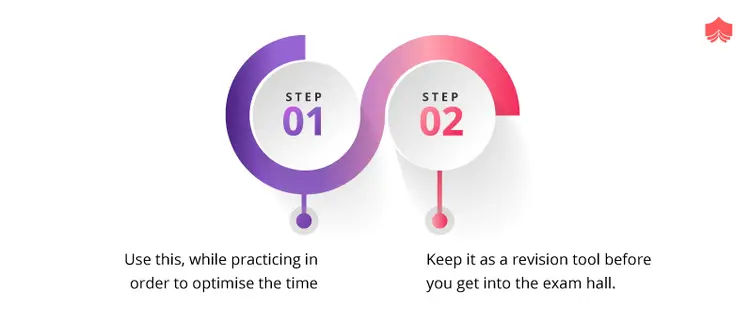
One of the most effective PMP test tips is to practice brain dumps before exam day.
- Step 1: You can use this method while practicing your mock tests in order to optimize the time while writing the PMP® exam.
- Step 2: In case, you don’t want to write the brain dump, you can keep it as a revision tool before you get into the exam hall. This would help you to keep the formulas and other required information fresh in your mind so that you can recall it easily.
Top Cities where Knowledgehut Conduct PMP Certification Training Course Online
Points to Keep in Mind While Writing your PMP® Exam
The Project Management Professional Certification exam consists of 200 questions which you need to answer in 4 hours. Keep these PMP exam prep tips in mind to answer questions more easily and manage your time well. These PMP test tips will help you stay focused and manage your time well during the exam.
- You need to read every question carefully and answer them. It is natural to get distracted and tired while answering all the questions in such a tight schedule. So, you need to relax by taking deep breaths and try to focus on the exam.
- Do not waste your time on breaks and you should plan for only 2 breaks. You must remember that the computer clock will keep ticking while you are on break. You will have to go through security checks before entering into the exam hall after every break. You should go for breaks when you absolutely need it.
- You should not panic when you find a few difficult questions consecutively which you are unable to answer. This is quite normal and you will find the easy and direct questions which will follow later.
- Do not spend more than a minute or two on any question. This would give you the time to read through all the questions. You will also come across easy and direct questions at any point during the exam.
- Use the elimination method for all the difficult questions or use your best guess in order to choose the best answer. You just need to ensure that you do not leave any question unanswered. In case, you are doubtful about any of the answer, you should mark it for review to come back to it later.
Become a project management expert with our Project Management prep course. Lead your team to success with confidence.
Points to Keep in Mind Once you Complete your PMP® Exam
Did you answer all the questions of your PMP® exam? That’s not it. You need to keep in mind the following points after you complete the PMP® exam:
- After completing all the questions, you should use the remaining time to review the marked questions.
- You will be asked to fill a survey once you complete the exam. This survey is optional. Once you complete the survey or you choose to skip it, your result will pop up on your screen if you pass the exam.
- Finally, you need to collect your printed report card from your Prometric test center staff. You will receive the hard copy of the certificate at the address provided by you during the application process.
What Should You Bring to the Prometric Center?
There are many restrictions on what you can bring to the test area. But there are also certain things which you must carry in order to enter the exam center. They are:
- You should carry your printed your Prometric confirmation receipt.
- You should also carry a valid and correct form of government-issued photo identification.
The name on the photo identification must match the name that you provided while applying for the exam and it must not be expired. In case, there is any change in your marital status, you should have photo identification with the same name that you registered for the exam.
Role of Prometric and PMI in your PMP® exam
Prometric is a private company who provides secure testing facilities for certifications provided by many professional organisations. One of them is the project management professional (PMP) certification exam provided by PMI. Prometric is a leader of standardized testing administration with over 10,000 testing centers in 160 countries.
Project Management Institute PMI is a global organisation who sets the standards for the field of Project Management. PMI develops all the test content for the standardized Project Management Professional (PMP)® exam which determines the certification status of a candidate. PMI has chosen Prometric to manage the electronic PMP® testing process.
You need to pay the fee for your PMP® certification exam directly to PMI, whereas, Prometric manages the test scheduling, administration, and analysis process.
Summing Up
After all the effort you have invested in preparing for the PMP® exam, it is common to have jitters on the day. Instead of getting stressed out, having a structured plan on the days leading up to the exam will help you.
Frequently using flash cards, relying on brain dumps, and strategically using your breaks are some ways you can keep yourself calm and composed during the exam. Keeping yourself composed using these tips will help you face the exam without any nervousness. You can also enroll in our PMP certification online training that will help you pass the exam with ease.
All the best!
Frequently Asked Questions (FAQs)
1. What is the best way to prepare for the PMP exam?
The best way to study for PMP exam is by combining structured training with consistent self-study. Take a PMP prep course, review the PMBOK® Guide, practice mock tests, and use flash cards. Focus on understanding concepts, not just memorizing. A study plan and exam simulator can really help you build confidence.
2. Is it difficult to pass the PMP exam?
The PMP exam is challenging, but not impossible. It tests your real-world application of project management concepts. With focused study, practice questions, and a solid understanding of PMI’s framework, most candidates can clear it. Time management and exam strategy are just as important as knowing the material.
3. What is the PMP pass rate?
PMI doesn’t officially publish a pass rate, but industry estimates suggest it's around 60–70%. The exam is tough and scenario-based, so preparation is key. Your results depend on how well you apply the concepts, not just how much you’ve memorized.
4. Is PMP harder than CPA?
Both exams are tough, but in different ways. PMP focuses on applying project management principles in practical scenarios, while CPA covers accounting and auditing in depth. If you're from a project management background, PMP may be more approachable. Each requires dedicated study and has its own challenges.
5. What is the cost of PMP certification in India?
The PMP exam fee is $405 for PMI members and $555 for non-members. In INR, that’s roughly ₹34,000 to ₹47,000, depending on exchange rates. You may also need to budget for training, which can range from ₹10,000 to ₹25,000 or more, depending on the provider.
6. How can I improve my PMP score?
Practice using mock tests to identify weak spots and the kind of questions that leave you stumped. Leave time for reviewing flagged questions and time yourself thorugh each section.
7. What is the best book for the PMP exam?
The PMBOK® Guide is the foundational resource for PMP preparation. Combining it with a reliable question bank and mock-test provider is the best way to prepare.
8. How many attempts are allowed in PMP?
PMI allows three attempts within a one-year period. If you don’t succeed, you will need to wait for a year after your last attempt before reapplying.
454 articles published
Kevin D. Davis is a seasoned and results-driven Program/Project Management Professional with a Master's Certificate in Advanced Project Management. With expertise in leading multi-million dollar proje...
Get Free Consultation
By submitting, I accept the T&C and
Privacy Policy