
- Home
- Blog
- Project Management
- How Do I Maintain My PMP Certification in 2026?
How Do I Maintain My PMP Certification in 2026?
Updated on Jan 13, 2026 | 10 min read | 12.88K+ views
Share:
Did you get PMP® certified? Congratulations! It is not an easy feat to go through all the hard work in order to get your PMP certification. But your credential is valid for only three years. You must participate in the Continuing Certification Requirements (CCR) program of PMI to keep your credentials active.
As a PMP® credential holder, it is recommended by the Project Management Institute (PMI) to earn 60 PDUs (Professional Development Units) every three years. The CCR program encourages every PMP® certified professional to undergo educational and professional development activity. One PDU is equivalent to one hour of time that you spend in a Professional Development activity. There are multiple ways to earn these PDUs.
Ultimate PMP Formula Cheat Sheet
Get a quick, exam-ready PMP cheat sheet with all essential formulas and key concepts in one place.
Maintain your PMP® Certification with CCR and PDUs
Earning your PMP® certification is a big step and knowing how to maintain PMP certification makes the process easier and more sustainable. The Continuing Certification Requirements (CCR) program offered by PMI is designed for you to grow and develop the skills that organisations are seeking in the present market scenario and at the same time you can maintain your certification status.
CCR is an easy-to-use online tool through which you can report your PDUs. The Professional Development Units (PDUs) can be calculated in blocks of one hour of time that you spend by learning, teaching others, or volunteering. You can maintain your PMP® certification status with PMI by accumulating and tracking these PDUs over a three-year period.
You need to earn 60 PDUs in order to maintain your PMP® certification exam. You can claim the required PDUs in two forms. They are:
- Education
- Giving back
Get to know more about importance of project charter.
What is the PMP Certification Renewal Cycle?
The PMP certification isn't a one-and-done achievement. Once you earn it, you must keep it active through a structured renewal process every three years. PMI calls this the Continuing Certification Requirements (CCR) cycle.
To renew, you need to earn 60 PDUs, short for Professional Development Units, during this 3-year cycle. These are part of the official PMP certification maintain requirements outlined by PMI. These PDUs help demonstrate your ongoing commitment to learning and growing as a project professional.
You can earn PDUs through courses, webinars, books, volunteer work, or by simply doing your job as a project manager. But there's a structure. At least 35 PDUs must come from education. The remaining 25 can come from giving back to the profession.
The idea is to stay updated with changing trends and sharpen your skills continuously. Once you’ve earned the required PDUs, you log them on PMI’s online system, pay the renewal fee, and accept the Code of Ethics.
It’s not a difficult process. It just requires consistency. Spread your learning across three years so you don’t have to rush in the final months. Understanding the renewal cycle is the first step in learning how to maintain PMP certification successfully.
What are PDUs and Why Are They Important?
PDUs, or Professional Development Units, are credits you earn to maintain your PMP certification. One PDU equals one hour of learning or contribution toward the project management profession.
There are two main types: Education PDUs and Giving Back PDUs.
Education PDUs involve learning through courses, training, webinars, or reading. PMI’s Talent Triangle breaks this down further into:
- Ways of Working (technical skills)
- Power Skills (leadership)
- Business Acumen (strategic thinking)
You need at least 8 PDUs in each of these three areas, totaling 35.
Giving Back PDUs are earned through activities like mentoring, volunteering, creating content, or just working as a project manager. You can claim up to 25 PDUs here.
Why are PDUs important? Because the world of project management changes constantly. New tools, methodologies, and challenges emerge all the time. PDUs ensure you stay sharp, relevant, and valuable.
They also show employers that you’re serious about your growth. You’re not just sitting on your certification. You’re actively building on it.
PDUs are more than checkboxes. They are an opportunity to grow your network, explore new areas, and future-proof your career. They play a central role in maintaining PMP certification and staying relevant in today’s evolving project landscape. If you're unsure how to maintain PMP certification, focusing on PDUs is a good place to start.
Ways to earn PDUs through Educational activities - PMI Talent Triangle™
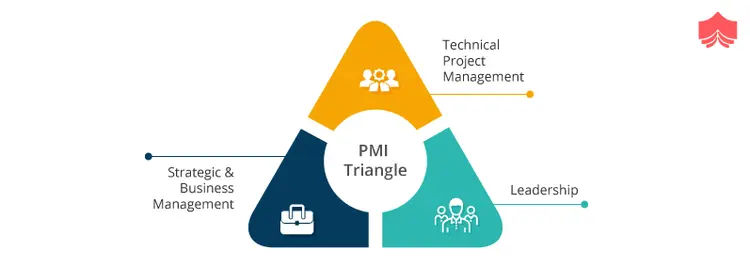
Research shows that the ideal skill set which the practitioners need to possess should comprise of technical, leadership, and strategic and business management competency. This is called the PMI Talent Triangle™. If you’re wondering how to earn PDUs for PMP certification, these competencies can guide your learning choices. They are explained as:
- Technical project management: This competency comprises of the knowledge, skills, and behaviors related to specific domains of Project, Program, and Portfolio Management.
- Leadership: This competency comprises of the knowledge, skills, and behavior specific to leadership-oriented, cross-cutting activities that help an organisation to achieve its business goal.
- Strategic and business management: This competency includes the knowledge and expertise required in the industry or an organisation that enhances performance and delivers the business outcomes in a better way.
The project management professional (PMP) course and activities included under the three components of the PMI Talent Triangle™ for the candidates to meet the 60 PDU bundle requirement prescribed by PMI are as follows:
| Technical | Leadership | Strategic and Business Management |
|---|---|---|
| Life Cycle Management | Coaching & Mentoring | Customer relationship & satisfaction |
| Time, Scope, Risk Management | Problem Solving | Benefits Realisation |
| Estimation | Team Building | Legal & Regulatory compliance |
| Agile Practices | Emotional Intelligence | Strategic planning & analysis |
| Governance | Conflict Management | Operational Functions |
| Data gathering and modeling | Brainstorming | Business acumen |
| Earned value management | Influencing | Competitive analysis |
| Performance Management | Listening | Market awareness |
| Interpersonal skills | Business models and structures |
You can choose from one of the following options under Education in order to earn the 35 PDUs under the CCR program offered by the Project Management Institute (PMI)®. Many professionals prefer PMP renewal PDU courses that align with the Talent Triangle to meet this requirement efficiently.
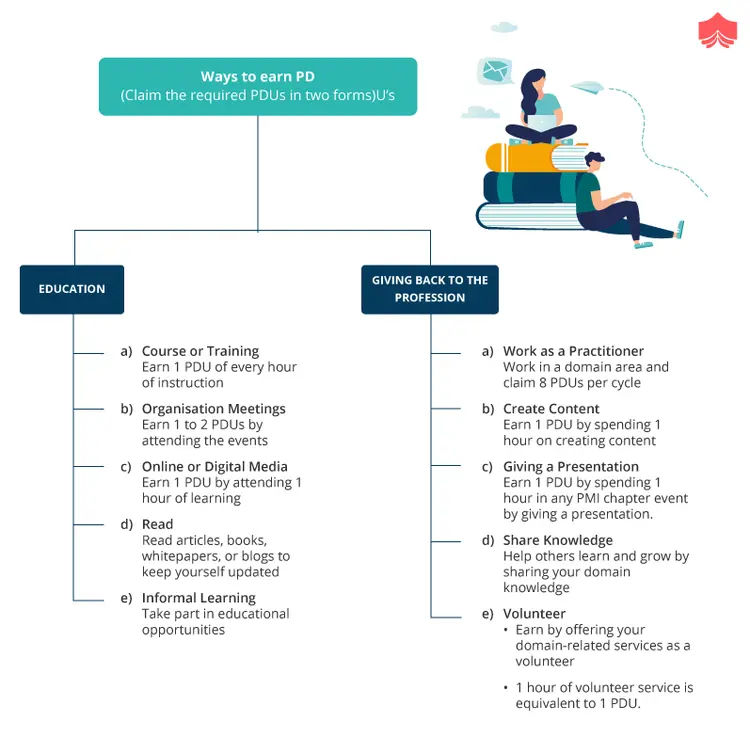
1. Course or Training
The online PMP certification course or training refers to the Instructor-led formal education courses or classes held in-person or online. Taking up the educational training courses is one of the effective and traditional ways to learn. You can choose the best-suited option from the plethora of options offered by PMI and third-party providers across the globe to earn 1 PDU of every hour of instruction:
- PMP certification courses offered by a PMI Registered Education Provider (R.E.P)
- Face-to-face and instructor-led courses from PMI SeminarsWorld®
- Educational events held by PMI chapter
- Academic education through programs accredited by the PMI Global Accreditation Center (GAC)
- Courses offered by other third-party providers
- E-learning On Demand courses.
2. Organization Meetings
The activities, meetings, and local events are referred to as organisation meetings which provide you with an opportunity to learn and network with the other professionals. You can earn 1 to 2 PDUs by attending the events organised by PMI throughout the year.
3. Online or Digital Media
This comprises of the self-paced learning conducted online or through varied forms of digital media. You can customize your learning and educational opportunities according to your needs and suitability with the help of technology. There are numerous educational webinars, videos, and other types of digital content available online and on demand. You can earn 1 PDU by attending 1 hour of learning. The opportunities available through these resources are as follows:
- ProjectManagement.com
- PMI Online Courses
- PMI Registered Education Providers (R.E.P.s).
4. Read
Did you know that you can earn PDUs for your CCR by reading? Yes, you can do that through self-directed reading that is relevant to your PMP® certification. Reading is one of the valuable components of learning and there are numerous reading resources available that is related to the profession. You can choose from articles, books, whitepapers, or blogs to keep yourself updated in order to support your ongoing professional development.
5. Informal Learning
You can also earn PDUs to maintain your PMP® certification by taking part in educational opportunities which focus on structured discussions. Sometimes, you get to learn from interaction with others. Also, 1 hour of learning under informal learning is equivalent to 1 PDU.
Top Cities where KnowledgeHut Conduct PMP Certification Training Course Online
9 Ways to Earn PDUs by Giving Back to the Profession
You can expand your knowledge and skills both personally and professionally while earning your PDUs to maintain your PMP® certification by giving back to the profession. This can prove to be a unique and great way to expand your horizons.
Choose from the following ways to earn your PDUs by giving back to the profession:
1. Work as a Practitioner
You can claim 8 PDUs per cycle by working as a practitioner and working in a domain area related to your certification. This enables you to apply your skills and knowledge in a practical setting. It also allows you to contribute to sustaining and growing the profession. These PDUs are only applicable to your current cycle and cannot be transferred.
2. Study Project Management Materials
Reading professional resources - like the PMBOK® Guide, whitepapers, or industry articles - counts as giving back because it strengthens the knowledge you bring to teams and projects. Go beyond skimming - highlight insights, connect concepts to real-world work, and reflect on applications. By deepening your understanding of methods like agile scaling or AI-driven scheduling, you elevate professional standards. Record your study time in PMI’s CCRS to ensure these self-driven learning hours translate into valid PDUs.
3. Complete a Training Course
Training programs sharpen your skills while advancing the profession’s credibility. Enrolling in courses - whether advanced risk management, agile coaching, or leadership workshops - demonstrates your commitment to staying relevant. Many programs - including those from PMI Authorized Training Partners like upGrad KnowledgeHut - emphasize practical application through simulations and peer learning. By completing a course and logging it in PMI’s CCRS, you prove you’re not just consuming content but actively investing in excellence - setting yourself apart as a project leader who values continuous growth.
4. Attend a Meeting or Discussion
Professional gatherings - chapter meetings, webinars, or discussion forums - are powerful to exchange insights and shape industry standards. Whether learning about AI in project management or sharing your own lessons - you contribute to the collective growth of the field. Even virtual sessions count - provided you engage meaningfully by asking questions or participating in polls. Each hour spent listening and contributing can be logged as PDUs - turning your networking into purposeful learning that strengthens your role and sustains your PMP credential.
5. Complete and Pass a Quiz
Quizzes validate learning and ensure knowledge retention, making them a practical way to earn PDUs. Many PMI webinars and eLearning modules include short assessments covering real scenarios - from stakeholder management to risk response. Passing these proves comprehension, not just attendance, which strengthens both your confidence and PMI’s credentialing standards. Flexible and quick, quizzes can be completed anytime, fitting into even packed schedules. Always log proof of completion in PMI’s CCRS to claim PDUs and keep your PMP certification current.
6. Create Content
Did you know that you can give back to the profession by creating content? Yes, you can earn PDUs to maintain your PMP® certification by creating new knowledge resources for practitioners as well as the public at large. You can share your insight and knowledge with others and contribute to their ongoing learning by developing knowledge resources. You can earn 1 PDU by spending 1 hour on creating content and can create new content in the following ways:
- Authoring books
- Writing articles or blogs
- Creating webinars or presentations.
7. Giving a Presentation
There are many occasions like PMI chapter event, professional conference, or within your organisation where you can give a formal presentation to others and share the knowledge which you have gained during your PMP® certification journey. You can earn 1 PDU by spending 1 hour in giving a presentation.
8. Share Knowledge
You can help others learn and grow by sharing your domain knowledge. You also contribute towards the growth of the profession and enhance the practices that are essential to your certified role by sharing your skills with others. Even if you are involving yourself in mentoring, teaching, or applying your subject matter knowledge towards an activity, but others will be benefited from your experience and perspective.
9. Volunteer
PMI has an active community of thousands of volunteers who offer their support to the Institute and the profession by working in a wide range of roles. You can earn PDUs to maintain your PMP® certification by offering your domain-related services as a volunteer to non-employer or non-client organisations. 1 hour of volunteer service is equivalent to 1 PDU.
Elevate your career with cheapest PRINCE2 certification. Master project management like a pro!
PMP® Certification Renewal Fees
Once you meet the PDU requirements of CCR, you can complete the renewal process of your credential at any point of the cycle. You will receive an electronic notification to apply for PMP renewal after PMI confirms that you have met the PDU requirements. You will be directed to submit the renewal fee payment on the online certification system as soon as you receive the notification. You should keep in mind that you must submit the payment in no later than 90 days after your cycle end date.
The CCR renewal fee for members and non-members are as follows:
| PMI Membership Status | CCR Renewal Fee |
|---|---|
| PMI member | $60 |
| Non-member | $150 |
Volunteering options offered by PMI
Are you trying to figure out a volunteering option to meet your CCR? There are numerous ways in which you can advance your career by contributing to PMI as a volunteer. These volunteering opportunities encompass a wide range of skills, interests, and goals.
PMI helps you to search for volunteering opportunity easily around the world with the help of their Volunteer Relationship Management System (VRMS). So, pick the right opportunity for you from the following options:
- PMI Board of Directors
- Board Support Committees
- PMI Educational Foundation (PMIEF)
- Member Advisory Groups (MAGs)
- Region Mentors
- Standards Committees
- Exam Development Volunteers
- PMI Awards Evaluators
- Presenters at PMI Events
- PMI Publication Reviewers (Knowledge Shelf, Bookstore reviewers, Project Management Journal® reviewers)
- Chapter Volunteers.
PMI Local Chapters
Become a member of your local PMI Chapter by paying a registration fee of $129 and a joining fee of $10 and take advantage of the knowledge and networking offered by it. The benefits of joining the local PMI Chapter are as follows:
1. Get access to the inner circle of local Project Managers
Grow your network with the other professionals who are driving the field of project management forward. The group might vary from those who have just started to those at the top of their careers.
2. Get easy access to exclusive events and seminars
Attend the chapter meetups and special guest talks to learn about the approach to facing new challenges from the professionals who have overcome similar obstacles in the past.
3. Discover relevant job opportunities
Get an opportunity to build your network with the local Project Management Professionals and get connections in companies located in your area to find new opportunities.
Tips for Maintaining Your Certification Efficiently
Staying on top of your PMP renewal doesn’t need to be stressful. With a little planning and the right approach, you can make it a smooth, ongoing process. Here are some tips to help you maintain your certification with less effort:
1. Don’t leave it till the end
Many professionals forget about PDUs until the last six months. Instead, spread your learning across all three years. Just one or two PDUs a month can keep you on track.
2. Build a PDU habit
Watch webinars during lunch. Listen to podcasts on your commute. Attend short workshops when possible. These micro-learning sessions add up fast.
3. Track your PDUs as you go
Use the PMI CCRS portal to log your PDUs as soon as you complete them. Waiting till the end can get messy.
4. Mix it up
Explore all three areas of the Talent Triangle. Technical skills, leadership, and business acumen. This keeps your learning well-rounded and meets the minimum requirements.
5. Use your work to earn PDUs
If you're already working as a project manager, you can claim up to 8 PDUs under the “Working as a Practitioner” category. Why not get credit for what you're already doing?
6. Volunteer or write content
Create a blog, speak at a webinar, or mentor someone. These activities not only give you Giving Back PDUs, they also help you grow as a professional.
7. Set reminders
Add recurring calendar reminders to review your progress every six months. A little check-in now and then can prevent last-minute panic later. That’s the secret to mastering how to maintain PMP certification without stress.
PMP Renewal Fees and PMI Membership Benefits
Renewing your PMP certification involves a fee, but it’s more manageable if you're a PMI member.
If you're a PMI member, the renewal fee is $60. If you're not a member, it’s $150. That’s a $90 difference, which often makes membership worth considering.
Membership itself costs about $139 annually, including local chapter fees. But it comes with several valuable perks. You get access to free PDU opportunities, exclusive webinars, industry tools, discounts on certifications and courses, and a subscription to PM Network and Project Management Journal.
Members also get access to PMI’s exclusive PDU-earning content, which can make maintaining your credential easier and more affordable. You can also connect with a global community of professionals and attend local events or virtual networking sessions.
If you plan to keep your certification long term, PMI membership usually pays off within the first renewal cycle. The discounts and learning access alone often offset the annual cost.
Before your three-year cycle ends, you’ll need to log your PDUs, agree to the Code of Ethics, and pay the renewal fee. It’s a straightforward process. Being a member just makes it easier, especially when you’re figuring out how to maintain PMP certification without overspending or missing deadlines.
Final Thoughts
Every professional has got different goals and interests, in the same way, there are different types of requirements across various industries. As you have read above, PMI offers a plethora of opportunity to you in order to meet the CCR program, enabling you to explore new options and new avenues.
You can choose the opportunities from education and giving back to the profession that suits you best. If you’re unsure how many PDUs required to maintain PMP certification, the answer is 60, earned across a balanced mix of learning and contribution activities.
You can read more about the Continuing Certification Requirements (CCR) by clicking here. Going further, getting a PMI membership exposes you to multiple opportunities which you can take in order to meet your CCR requirements. Whether you're renewing for the first time or the third, understanding how to maintain PMP certification gives you an edge.
Frequently Asked Questions (FAQs)
1. How much does it cost to maintain PMP?
Renewing your PMP costs $60 if you're a PMI member. For non-members, it’s $150. You might also spend extra on training or courses to earn PDUs. While there are free options, investing in quality resources helps you stay current and makes the renewal process smoother.
2. How long is PMP certification valid?
Your PMP certification stays valid for three years. Within that time, you need to earn 60 PDUs to keep it active. If you miss the deadline, your certification expires. Set reminders, log your PDUs regularly, and avoid the last-minute scramble before your cycle ends.
3. Can I renew my PMP without membership?
Yes, you can renew your certification without being a PMI member. But you’ll pay a higher fee and lose access to member-only perks like free PDUs and discounts. Membership isn’t mandatory, but it often pays off if you plan to stay certified long term.
4. How many attempts are allowed for PMP?
You get three chances to pass the PMP exam within one year of your application approval. If you don’t pass all three, you’ll have to wait a year and reapply. Take time to prepare well. Most candidates succeed within the first or second attempt.
5. How long is PMP certification valid?
The PMP certification is valid for three years from the date you pass the exam. To keep it active, you must earn 60 PDUs during this period. If you don’t renew in time, your certification will expire, and you’ll need to go through the exam process again.
6. How do I maintain my PMP certification?
To maintain your PMP certification, you need to earn 60 PDUs over a three-year cycle through education and professional contributions. Log your PDUs in PMI’s CCRS portal, agree to the Code of Ethics, and pay the renewal fee. Staying consistent makes the process simple and stress-free.
7. Do PMP certifications expire?
Yes, the PMP certification expires every three years. To maintain it, you must earn 60 PDUs within the renewal cycle and pay the renewal fee to stay active.
8. Which is the best institute for PMP certification?
The best choice is a PMI Authorized Training Partner (ATP). upGrad KnowledgeHut, as a PMI ATP, offers globally recognized, instructor-led PMP training with hands-on case studies and exam preparation support.
454 articles published
Kevin D. Davis is a seasoned and results-driven Program/Project Management Professional with a Master's Certificate in Advanced Project Management. With expertise in leading multi-million dollar proje...
Get Free Consultation
By submitting, I accept the T&C and
Privacy Policy