
- Home
- Blog
- Business Management
- The Ultimate Guide to becoming Business Systems Analyst
The Ultimate Guide to becoming Business Systems Analyst
Updated on Jul 03, 2025 | 12 min read | 11.75K+ views
Share:
Table of Contents
View all
- Who is a Business Systems Analyst?
- Difference Between Business Systems Analysts and Business Analysts
- Skill Set Required for a Business Systems Analyst
- Roles and Responsibilities of a Business Systems Analyst
- Salary Insight of an Entry-Level Business Analyst
- Career Progression of an Entry-Level Business Analyst
- Source
- Final Word
Business systems analysts are professionals who work with a company's internal IT department to ensure that its computer systems are running smoothly. They also work with external vendors and partners to ensure that all parts of a company's technology work together seamlessly.
If you're interested in becoming a business systems analyst, read our ultimate guide on what a business systems analyst does!
Master the Right Skills & Boost Your Career
Avail your free 1:1 mentorship session
Who is a Business Systems Analyst?
Business systems analysts are responsible for designing, implementing, and maintaining the business systems organizations use to run their daily operations. These professionals work with various technologies, including databases and enterprise applications like ERP and CRM systems.
They must also be able to work with people in different departments to make sure that the systems they develop are helpful for all employees.
Business systems analysts should have a bachelor's degree in computer science or a related field. They are also recommended to take a business systems analyst degree or any other degree in programming languages such as Java or SQL. It is essential for business systems analysts to stay up-to-date with new technologies and trends so that they can help their employers remain competitive in their industries.
A business systems analyst works with clients to ensure that their business processes are smooth and efficient. They analyze current processes and suggest improvements based on their findings. They also work with clients' internal teams to implement new technology solutions to help them grow their businesses while streamlining operations. They may also work with outside vendors to implement solutions that fit the client's needs.
Who Can Become a Business Systems Analyst?
If you're interested in becoming a business systems analyst job, you'll want to check the business systems analyst job description. Business systems analysts must be well-versed in technology and have strong interpersonal skills.
They typically come from two backgrounds: information technology and management. If you already have an IT background, you may quickly get into business analysis. However, if you don't have much computer experience, it's best to take some courses on computer science before applying for a job.
Suppose you don't have an IT background but come from a management background. In that case, it might be easier for you to get hired as a business analyst because they often work closely with managers responsible for managing a company's day-to-day operations.
A bachelor's degree is usually required for this position; however, some business system analyst companies may accept applicants who have only completed high school or obtained their GEDs provided they can show they have enough experience working with computers and people skills required by this position (such as being able to communicate effectively).
Want to become a professional business systems analyst? Business Analysts online can help you outsource your business analysis.
Difference Between Business Systems Analysts and Business Analysts
| Business Systems Analyst | Business Analyst |
|---|---|
| They tend to focus on software development. | They tend to focus on strategy implementation. |
| They typically have a background in software development or other technical fields. | They typically have a background in business administration or finance. |
| They tend to work with IT professionals. | They tend to work with non-IT professionals (e.g., managers). |
| They typically work on smaller projects that involve a limited number of stakeholders and inputs. | They typically work on larger projects that involve many stakeholders and inputs. |
| They spend more time developing solutions than analyzing problems. | They spend more time analyzing problems than developing solutions. |
Skill Set Required for a Business Systems Analyst
A business systems analyst is a hybrid role that combines both technical knowledge and business knowledge. Following is the must-have business systems analyst skill set.
Technical Skills
The technical skills required for an IT business systems analyst are fairly broad. They include knowledge of computer programming languages, data structures, and databases, as well as an understanding of how technology can improve business processes. For example, a business systems analyst might be responsible for creating or maintaining a website that allows customers to make purchases online.
To create the site, the analyst must know web design tools such as HTML, CSS, and JavaScript. They must also understand how customers use websites so that they can design the site in a way that makes it easy for people to use without feeling overwhelmed by too many options or confusing graphics.
The KnowledgeHut Business Analyst online course is designed to help you learn the skills you need to succeed in a business analyst role
Personal Skills
1. Well-developed Analytical, Diagnostic, and Problem-solving Skills
Business systems analysts are responsible for identifying and resolving business problems. They must be able to analyze the issue at hand from multiple perspectives, including technological, financial, and organizational. They must also determine which resources are available to fix the problem and how to use those resources best to succeed.
2. Excellent Organizational and Customer Service Skills
To succeed in this position, you must have excellent organizational skills to handle multiple projects simultaneously. You will also need to be able to communicate effectively with clients and team members and provide customer service during meetings with clients or other staff members who may not understand what they need from your department or company's services.
3. Proven Ability to Instruct and Mentor a Team
As a business systems analyst, you'll be responsible for training new employees on how best to use their resources within your organization's framework so that everyone works together efficiently towards common goals at all times.
4. Excellent Written and Verbal Communication Skills
Writing clearly and concisely is essential to a Business Systems Analyst. You will be working with people who have a wide range of technical knowledge, so it's essential that you can put your ideas into words that everyone understands.
5. Ability To Creatively Approach and Solve Situations
Business Systems Analysts need to be able to approach every situation with an open mind and be willing to experiment and be flexible in their approach. When you start troubleshooting, you might not know precisely what the problem is—you may even come up with several different solutions before finding the right one!
Roles and Responsibilities of a Business Systems Analyst
At this point, you must be wondering what a business systems analyst do. The business systems analyst is vital to any organization—whether a small, local business or a large, multinational corporation. The business systems analyst keeps the gears turning by ensuring that all of the company's software and machines are working correctly. They must also communicate well with other teams, including sales and marketing.
The business systems analyst roles and responsibilities include -
1. Improves Systems by Studying Current Practices
The business systems analyst must ensure that the system works efficiently and effectively, which means they need to know what it's supposed to do and how it's currently operating. These analysts study the company's operations and use this information to identify areas needing improvement. Then they create a plan for implementing those improvements.
2. Designing Modifications
Technical business systems analysts are responsible for designing modifications to current business processes, including software updates and other changes. They come up with recommendations for how these changes can improve efficiency and how much they'll cost.
3. Recommends Controls by Identifying Problems
Lead business systems analysts recommend controls based on issues they identify within the company's systems or processes. They may recommend changes such as new policies or procedures, additional employee training programs, or even additional software installations if necessary.
4. Write Improved Procedures
As a principal business systems analyst, you'll be tasked with writing improved procedures for your company. This includes writing up new procedures for filing an expense report and improving existing procedures by breaking them down into smaller steps and making sure they're easy to follow. You'll also ensure that your writing procedures are consistent with your company's other standard operating policies.
5. Declares Project Requirements
It is the most critical systems analyst job requirement. Business systems analysts are responsible for defining the requirements for each project. This includes determining what each phase of a project requires, who should be involved in each phase, and what types of resources will be needed.
It also involves identifying elements that may not be part of any particular phase but must still be considered to achieve success during each phase.
Empower your career with Microsoft Power BI training unleashing insights, make smarter decisions, and lead with analytics prowess
Salary Insight of an Entry-Level Business Analyst
- Entry-level business systems analyst salary, according to LinkedIn, is $68,000 annually on average.
- The median income with experience of one to five years earns $70,000 per year, according to LinkedIn.
- Senior business systems analyst with more than five years of experience earns up to $82,000 per year.
Career Progression of an Entry-Level Business Analyst
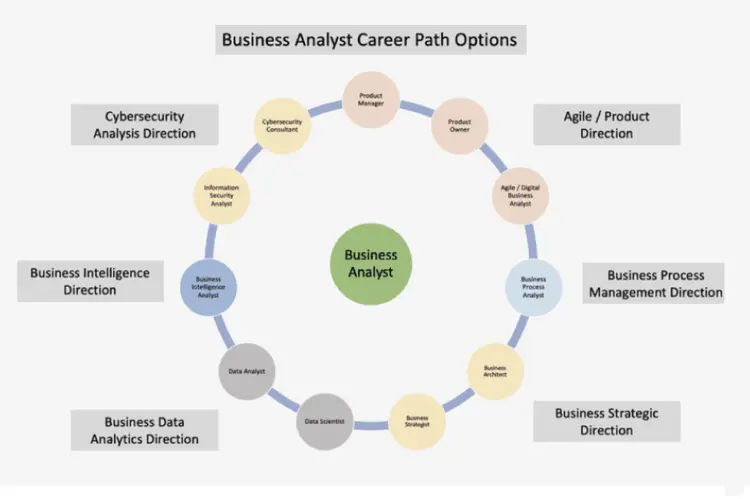
Source
A business system analyst is a jack-of-all-trades who works in many company areas, including marketing and sales. They can even become a project manager or team leader.
Here's what else you might be able to do with a business system analyst career:
1. Become a Project Manager
Project managers have a lot of responsibility—they coordinate multiple people, tasks, and deadlines to ensure that projects get done on time and within budget. They're often in charge of hiring workers for specific roles on projects and dealing with clients or upper management.
2. Become an IT Specialist
If you have experience with computers and software, becoming an IT specialist might be the way to go. IT specialists take care of all organizational computer problems by fixing them or helping other employees use new programs correctly. They may also create new programs or websites as needed.
3. Become a Team Leader
This role involves overseeing teams working on projects or tasks to achieve goals set by upper management or clients. Team leaders are responsible for ensuring that all team members are working effectively and efficiently and coordinating tasks and deadlines. They also help employees resolve any conflicts or issues that may arise within the team.
Final Word
The importance of business analysts is in the name itself—they are the people who help businesses succeed. They are the ones who make sure that the company's goals are aligned with its strategies and that those strategies are implemented in a way that best serves its customers.
Business analysts have an essential role to play in bridging the gap between business strategy and implementation, and they need to be able to think critically about how best to implement a strategy. They must take business systems analyst certificate courses from upGrad Knowledgehut. We give you the tools you need to become a successful business analyst!
Frequently Asked Questions (FAQs)
1. What does a business system analyst do?
The business systems analyst's job requirement is to analyze the needs of a business and then come up with a solution that will help them meet those needs. They often work with programmers, designers, and other technical experts to develop their design systems.
2. What skills are needed for a business systems analyst?
Business systems analysts need to be able to think about complex systems and the way they interact with each other. They need to understand how data flows through a system and how different types of users can use it.
They also need to communicate their findings clearly and effectively so that other people in their organization can understand the implications of their work. A business systems analyst should have strong analytical skills, an eye for detail, and an ability to spot potential problems.
3. Is a business system analyst an excellent job?
Yes, being a business system analyst is a good job. A business system analyst (BSA) is a person who helps companies design and manages their computer systems. They work with people from different departments in a company to ensure that the company's computer systems are running smoothly and meeting all departments' needs.
4. What are the five types of skills needed by a systems analyst?
The five skills needed by a systems analyst include:
- Communication skills
- Problem-solving skills
- Analytical thinking skills
- Technical knowledge and familiarity with software programs and applications
- Organizational skills
5. Is a business analyst an IT job?
Yes, business analysis is an IT job. Business analysts use a wide range of technologies to collect data, analyze it and make recommendations based on their findings.
Business analysts also work closely with stakeholders to understand their needs and concerns and how they want the information presented.
6. Does a business analyst require coding?
No, a business analyst does not require coding. Business analysts work with software developers to create and implement solutions to business problems. They do this by defining the problem, gathering requirements from stakeholders and users, designing solutions, creating prototypes, testing those prototypes with users and stakeholders, analyzing the results of those tests, documenting their findings, and presenting them to management.
103 articles published
Mansoor Mohammed is a dynamic and energetic Enterprise Agile Coach, P3M & PMO Consultant, Trainer, Mentor, and Practitioner with over 20 years of experience in Strategy Execution and Business Agility....
Get Free Consultation
By submitting, I accept the T&C and
Privacy Policy