
Top Product Owner Challenges and Proven Ways to Overcome Them in 2026
Updated on Mar 12, 2026 | 1.62K+ views
Share:
The Product Owner role sits at the volatile intersection of business, technology, and customer needs. It's a role riddled with complexity - balancing competing priorities, keeping the product vision intact, and translating feedback - into clear backlog items. And yet, this role is pivotal to any Agile team's success. In this blog, we’ll explore some of the most pressing product owner challenges - the real blockers that derail value delivery, slow down sprints, or lead to poor stakeholder alignment.
Whether you're new to the role or a battle-scarred PO, these insights will help you avoid common mistakes and become a stronger strategic driver of product success. For those considering formal learning paths, a Product Owner Certification can provide the structured knowledge and credibility to handle these challenges with confidence.
Master the Right Skills & Boost Your Career
Avail your free 1:1 mentorship session
Who is a Product Owner?
At the heart of every Scrum team is the Product Owner - a role designed not merely to manage tasks - but to orchestrate product value with surgical focus. This individual functions as the definitive voice behind the product backlog - translating strategic intent into executable work that moves the needle. Their job is to ensure that every sprint contributes not just output, but measurable business outcomes.
Unlike traditional roles such as project managers or business analysts, Product Owners operate in a unique pressure zone. They must engage continuously with end users, decode data trends, weigh competing priorities, and defend the product’s vision like a North Star - making critical calls on what gets built, when, and why. It's a balancing act that demands both - analytical clarity and political finesse.
Yet while the job may appear well-scoped on paper, its execution is far more complex in the wild. As companies scale and product ecosystems grow messier - the PO role often blurs into that of a strategist, negotiator, and systems thinker. Navigating shifting requirements, interdepartmental demands, and imperfect information becomes a daily norm. This is where the real weight of the role reveals itself - and where many Product Owner challenges begin to surface. Flexible Agile courses online now make it easier for busy professionals to gain the tools to navigate these complexities while balancing full-time roles.
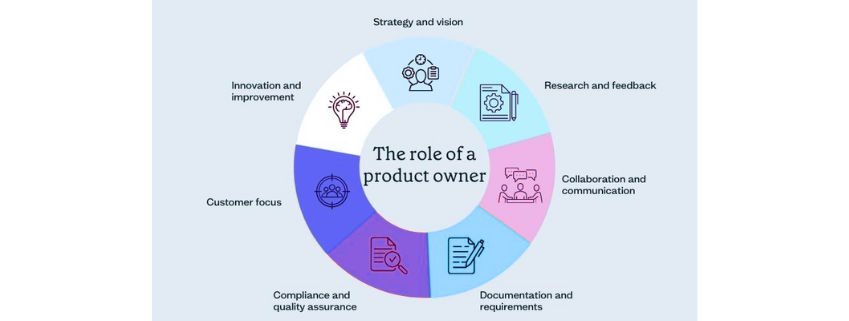
Source: Lyssna.com
Common Product Owner Challenges
Being a Product Owner is less about maintaining a backlog and more about leading with clarity amidst chaos. Here’s an in-depth look at the real-world challenges POs face - and how to overcome them strategically.
1. Backlog & Prioritization Issues
Managing an ever-growing product backlog is one of the most persistent challenges for Product Owners. It's easy for backlogs to become cluttered with feature requests, technical tasks, and outdated user stories - turning what should be a focused list of high-value items - into an unmanageable to-do pile.
POs often fall into the trap of serving as a glorified feature gatekeeper - responding reactively to stakeholder demands rather than shaping the backlog around user outcomes and product goals.
How to Avoid It:
- Use Prioritization Frameworks Techniques: MoSCoW (Must-have, Should-have, Could-have, Won't-have), RICE (Reach, Impact, Confidence, Effort), or WSJF (Weighted Shortest Job First) - help filter value from noise.
- Hold Regular Backlog Grooming: Refinement sessions should not just clean up stories - but realign them with the evolving strategy.
- Tie Stories to Goals: Each backlog item should map back to a product goal or OKR - no orphan tasks.
- Limit Work in Progress (WIP): Having too many high-priority items causes context-switching and confusion. Focus is a feature.
2. Balancing Stakeholder Interests
Stakeholders - from sales and marketing to customer success and engineering - often come with competing priorities. A PO must navigate these conflicting demands without becoming a people-pleaser or a bottleneck. This challenge intensifies in matrixed or scaled Agile environments - where multiple teams and executives want their needs addressed yesterday.
How to Avoid It:
- Create a Transparent Prioritization Process: When everyone understands how decisions are made - they’re more likely to accept them - even if their feature gets delayed.
- Facilitate Value Conversations: Shift the dialogue from "I want this" - to "What value does this bring?". Use metrics to frame discussions.
- Use a Single Source of Truth: A visual product roadmap and live backlog board can help stakeholders see where things stand - which reduces repeated status requests.
- Build Political Capital: Developing trust with key influencers ensures smoother negotiations when tough trade-offs must be made.
3. Not Prioritizing Product Vision
It’s easy to get caught up in day-to-day tasks and forget the strategic arc. POs who neglect the product vision end up with a disjointed user experience, inconsistent features - or, worse - a product that no longer serves its intended audience.
How to Avoid It:
- Evangelize the Vision: Reinforce the product vision during sprint planning, demos, and retros. It’s not a document - it’s a drumbeat.
- Audit the Roadmap Frequently: Make sure short-term sprint items align with long-term outcomes.
- Say “No” Strategically: Learn to diplomatically reject low-value work that doesn’t align with vision. Not every idea deserves execution.
- Partner with Product Leadership: Ensure alignment between executive strategy and team-level execution.
4. Not Trusting Your Scrum Team
When POs micromanage developers, override story point estimates, or neglect retrospectives - they erode trust and team autonomy. This results in disengagement, friction, and ultimately, lower velocity and morale.
How to Avoid It:
- Respect Roles and Boundaries: The PO defines the “what” and the team decides the “how.” Honor that separation.
- Participate in Retrospectives: Show up, listen, and act on feedback. This builds psychological safety.
- Be Open to Estimation Discussions: If you disagree with sizing, ask questions - not directives.
- Celebrate Team Wins: Recognition fosters a culture of shared accountability and mutual trust.
5. Lack of Data & Market Insights
Making product decisions based on internal opinions or gut feeling is a fast track to irrelevance. Without real data - user behavior analytics, market research, competitor benchmarking - POs risk building features no one uses.
How to Avoid It:
- Invest in Analytics Tools: Use platforms like Mixpanel, Hotjar, or Google Analytics - to track real-time user behavior.
- Talk to Users Weekly: Establish a cadence of user interviews or usability tests.
- Collaborate with Sales & Support: They’re on the front lines and have a pulse on customer pain points.
- Validate Assumptions Early: Run experiments, A/B tests, or quick MVPs - before scaling a feature.
6. Managing Technical Debt & Quality Control
Many Product Owners struggle to advocate for technical work that doesn’t directly show up on a roadmap or satisfy a user story. Ignoring technical debt may offer short-term gains - but it becomes a long-term liability - slowing delivery, increasing bugs, and causing developer frustration.
How to Avoid It:
- Co-own Quality with Engineers: Encourage engineers to highlight areas of concern during backlog refinement.
- Budget for Maintenance: Set aside sprint capacity - say 10-20% - for non-functional improvements.
- Track Defects Publicly: Maintain visibility of bugs and debt across the team and stakeholders.
- Promote Clean Code Culture: Align with your tech lead to champion sustainable engineering practices.
7. Overcommitting & Ignoring Feedback Loops
In a bid to appease leadership or outpace competitors - POs often commit to aggressive timelines without factoring in risk, feedback cycles, or team velocity. The result? Half-baked features, missed deadlines, and disillusioned teams.
How to Avoid It:
- Use Empirical Planning: Base commitments on historical velocity - not wishful thinking.
- Shorten Feedback Loops: Release frequently, learn quickly. Don’t wait for perfection.
- Accept Scope Changes: Agility means adapting. Create space for iteration without framing it as failure.
- Defend Team Health: Burnout leads to bugs. Protect your team’s capacity like a product feature.
8. Decision Fatigue & Communication Overload
A day in the life of a PO is often a blur of stand-ups, planning meetings, backlog reviews, stakeholder calls, and ad-hoc firefighting. With so many micro-decisions to make - decision fatigue sets in - leading to delayed judgment, missed details, and loss of strategic focus.
How to Avoid It:
- Establish Decision Criteria: Create frameworks or rubrics for repeatable decisions.
- Batch Meetings: Cluster similar meetings together to avoid constant context-switching.
- Use Asynchronous Updates: Not every conversation needs a call. Embrace tools like Loom or Confluence.
- Protect Deep Work Time: Block out hours on your calendar for thinking, reviewing insights, and vision alignment.
In mastering these challenges - Product Owners move from backlog managers to value champions. The path isn’t easy - but with awareness, structure, and continuous learning, it’s a role that can deeply impact product success and organizational agility.
Product Owners Overcoming Challenges: Real World Examples
Great Product Owners aren’t defined by avoiding problems - they’re defined by how they wrestle them into opportunities. Theory sets the foundation, but practice under pressure separates the average from the exceptional. Let’s look at how some of the world’s most influential product organizations tackled these exact hurdles - and what project managers can learn from their playbook.
1. Spotify: Autonomy with Alignment
At Spotify, rapid growth risked turning squads into siloed factories of features. Their Product Owners were under immense strain to balance team autonomy with enterprise-wide coherence. The solution? A radical emphasis on outcomes over outputs. Squads were trusted with full ownership of “missions,” but alignment was achieved through sharp prioritization frameworks and relentless feedback loops. It’s a masterclass in how giving away control, paradoxically, gave Spotify more of it - accelerating innovation without drowning in backlog sprawl.
2. Airbnb: Ruthless Focus on the Booking Flow
In its breakout years, Airbnb was being pulled in a thousand directions. Hosts wanted new tools, guests wanted features, and investors wanted speed. Many POs would have tried to appease everyone. Instead, Airbnb’s leaders fixated on one choke point: making the booking journey seamless. Everything else - no matter how shiny - took a back seat. The payoff? Higher conversion, stickier retention, and the confidence to scale globally. The lesson: saying “no” with conviction is often the most strategic “yes.”
3. Atlassian: Training POs as Diplomats
Atlassian discovered that the bottleneck wasn’t engineering capacity - it was conflict between stakeholders and Product Owners. To solve this, they didn’t hire more managers - they invested in upskilling their POs. Workshops on OKRs, stakeholder communication, and data-led prioritization armed them with tools to negotiate trade-offs without eroding trust. The result was a measurable dip in delivery friction and a rise in successful feature adoption. It shows that sometimes the smartest backlog investment isn’t a feature - it’s the people curating it.
4. Amazon: Working Backwards, Always
At Amazon, Product Owners are taught to start with a future-facing press release before coding begins. This ritual forces clarity: Who is this for? What problem does it solve? Why will customers care? By making the “why” painfully explicit, POs inoculate themselves against vanity features and politics. Data and customer obsession - not gut feel - drive every decision. That’s how Amazon consistently avoids the trap of building for the loudest stakeholder rather than the end user.
Takeaway: Whether it’s Spotify’s empowered squads, Airbnb’s ruthless prioritization, Atlassian’s PO upskilling, or Amazon’s data-first discipline, the message is clear: successful Product Owners don’t escape challenges - they weaponize them. And for project managers stepping into PO shoes, these case studies aren’t just stories - they’re roadmaps to mastering complexity with clarity.
In mastering these challenges, Product Owners move from backlog managers to value champions. The path isn’t easy - but with awareness, structure, and continuous learning, it’s a role that can deeply impact product success and organizational agility.
Final Thoughts
The best Product Owners aren’t perfect - they’re adaptable. They recognize mistakes early, align fast, and never lose sight of their product’s north star. By mastering these core challenges - from backlog chaos to decision fatigue - you can transform the way your team delivers value.
If you’re ready to deepen your expertise and rise above these common Product Owner mistakes, explore upGrad KnowledgeHut’s Product Owner certification programs. Whether you're aspiring to step into the role or aiming to sharpen your leadership edge, we’ve built these programs to help you drive outcomes - not just outputs.
Frequently Asked Questions (FAQs)
1. Is being a Product Owner difficult?
Yes - being a Product Owner is challenging because it demands balancing business goals, customer needs, and team capacity. Success requires sharp prioritization, stakeholder management, and resilience under constant change.
2. What is the hardest thing as a product manager?
The toughest part is making trade-offs—saying “no” to good ideas in order to focus on the few that truly drive value. It’s a constant test of judgment, data-driven decision-making, and vision alignment.
3. Are Product Owners still in demand?
Absolutely. With Agile adoption growing worldwide, skilled Product Owners are in high demand across industries. Organizations see them as critical to ensuring customer value and business impact.
4. What is your strongest skill set as a product manager?
Top-performing product managers excel at strategic prioritization, clear communication, and customer empathy. These skills help them align stakeholders, inspire teams, and consistently deliver products that solve real problems.
1639 articles published
KnowledgeHut is an outcome-focused global ed-tech company. We help organizations and professionals unlock excellence through skills development. We offer training solutions under the people and proces...
Get Free Consultation
By submitting, I accept the T&C and
Privacy Policy
Ready to learn about Agile Certifications Roadmap?