
Types of Product Managers: Roles, Skills & Career Paths
Updated on Sep 23, 2025 | 1.48K+ views
Share:
Product management is one of the most dynamic and in-demand career paths today, but did you know that there are different kinds of project managers? A “product manager” can mean different things based on factors like the industry, company size, or stage of product maturity. Product managers could be focusing on technical aspects, data, growth, design, or even marketing.
Anyone aspiring to become a product manager needs to understand the different branches available in the market. This is helpful to find one that fits with your skillset and ambitions.
In this blog, we will look at the different kinds of product managers, salary ranges, and their responsibilities. Whether you’re just starting out or looking to specialize, this breakdown will help you map your product management career path.
Master the Right Skills & Boost Your Career
Avail your free 1:1 mentorship session
What Is a Product Manager?
At its core, a product manager (PM) is responsible for guiding a product from conception to launch and beyond. PMs set the vision, define the roadmap, coordinate across teams, and ensure the product delivers value to users while meeting business goals.
Unlike project managers who focus on timelines and execution, product managers work at the meeting point between customer needs, business strategy, and technical feasibility. They are often called the “CEO of the product”. This is not because they hold executive power, but because they juggle aspects of the vision, execution, and stakeholder alignment.
The scope of the role varies widely. In startups, PMs may wear many hats, from UX design to analytics. In enterprises, PMs are often specialized and work towards a key focus area. This is why the world of product management has evolved into a diverse set of roles, each tailored to specific contexts and outcomes.
Explore different kinds of Product Managers with the help of UpGrad KnowledgeHut Agile courses.
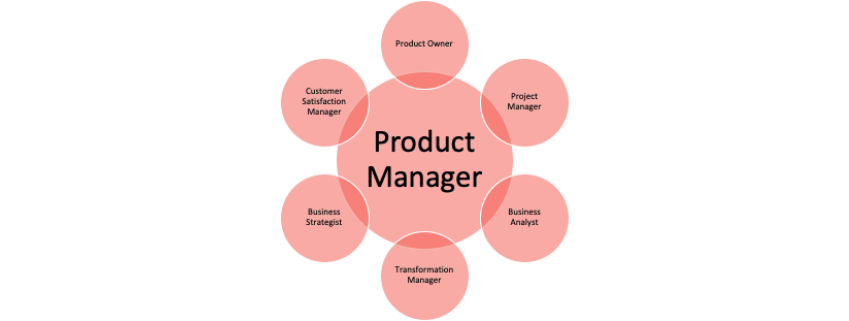
Source: wazobia.com
Different Types of Product Managers
Product management is not a role set in stone. Over time, it has branched into multiple specializations, each shaped by factors such as the size of the company, product complexity, and market focus. From entry-level associates learning the ropes to directors and principals shaping entire portfolios, PM roles span various responsibilities.
Let us try to understand the different kinds of Product Manager specializations available in today’s job market.
1. Associate Product Manager (APM)
For those starting out in product management, the APM role serves as a structured entry point. APMs often rotate between teams to gain exposure to the product lifecycle and learn directly from senior PMs.
- Roles & Responsibilities: Assist with user research, write product requirements, track feature performance, and support cross-functional coordination.
- Salary Range: Typically ranges from $70,000 to $100,000 in the US.
2. Technical Product Manager
When a product requires deep technical expertise, the Technical Product Manager (TPM) steps in. They act as the bridge between engineering and business stakeholders, ensuring technical feasibility aligns with customer needs.
- Roles & Responsibilities: Manage APIs, infrastructure, and system performance; work closely with developers; make decisions about technical trade-offs.
- Salary Range: Typically ranges from $120,000 to $140,000 in the US.
3. Senior Product Manager
Senior PMs move beyond execution into ownership of significant product lines. They’re responsible for strategy, roadmap definition, and mentoring junior team members.
- Roles & Responsibilities: Define product vision, align stakeholders, lead roadmap execution, and monitor product success metrics.
- Salary Range: Typically ranges from $150,000 to $200,000 in the US.
4. Digital Product Manager
In companies where the product is primarily digital (apps, SaaS, e-commerce), Digital PMs ensure seamless online experiences that maximize engagement and retention.
- Roles & Responsibilities: Oversee user journeys, manage UX flows, run A/B tests, and drive KPIs like conversion rates.
- Salary Range: Typically ranges from $110,000 to $160,000 in the US.
5. Growth Product Manager
Growth PMs are metrics-driven and majorly focus on scaling the product. Their experiments fuel acquisition, retention, and revenue growth.
- Roles & Responsibilities: Optimize funnels, run experiments, analyze cohort data, and partner with marketing to drive growth levers.
- Salary Range: Typically ranges from $120,000 to $180,000 in the US.
6. Data Product Manager
When data is the core asset of a product, Data PMs are needed. They oversee pipelines, dashboards, and ML-driven features. They also ensure data translates into value for both customers and internal teams.
- Roles & Responsibilities: Define data strategy, collaborate with data engineering and science, prioritize analytic features.
- Salary Range: Typically ranges from $130,000 to $200,000 in the US.
7. Product Marketing Manager (PMM)
PMMs sit at the intersection of product and marketing, ensuring that the value of a product is effectively communicated to the market.
- Roles & Responsibilities: Develop positioning and messaging, craft go-to-market strategies, align sales enablement with product launches.
- Salary Range: Typically ranges from $110,000 to $160,000 in the US.
8. UX / Product Design Manager
This role ensures that usability and user experience remain central to the product strategy. They lead design teams and collaborate with PMs and engineers to build intuitive products.
- Roles & Responsibilities: Oversee design systems, manage usability research, advocate for customer-first design in roadmaps.
- Salary Range: Typically ranges from $120,000 to $170,000 in the US.
9. AI Product Manager
As AI becomes mainstream, AI PMs focus on products infused with machine learning and artificial intelligence. They balance innovation with ethical and practical concerns.
- Roles & Responsibilities: Manage datasets, monitor model performance, define AI product vision, and ensure ethical implementation.
- Salary Range: Typically ranges from $130,000 to $200,000 in the US.
10. Staff Product Manager
Staff PMs operate at a senior level without necessarily managing people directly. Their expertise and influence shape multiple product areas.
- Roles & Responsibilities: Drive large-scale initiatives, set system-wide priorities, and mentor PMs across teams.
- Salary Range: Typically ranges from $180,000 to $230,000 in the US.
11. Product Lead
Product Leads combine leadership with execution, often guiding PMs under them while still owning critical product outcomes.
- Roles & Responsibilities: Align roadmaps with company strategy, manage PM teams, and oversee delivery of major initiatives.
- Salary Range: Typically ranges from $170,000 to $220,000 in the US.
12. Strategic Product Manager
These PMs take a long-term view, focusing on portfolio strategy, competitive positioning, and business expansion opportunities.
- Roles & Responsibilities: Conduct market analysis, shape multi-year strategies, and advise leadership on product direction.
- Salary Range: Typically ranges from $180,000 to $250,000 in the US.
13. Product Operations Manager
Product Ops Managers optimize the workflows and processes that allow PM teams to succeed. They keep product organizations efficient and aligned.
- Roles & Responsibilities: Manage tools and reporting systems, coordinate product operations, and ensure cross-team efficiency.
- Salary Range: Typically ranges from $100,000 to $150,000 in the US.
14. Enterprise Product Manager
Enterprise PMs design and manage complex solutions for large organizations, often focusing on integrations, compliance, and scale.
- Roles & Responsibilities: Define enterprise-grade features, manage customer accounts, ensure scalability and security.
- Salary Range: Typically ranges from $140,000 to $230,000 in the US.
15. Startup Product Manager
In startups, PMs juggle everything from strategy to UX, often with little structure. They thrive in ambiguity and prioritize speed.
- Roles & Responsibilities: Conduct customer interviews, define MVPs, manage growth hacks, and adapt roadmaps rapidly.
- Salary Range: Typically ranges from $90,000 to $150,000 in the US. They also earn equity quite early if they’ve proven to be a stable member of the team that has played a crucial role.
16. Director of Product Management
At this level, product leaders oversee entire portfolios and PM teams, reporting directly to executive leadership.
- Roles & Responsibilities: Lead multiple PMs, set portfolio strategy, allocate resources, align with C-level executives.
- Salary Range: Typically ranges from $180,000 to $250,000 in the US. (often higher with stock options)
17. Principal Product Manager
Principals are senior experts whose influence extends across products. They are thought leaders and visionaries, guiding strategy without formal team management.
- Roles & Responsibilities: Define cross-product vision, influence executive strategy, mentor senior PMs.
- Salary Range: Typically ranges from $200,000 to $270,000 in the US.
How to Choose the Right Product Manager Type for You?
Choosing the right PM path starts with evaluating your strengths and passions. Do you enjoy technical discussions and creating a detailed roadmap in terms of technical capabilities? Then a Technical or AI PM might suit you. Do you rather prefer customer insights and storytelling? Consider Product Marketing or UX roles. If you thrive on data, a Data or Growth PM role could be the best fit.
Also consider the type of company you want to work with. Startups often need generalist PMs who do a bit of everything, while large enterprises offer specialized tracks (e.g., enterprise, strategic, product ops). Salary and career trajectory also play a role—senior and specialized PMs often earn more but require years of experience and proven expertise.
By reflecting on your skills, interests, and career goals, you can align yourself with the PM role that offers the greatest fulfillment and growth.
Looking to find the right Product Manager fit for you? Follow the best Agile courses to find your true value.
Summing Up
Product management is a diverse field with roles ranging from entry-level APMs to Principal PMs and Directors. Each type requires a unique mix of skills, from technical expertise to storytelling, data analysis, or leadership. Salaries reflect this diversity, with ranges spanning from $70,000 to well over $250,000 depending on specialization and seniority.
Understanding these roles not only helps you plan your career but also shows how organizations deploy PM talent strategically. Whether you’re looking for breadth at a startup or depth in an enterprise, there’s a PM path for you. The key is to choose a role that aligns with your strengths and ambitions—then grow into it deliberately.
Frequently Asked Questions (FAQs)
1. What are the 4 P’s of product management?
The 4 P’s are Product, Price, Place, and Promotion—core elements of managing a product’s success.
2. What are the 5 levels of a product?
The five levels are Core Benefit, Generic Product, Expected Product, Augmented Product, and Potential Product.
3. What is the RFQ in NPD?
RFQ (Request for Quotation) is a document sent to suppliers during new product development to solicit cost and supply details.
4. What are the 4 stages of product management?
The stages are Introduction, Growth, Maturity, and Decline, which describe a product’s lifecycle.
1639 articles published
KnowledgeHut is an outcome-focused global ed-tech company. We help organizations and professionals unlock excellence through skills development. We offer training solutions under the people and proces...
Get Free Consultation
By submitting, I accept the T&C and
Privacy Policy
Ready to learn about Agile Certifications Roadmap?