
- Home
- Blog
- Project Management
- Operations Manager Job Description: Roles, Skills, Qualification
Operations Manager Job Description: Roles, Skills, Qualification
Updated on Dec 04, 2024 | 7 min read | 3.17K+ views
Share:
Table of Contents
View all
- What Does an Operations Manager do?
- Operations Manager Duties and Responsibilities
- Operations Manager Job Description Examples
- Operations Manager Skills and Qualifications
- Operations Manager Salary Expectations
- Operations Manager Education and Training Requirements
- Tips to Crack Operations Manager Interview
- To Sum up
The backstage tasks that are essential to a business's operation are included in business operations. To ensure the seamless operation of the company, operations managers usually supervise a variety of areas. The operations manager job description includes purchasing, accounting, Human Resources, IT, and process management. This managerial function is essential to maintaining the efficacy and efficiency of the company. It has the potential to develop into a COO (chief operating officer) post. If you are keen on making a career in this field, consider pursuing the best Project Management certification.
Ultimate PMP Formula Cheat Sheet
Get a quick, exam-ready PMP cheat sheet with all essential formulas and key concepts in one place.
What Does an Operations Manager do?
The smooth and prompt execution of a business's operations is guaranteed by operations managers. They are in charge of people, corporate strategy, budgets, core operations, and project delivery. An organization's long-term success is greatly aided by these managers. The operations manager job description also includes encouraging the development and progress of their workforce.
To oversee day-to-day business operations, competent operations managers use their managerial experience and problem-solving skills. Their main goal is to support the business's economic growth by making sure that resources are used and allocated wisely.
Additionally, to supervise staff tasks and create a positive work atmosphere that promotes productivity, operations managers depend on their strong leadership abilities. These managers make sure that internal policies, industry rules, and pertinent standards are followed. It could be necessary to work with a number of stakeholders. They include government agencies, trade groups, management groups, and top executives like chief executive officers and chief operating officers.
Operations Manager Duties and Responsibilities
An operations manager's duties and responsibilities vary depending on the industry and type of business. They have a wide range of skills and a great deal of industry expertise, which enable them to manage various business tasks.
Some positions require a lot of work experience plus additional credentials, such as a college degree or a master's degree in business administration, while others may be entry-level.
Despite these variances, the majority of operations manager job descriptions share a number of responsibilities.
- Oversee Daily Operations: Manage and coordinate all operational activities. Ensure smooth workflows across departments. Address challenges to maintain efficiency and productivity.
- Optimize Processes: Analyze and improve operational processes for better performance. Implement strategies to reduce costs and enhance output. Ensure resources are used effectively.
- Team Supervision and Development: Lead, train, and support team members. Set performance goals and monitor progress. Foster a collaborative and motivated work environment.
- Ensure Compliance: Enforce company policies and industry regulations. Monitor safety standards and legal requirements. Ensure operations align with organizational goals.
- Manage Budgets and Resources: Develop and oversee budgets for operational needs. Allocate resources efficiently to meet business objectives. Track financial performance and adjust plans as needed
Operations Manager Job Description Examples
Operation manager job description sample 1: Retail Operations Manager
- Oversee day-to-day store operations, including inventory management, staff scheduling, and customer service standards.
- Develop and implement strategies to boost sales, improve customer satisfaction, and enhance brand loyalty.
- Monitor store performance through KPIs, identifying areas for improvement and driving operational excellence.
- Train, mentor, and evaluate staff to ensure alignment with company goals and enhance team productivity.
- Manage budgets, control operational costs, and ensure optimal resource allocation for profitability.
Example 2: Manufacturing Operations Manager
- Supervise daily manufacturing processes to maintain production schedules and meet quality standards.
- Collaborate with procurement and logistics teams to ensure a seamless supply chain and timely material availability.
- Enforce safety protocols, regulatory compliance, and environmental standards across production facilities.
- Analyze operational metrics to identify bottlenecks and implement process improvements for efficiency gains.
- Oversee workforce management, including hiring, training, and performance evaluations, to maintain a skilled and motivated team.
Example 3: IT Operations Manager
- Manage and maintain IT systems, networks, and infrastructure to ensure seamless business operations.
- Develop and implement IT policies for system security, data integrity, and business continuity planning.
- Monitor IT budgets, allocate resources effectively, and ensure cost-efficient technology utilization.
- Collaborate with stakeholders to address technical issues, upgrade systems, and support business needs.
- Analyze system performance metrics, identify areas for improvement, and drive initiatives for enhanced efficiency and reliability.
Operations Manager Skills and Qualifications

Source: edureka
Skills
- Leadership Skills: Ability to lead and motivate teams to achieve organizational goals. Skilled in conflict resolution and team development.
- Problem-Solving Abilities: Strong analytical skills to identify and resolve operational challenges. Proficient in implementing effective solutions under pressure.
- Communication Skills: Excellent verbal and written communication for clear collaboration. Skilled in presenting ideas and reports to diverse audiences.
- Organizational Skills: Proficient in managing multiple tasks and projects simultaneously. Strong attention to detail and time management.
- Financial Acumen: Experience in budgeting, cost management, and financial planning. Ability to analyze financial data and optimize resource allocation. Showcase your experience as per the business operations manager job description.
- Technical Proficiency: Familiarity with industry-specific tools, software, and technologies. Competence in using data analytics for decision-making.
- Adaptability: Ability to thrive in fast-paced and changing environments. Skilled in adapting strategies to meet evolving business needs.
- Knowledge of Compliance and Safety: Understanding of industry regulations and safety standards. Skilled in enforcing policies to ensure legal and operational compliance.
- Customer Focus: Ability to prioritize customer satisfaction and address concerns effectively. Proficient in aligning operations to enhance user experience.
Qualifications
- Educational Background. A bachelor’s degree in business administration, operations management, or a related field. A master’s degree or MBA is a plus.
- Professional Experience. Proven experience in operations management or a similar role. Demonstrated success in managing teams and improving processes.
- Technical Proficiency. Familiarity with ERP systems, project management software, and data analysis tools. Knowledge of industry-specific technologies is an advantage.
- Certifications. Certifications such as PMP training (Project Management Professional), Six Sigma, or Lean Management are desirable. Specialized certifications in the relevant industry add value.
Operations Manager Salary Expectations
The average annual compensation for an operations manager is $75,464.
In addition, incentives, stock options, profit-sharing, pension plans, health and dental insurance, and other benefits may be part of operations manager job description salary.
The following are some of the highest-paying sectors for operations managers:
- Defense and aerospace
- Mining, utilities, and energy
- Biotechnology and pharmaceuticals
- Manufacturing
- Information technology
Operation manager salaries as per the region:
- California: $107,035
- New Jersey: $105,600
- Wyoming: $102,172
- Rhode Island: $101,250
- Arkansas: $100,000
- Washington: $99,999
Operations Manager Education and Training Requirements
To excel as an Operations Manager, candidates must meet specific educational and training criteria to build a strong foundation for the role.
- Bachelor’s Degree. A degree in business administration, operations management, supply chain management, or a related field is typically required.
- Master’s Degree (Optional). An MBA or master’s degree in operations or management can be an advantage for higher-level roles.
- Professional Certifications. Certifications like PMP (Project Management Professional), Six Sigma, Lean Management, prince2 certification, or CPIM (Certified in Production and Inventory Management) enhance qualifications.
- On-the-job training. Experience in roles like team leader, supervisor, or department manager helps build practical operational skills.
- Specialized Industry Knowledge. Training in industry-specific software, tools, or regulations is often necessary for success.
- Workshops and Seminars. Participation in leadership and process improvement workshops enhances management skills.
- Technical Skills Development. Familiarity with ERP systems, data analysis tools, and project management software is essential for operational success.
Operations Manager Job Description Template
Template 1
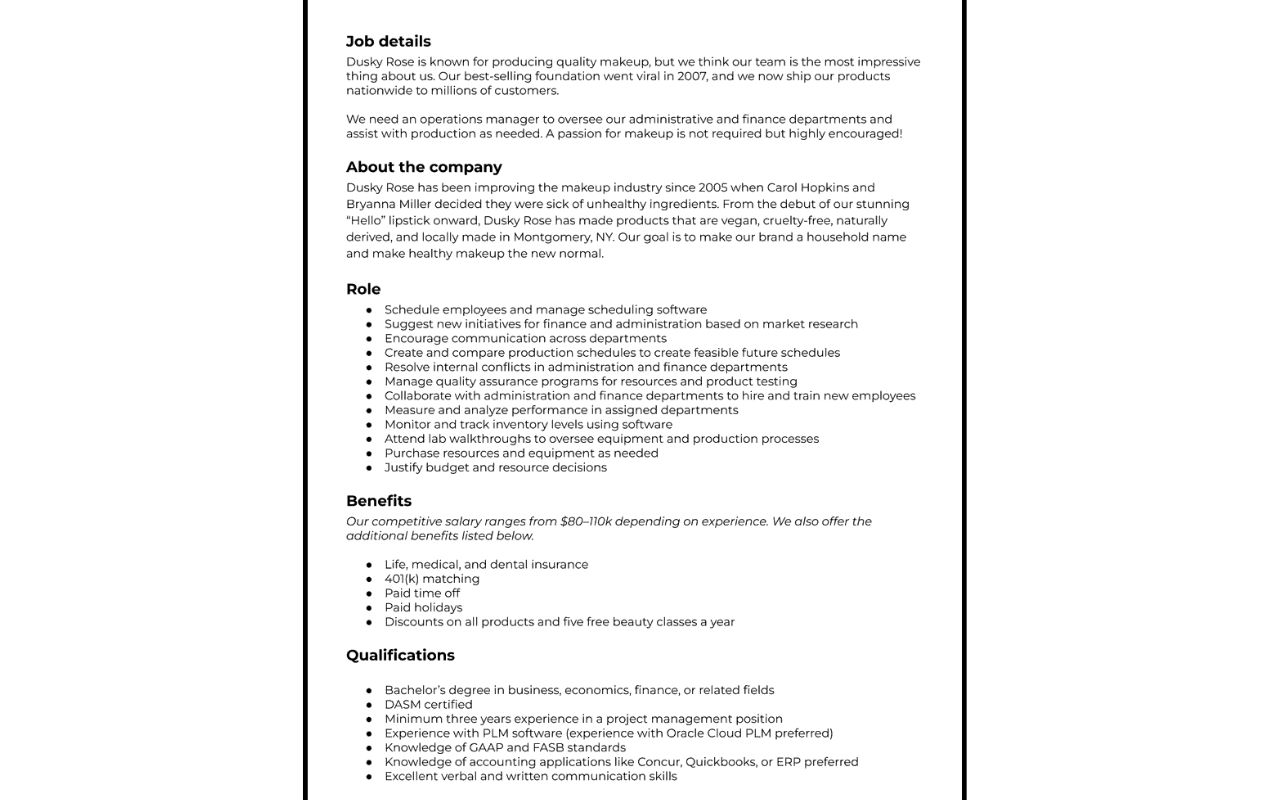
Source: beamjobs.com
Template 2

Source: .business-in-a-box
Tips to Crack Operations Manager Interview
Prepare thoroughly and present yourself as a confident, capable leader by following these practical tips:
- Understand the Role: Research the company and its operational needs. Familiarize yourself with the responsibilities of the role and align your answers accordingly.
- Highlight Relevant Experience: Emphasize your experience in managing teams, processes, and budgets. Share specific examples of how you solved challenges and improved operations. The operations manager job description resume should also explain it in detail.
- Showcase Leadership Skills: Demonstrate your ability to lead and motivate teams. Use examples of successful leadership during projects or crisis situations.
- Be Data-Driven: Highlight your proficiency with analytics and metrics. Explain how you’ve used data to make decisions or improve efficiency in past roles.
- Discuss Process Improvements: Share examples of processes you’ve optimized. Mention cost savings, efficiency gains, or other measurable outcomes. When you are applying for a job having a senior operations manager job description, it us critical to highlight it.
- Prepare for Behavioral Questions: Practice responses to questions about conflict resolution, team management, and problem-solving. Use the STAR (Situation, Task, Action, Result) method for clarity.
- Demonstrate Technical Skills: Showcase your expertise in relevant software, tools, and methodologies like ERP systems or Lean principles. It is even more important when you are applying for a job with a junior operations manager job description.
- Ask Insightful Questions: Prepare thoughtful questions about the company’s goals and challenges. This shows genuine interest and strategic thinking.
- Practice Confidence and Clarity: Communicate clearly and confidently. Maintain a professional demeanor and strong body language.
- Follow Up: Send a thank-you email highlighting your enthusiasm for the role. Reiterate your fit for the position.
To Sum up
Any business's efficiency, production, quality, and customer happiness are all impacted by operations management. Comprehending the fundamentals of operations administration can assist managers in streamlining procedures and accomplishing corporate goals. Businesses can achieve improved operations and success by concentrating on the needs of their consumers, consistently improving procedures, and efficiently managing resources. The foundation for expansion, creativity, and sustained success in an organization is laid by operations managers.
In today's constantly shifting economic environment, the majority of businesses face a number of difficulties in their daily operations. As a result, a company without an operations manager will inevitably find it difficult to maintain efficient and effective operations.
Frequently Asked Questions (FAQs)
1. Is operations manager a high position?
In most organizational hierarchies, an operations manager is not usually regarded as a top-level manager. They frequently hold middle management roles. They are in charge of managing particular departments or operational tasks inside a company.
2. What are the duties of an operations manager?
The operation manager task and responsibilities include:
- Oversee daily operations to ensure efficiency.
- Manage budgets and control costs.
- Optimize processes and workflows.
- Lead and train teams.
- Ensure compliance with regulations.
3. What is the role of operation management?
The field of operations management is concerned with managing business procedures to optimize an organization's efficiency. It entails organizing, planning, and managing the company's operations. It maximizes operating profit while balancing expenses and revenues.
4. What is the main goal of operations management?
Operations management aims to maximize the organization's efforts, primarily in the areas of infrastructure and supply chain management and the production of goods and/or services. The emphasis is on resource allocation, cost reduction, and profitability maximization.
5. What is the next position after operations manager?
A Director of Operations position, which involves strategic planning and high-level decision-making, might be the next progression. They might eventually rise to leadership roles such as Chief Operating Officer or Vice President of Operations. In these roles, they direct and influence the operational policies and objectives of the company.
454 articles published
Kevin D. Davis is a seasoned and results-driven Program/Project Management Professional with a Master's Certificate in Advanced Project Management. With expertise in leading multi-million dollar proje...
Get Free Consultation
By submitting, I accept the T&C and
Privacy Policy