
Top 15 Important Applications of Cybersecurity in 2026
Updated on Feb 04, 2026 | 10 min read | 31.63K+ views
Share:
Table of Contents
View all
A growing amount of information is becoming digital and accessible through wireless and wired digital communication networks in addition to the pervasive internet. One of the primary reasons is the rapidly changing technological landscape and the fact that software adoption is steadily rising across numerous industries. Since cybercriminals value all extremely sensitive information greatly, it is crucial to safeguard it using robust applications of cybersecurity.
Cybersecurity is defending sensitive data and important systems from online threats. Cybersecurity measures, sometimes referred to as information technology (IT) security, are intended as counterattacks to threats, whether they come from inside or outside of an organization. Several organizations ensure their employees undergo training for the same.
Although the Cybersecurity course duration may vary, employees get an opportunity to build expertise in the subject and reduce cyberattack possibilities.
Master the Right Skills & Boost Your Career
Avail your free 1:1 mentorship session
Top 15 Important Applications of Cyber Security
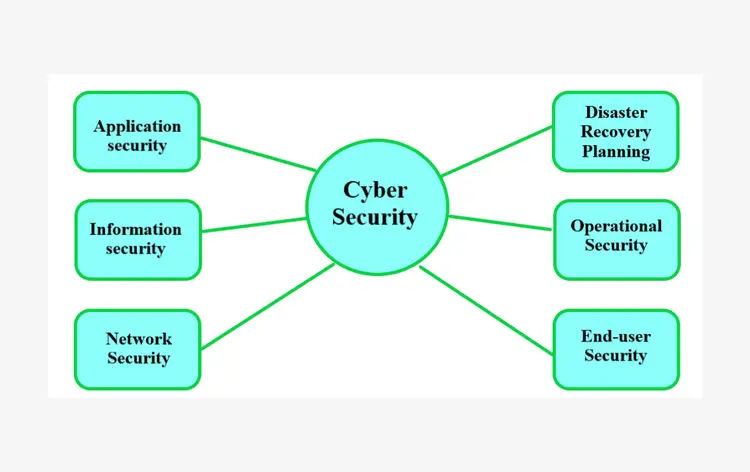
Cybersecurity threats change over time, and it is important for organizations to counter these threats. Intruders adjust by creating new tools and tactics to undermine security when new protections are developed to counter more recent attacks. Your organization's cybersecurity is only as strong as its weakest link. To safeguard your data and systems, it's crucial to have a collection of cybersecurity tools and techniques at your disposal. Below are a few important applications of cybersecurity -
nwkings
1. Network Security Surveillance
Continuous network monitoring is the practice of looking for indications of harmful or intrusive behavior. It is often used in conjunction with other security tools like firewalls, antivirus software, and IDPs. Monitoring for network security may be done manually or automatically using the software.
2. Identification And Access Control (IAM)
The management has control over which individual can access which sections of the data. Usually, the management regulates who has access to data, networks, and computer systems. Here is where cybersecurity comes into the picture by identifying users and executing an access control. Various cyber security applications ensure IAM across an organization. IAM may be implemented in both software and hardware, and it often makes use of role-based access control (RBAC) to limit access to certain system components.
Managers can manage who has access to what, when they can access it, and for how long, thanks to solution providers like Okta.
3. Software Security
Applications that are crucial to company operations are protected by application security. It contains controls like code signing and application whitelisting and may assist unify your security rules with things like file-sharing rights and multi-factor authentication. With the application of AI in cyber security, software security is bound to increase.
4. Risk Management
Risk management, data integrity, security awareness training, and risk analysis are all covered by cyber security. The evaluation of risks and the control of the harm that may be done as a result of these risks are important components of risk management. The security of sensitive information is another issue covered by data security.
5. Planning for disaster recovery and business continuity
Data recovery enables organizations to continue working in the event of data loss, assaults, or calamities. By regularly data backup and spending money on a system that will enable corporate activities to continue, this application offers models or techniques that may help firms manage with severe data loss. Thus, this application of cybersecurity ensures business continuity.
6. Physical Security
System locks, intrusion detection systems, alarms, surveillance systems, and data-destruction systems are a few examples of physical security measures. These allow organizations to secure their IT infrastructure.
7. Compliance And Investigations
Cybersecurity is helpful during the examination of suspicious situations. Additionally, it helps to upkeep and adhere to regulations.
8. Security During Software Development
The software aids in detecting software flaws when they are being developed and ensuring that regulations and standards are followed. Cybersecurity tools thoroughly test, scan, and analyze the software to identify any bugs, openings, or weaknesses that hackers or competing businesses might exploit.
9. Security Against DDoS
Cybersecurity aids in providing a mitigation solution to deal with DDoS. It redirects traffic to other cloud-based servers and resolves the issue.
10. Protecting Critical Systems
Cybersecurity aids in preventing assaults on huge servers linked to wide-area networks. It upholds industry-standard, strict safety standards for users to abide by cybersecurity precautions to secure the devices. It keeps track of all apps in real time and routinely evaluates the network security, servers, and users themselves.
11. Securing AI Systems and Applications
Securing AI systems and applications is critical as these technologies become increasingly integrated into various aspects of our digital era. AI systems, due to their complexity and the good amounts of data they process, are vulnerable to a various security threats, including data breaches, model tampering, and adversarial attacks. Making it sure the security of AI involves implementing strong encryption methods, regular vulnerability assessments, and developing resilient models that can withstand malicious inputs. Additionally, ethical considerations, such as ensuring transparency and fairness in AI algorithms, plays crucial role in building trust and reliability in AI applications.
12. Threat Intelligence
The process of collecting and analyzing data on possible risks is known as threat intelligence. Organizations may better plan and respond by understanding possible cyber risks, due to this preventive strategy. Organizations can predict attacks and put measures aside to reduce risks, such as upgrading security procedures and educating employees about new dangers, by using threat information.
13. Endpoint Security
Endpoint security focuses on securing individual devices such as computers, mobile phones, and tablets that connect to a network. This includes implementing measures like encryption, access controls, and regular software updates to protect against unauthorized access and malware. A good endpoint security ensures that each device has a strong barrier against potential cyber threats and preventing them from compromising the entire network.
14. Bots
Bots can be both a tool for efficiency and a vector for cyber attacks. Security applications monitor and manage bot traffic to distinguish between legitimate bots, like search engine crawlers, and malicious ones that attempt to breach security defenses. Implementing bot management solutions helps prevent automated attacks such as credential stuffing and denial-of-service (DoS) attacks, ensuring the integrity and availability of web services.
15. Antivirus and Anti-malware
The key components of cybersecurity are antivirus and anti-malware programs, that are necessary to protect systems against various of harmful software. To identify and eliminate threats, these technologies use a variety of detection methods. With signature-based detection, known threats are quickly detected and blocked by comparing files to a database of known malware signatures. But as malware gets more advanced, heuristic analysis becomes important. This approach protects against newly discovered malware variants by analyzing the behavior and structure of unknown files in search of suspicious features that point to possible dangers.
Behavioral monitoring is another critical feature of modern antivirus and anti-malware solutions. By continuously observing the actions of applications and processes, these tools can detect and respond to malicious behavior in real-time, stopping threats before they can cause significant damage. This proactive approach is vital for defending against sophisticated attacks like ransomware, which can encrypt data and demand a ransom for its release.
Benefits of Cybersecurity
There are several advantages of using cybersecurity. Below are a few of them-
| Benefits | Description |
| Safeguards The Reputation Of Your Company | Data breaches often damage your company's image. Every business in the market is vying for the client's confidence above all else. Hence, a significant data leak might reduce the client's faith in you. Building a safe system and taking all necessary steps are essential for preventing such disastrous incidents. Cyber security applications enable you to handle authentication using network security and cloud security technologies. Individuals pursuing the best Ethical Hacking course online will develop the skill to identify loopholes in the system and safeguard their company's data. |
| Shields Personal Information | Personal information is one of the most critical assets in the digital era. A cyber security app makes it difficult for a virus to extract or corrupt information within the system. |
| Enables Workers To Do So Securely | Every organization's staff is continuously at risk of a possible cyber-attack if the company doesn't have the best cybersecurity apps. |
| Facilitates Remote Work | The gig economy and remote workers now require businesses to join Zoom conversations and sync all of their processes and data. In such a scenario, cybersecurity tools and effective IT support options can safeguard your home WiFi and block hackers from monitoring or tracking the data of your employees. It functions as a centralized system that effectively secures your data. |
| Improved Data Management | Businesses with streamlined cyber security may simplify and modify any information, from sensitive customer data to individual employee data. The applications improve privacy, and operational effectiveness may be increased. Across the KnowledgeHut Cyber Security course duration, the professionals will be able to understand the application of cyber security in real life and how to utilize cybersecurity software for data management. For the next step, check out our guide on how to get into Cyber Security here. |
Different Types of Cyber Security Threats
Three types of attacks countered by cyber security are:
- Cybercrime comprises lone individuals or organizations that attack systems for harm or financial advantage.
- Information collection for political purposes is a common component of cyberattacks.
- Cyberterrorism aims to compromise electronic systems to elicit fear or panic.
Below are some of the most common cybersecurity threats -
- Viruses
- DDoS
- Malware
- Worms
- Trojan
- Phishing
- Social engineering
- Ransomware
- SQL Injection
Why Do Businesses Need Cybersecurity?
The recent high-profile security breaches of companies like Equifax, Yahoo, and the U.S. The Securities and Exchange Commission (SEC), which lost extremely sensitive user data and suffered irreparable damage to its finances and reputation, indicates the alarming need for sound cyber security strategies. Hence, it is integral to ensure your company has the necessary cybersecurity tools and techniques in place.
An IBM estimate from 2021 shows that cybercrimes cost firms $4.24 million on average. By 2025, it is predicted that cybercrime will cost $10.5 trillion annually.
Many businesses overlook the need for cyber security and become targets of attacks. Because they don't consider them required expenditures, so they don't even adopt the most fundamental security measures.
In contrast, many firms throughout the globe that are aware of their cyber defense have employed technology to leverage quickly expanding technological standards to become more resistant than ever.
Looking to boost your career? Get ITIL certification training and unlock endless opportunities. Upgrade your skills and become an ITIL expert. Join now!
Final Thoughts
The fight against cybersecurity is never-ending. Soon, there won't be a conclusive answer to the issue. The complexity of IT systems, the intrinsic nature of information technology (IT), and human fallibility in forming judgments about what activities and information are safe or hazardous from a cybersecurity viewpoint are the primary causes of cybersecurity challenges.
There are no magic solutions or even combinations of solutions (cybersecurity applications) that will "fix the issue" permanently since none of these variables is anticipated to alter shortly.
Innovation creates new IT applications. However, it also creates new opportunities for criminals, terrorists, and other adversaries to operate. As a result, improving a system's cybersecurity posture must be seen as a continuous effort rather than something that can be completed once and then ignored.
Frequently Asked Questions (FAQs)
1. What are the five benefits of using Cybersecurity Applications?
There are several advantages to using cybersecurity applications. Below are a few of them:
- Safeguards the reputation of your company
- Shields Personal Information
- Enables workers to do so securely
- Facilitates Remote Work
- Improved Data Management
2. What are examples of cyber security?
Network security examples include firewalls that prevent illegal access to a network and antivirus. Antispyware software and VPNs (Virtual Private Networks) are other examples used for secure remote access.
3. What is an application security example?
Hardware, software, and processes that detect or reduce security vulnerabilities fall under application security. For example, hardware application security is a feature of routers that blocks Internet users from reading a computer's IP address.
4. How does cyber security work?
All of the computers, networks, and software that a corporation uses are protected by various levels of cybersecurity. The company, its people, its processes, and its technology must all be intended to operate in unison to provide a united defense against prospective cyberattacks.
When cybersecurity systems are working effectively, they can identify, look into, and fix any systemic flaws or vulnerabilities before a hacker or malicious software can take advantage of them.
5. Which app is best for cyber security?
The market has several applications for cyber security. Avast is one of the best cybersecurity apps for securing your device from viruses and other dangers. An effective free antivirus called Avast will alert you when malware and adware have been installed and are invading your privacy.
212 articles published
Vitesh Sharma, a distinguished Cyber Security expert with a wealth of experience exceeding 6 years in the Telecom & Networking Industry. Armed with a CCIE and CISA certification, Vitesh possesses expe...
Get Free Consultation
By submitting, I accept the T&C and
Privacy Policy