
- Blog Categories
- Project Management
- Agile Management
- IT Service Management
- Cloud Computing
- Business Management
- BI And Visualisation
- Quality Management
- Cyber Security
- DevOps
- Most Popular Blogs
- PMP Exam Schedule for 2025: Check PMP Exam Date
- Top 60+ PMP Exam Questions and Answers for 2025
- PMP Cheat Sheet and PMP Formulas To Use in 2025
- What is PMP Process? A Complete List of 49 Processes of PMP
- Top 15+ Project Management Case Studies with Examples 2025
- Top Picks by Authors
- Top 170 Project Management Research Topics
- What is Effective Communication: Definition
- How to Create a Project Plan in Excel in 2025?
- PMP Certification Exam Eligibility in 2025 [A Complete Checklist]
- PMP Certification Fees - All Aspects of PMP Certification Fee
- Most Popular Blogs
- CSM vs PSM: Which Certification to Choose in 2025?
- How Much Does Scrum Master Certification Cost in 2025?
- CSPO vs PSPO Certification: What to Choose in 2025?
- 8 Best Scrum Master Certifications to Pursue in 2025
- Safe Agilist Exam: A Complete Study Guide 2025
- Top Picks by Authors
- SAFe vs Agile: Difference Between Scaled Agile and Agile
- Top 21 Scrum Best Practices for Efficient Agile Workflow
- 30 User Story Examples and Templates to Use in 2025
- State of Agile: Things You Need to Know
- Top 24 Career Benefits of a Certifed Scrum Master
- Most Popular Blogs
- ITIL Certification Cost in 2025 [Exam Fee & Other Expenses]
- Top 17 Required Skills for System Administrator in 2025
- How Effective Is Itil Certification for a Job Switch?
- IT Service Management (ITSM) Role and Responsibilities
- Top 25 Service Based Companies in India in 2025
- Top Picks by Authors
- What is Escalation Matrix & How Does It Work? [Types, Process]
- ITIL Service Operation: Phases, Functions, Best Practices
- 10 Best Facility Management Software in 2025
- What is Service Request Management in ITIL? Example, Steps, Tips
- An Introduction To ITIL® Exam
- Most Popular Blogs
- A Complete AWS Cheat Sheet: Important Topics Covered
- Top AWS Solution Architect Projects in 2025
- 15 Best Azure Certifications 2025: Which one to Choose?
- Top 22 Cloud Computing Project Ideas in 2025 [Source Code]
- How to Become an Azure Data Engineer? 2025 Roadmap
- Top Picks by Authors
- Top 40 IoT Project Ideas and Topics in 2025 [Source Code]
- The Future of AWS: Top Trends & Predictions in 2025
- AWS Solutions Architect vs AWS Developer [Key Differences]
- Top 20 Azure Data Engineering Projects in 2025 [Source Code]
- 25 Best Cloud Computing Tools in 2025
- Most Popular Blogs
- Company Analysis Report: Examples, Templates, Components
- 400 Trending Business Management Research Topics
- Business Analysis Body of Knowledge (BABOK): Guide
- ECBA Certification: Is it Worth it?
- Top Picks by Authors
- Top 20 Business Analytics Project in 2025 [With Source Code]
- ECBA Certification Cost Across Countries
- Top 9 Free Business Requirements Document (BRD) Templates
- Business Analyst Job Description in 2025 [Key Responsibility]
- Business Analysis Framework: Elements, Process, Techniques
- Most Popular Blogs
- Best Career options after BA [2025]
- Top Career Options after BCom to Know in 2025
- Top 10 Power Bi Books of 2025 [Beginners to Experienced]
- Power BI Skills in Demand: How to Stand Out in the Job Market
- Top 15 Power BI Project Ideas
- Top Picks by Authors
- 10 Limitations of Power BI: You Must Know in 2025
- Top 45 Career Options After BBA in 2025 [With Salary]
- Top Power BI Dashboard Templates of 2025
- What is Power BI Used For - Practical Applications Of Power BI
- SSRS Vs Power BI - What are the Key Differences?
- Most Popular Blogs
- Data Collection Plan For Six Sigma: How to Create One?
- Quality Engineer Resume for 2025 [Examples + Tips]
- 20 Best Quality Management Certifications That Pay Well in 2025
- Six Sigma in Operations Management [A Brief Introduction]
- Top Picks by Authors
- Six Sigma Green Belt vs PMP: What's the Difference
- Quality Management: Definition, Importance, Components
- Adding Green Belt Certifications to Your Resume
- Six Sigma Green Belt in Healthcare: Concepts, Benefits and Examples
- Most Popular Blogs
- Latest CISSP Exam Dumps of 2025 [Free CISSP Dumps]
- CISSP vs Security+ Certifications: Which is Best in 2025?
- Best CISSP Study Guides for 2025 + CISSP Study Plan
- How to Become an Ethical Hacker in 2025?
- Top Picks by Authors
- CISSP vs Master's Degree: Which One to Choose in 2025?
- CISSP Endorsement Process: Requirements & Example
- OSCP vs CISSP | Top Cybersecurity Certifications
- How to Pass the CISSP Exam on Your 1st Attempt in 2025?
- Most Popular Blogs
- Top 7 Kubernetes Certifications in 2025
- Kubernetes Pods: Types, Examples, Best Practices
- DevOps Methodologies: Practices & Principles
- Docker Image Commands
- Top Picks by Authors
- Best DevOps Certifications in 2025
- 20 Best Automation Tools for DevOps
- Top 20 DevOps Projects of 2025
- OS for Docker: Features, Factors and Tips
- More
- Agile & PMP Practice Tests
- Agile Testing
- Agile Scrum Practice Exam
- CAPM Practice Test
- PRINCE2 Foundation Exam
- PMP Practice Exam
- Cloud Related Practice Test
- Azure Infrastructure Solutions
- AWS Solutions Architect
- IT Related Pratice Test
- ITIL Practice Test
- Devops Practice Test
- TOGAF® Practice Test
- Other Practice Test
- Oracle Primavera P6 V8
- MS Project Practice Test
- Project Management & Agile
- Project Management Interview Questions
- Release Train Engineer Interview Questions
- Agile Coach Interview Questions
- Scrum Interview Questions
- IT Project Manager Interview Questions
- Cloud & Data
- Azure Databricks Interview Questions
- AWS architect Interview Questions
- Cloud Computing Interview Questions
- AWS Interview Questions
- Kubernetes Interview Questions
- Web Development
- CSS3 Free Course with Certificates
- Basics of Spring Core and MVC
- Javascript Free Course with Certificate
- React Free Course with Certificate
- Node JS Free Certification Course
- Data Science
- Python Machine Learning Course
- Python for Data Science Free Course
- NLP Free Course with Certificate
- Data Analysis Using SQL
- Home
- Blog
- It Service Management
- ITSM Integration: Meaning, Types, Benefits & Examples
ITSM Integration: Meaning, Types, Benefits & Examples
Updated on Nov 18, 2025 | 1.62K+ views
Share:
Table of Contents
View all
Even the most sophisticated IT teams can find themselves hamstrung by fragmented systems. A monitoring tool detects an outage - but the ticket never reaches the right engineer. Change approvals are delayed because configuration data is outdated. These inefficiencies all point to a common root cause - disconnected IT Service Management (ITSM) ecosystems.
ITSM integration solves this by connecting the dots - linking service, infrastructure, and automation platforms into a cohesive operational framework. It’s how enterprises scale responsiveness, eliminate silos, and build the foundation for reliable digital services. In this post, we’ll break down what ITSM integration means, why it’s vital, the key types, and how industry leaders are using it to gain a competitive edge.
Master the Right Skills & Boost Your Career
Avail your free 1:1 mentorship session
What is ITSM Integration?
At its essence, ITSM integration is the process of connecting your IT service management platform - like ServiceNow, Jira Service Management, or BMC Helix - with the other tools your IT ecosystem depends on. These connections allow - seamless data flow, automation, and visibility across the entire service lifecycle.
Integration typically happens through APIs, middleware, or native connectors - and allows different systems to communicate without manual intervention. For instance, if a monitoring tool like Splunk detects a server crash - an integration can automatically open a ServiceNow incident and alert the appropriate support team.
According to ServiceNow Docs ITSM, integrations can sync everything from incident management workflows to asset data in the CMDB (Configuration Management Database). This creates a single source of truth for IT operations.
The ultimate goal? To ensure that every tool - from ticketing systems to automation scripts - works as one ecosystem. When done right, ITSM integration doesn’t just connect software; it connects teams, processes, and decisions.
Why Integrations Matter for Modern IT Teams?
Modern IT landscapes are sprawling. Teams use dozens of specialized tools - across infrastructure, DevOps, monitoring, and collaboration. Without integration, these tools operate in isolation - and generate redundant data and slow down response times.
Disconnected systems mean:
- Incidents logged in one platform may go unnoticed in another.
- Change approvals get lost in email threads.
- Reporting becomes inconsistent, with multiple “versions of the truth.”
This is not just a technical issue - it’s a business risk. Research from EMA and Gartner consistently shows that integrated ITSM environments reduce incident resolution times by up to 40% and improve SLA compliance by more than 25%.
For IT leaders - integration is a lever for strategic agility. It allows faster feedback loops, clearer accountability, and better compliance with frameworks - like ITIL and ISO 20000. The stakes are high - every minute of downtime can cost thousands in lost productivity and revenue.
Simply, integration is not an upgrade - it’s an operational imperative.
Types of ITSM Integrations
ITSM integrations come in many forms - and each addresses a different need within the IT operations lifecycle. Below are the most common categories - and how they create value.
1. Monitoring and Alerting Integrations
Monitoring systems - like Nagios, Zabbix, Splunk, or Datadog - continuously scan infrastructure health. Alerts can automatically generate incidents with relevant metadata - which includes server name, time stamp, and root-cause hints - by integrating these with ITSM platforms.
For example - a Datadog alert about high CPU usage can instantly trigger a ServiceNow incident and notify the on-call engineer. No manual triage - no missed alerts.
This type of integration shortens the Mean Time to Detect (MTTD) and Mean Time to Resolve (MTTR) - and allows IT teams to act before users even notice an outage.
2. Configuration Management and CMDB Integrations
A Configuration Management Database (CMDB) is only as valuable as the data it holds. By integrating your ITSM system with discovery tools or infrastructure-as-code platforms - it keeps this data accurate.
When assets or configurations change - say, a new virtual machine is deployed or a patch is applied - integrations update the CMDB automatically. This makes sure incident and change workflows always reference current configuration data - and improves auditability and reduces risk.
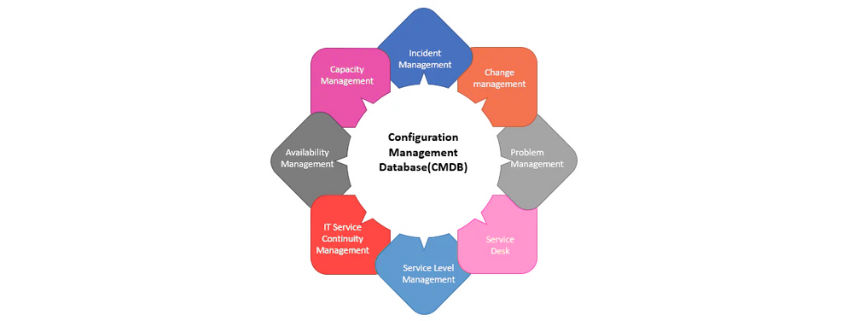
Source: ITSM Docs
3. DevOps and CI/CD Integrations
As DevOps practices mature - integrating ITSM with CI/CD tools has become crucial. Consider the Ansible–ServiceNow ITSM integration. This setup allows Ansible playbooks to communicate with ServiceNow, and creates or updates tickets - when automated deployments occur.
The result - smoother handoffs between development and operations, better traceability for changes, and reduced deployment friction.
Similarly - integrating with Jenkins or GitLab CI/CD pipelines makes sure every build or deployment event is logged in the ITSM system. This maintains compliance - while preserving DevOps velocity.
4. Collaboration and Communication Tool Integrations
Tools like Slack, Microsoft Teams, and Zoom have become the backbone of IT communication. Teams receive ticket updates, status changes, and alerts directly in their workspace - when these are linked with ITSM platforms.
For example, a Teams integration can notify the incident response channel when a high-priority ticket is created - which allows instant collaboration. These integrations bring ITSM processes into the tools people already use - and increases adoption while reducing response latency.
5. Identity and Access Management (IAM) Integrations
By integrating IAM systems - like Okta or Azure Active Directory with ITSM - organizations can automate access requests, approvals, and deprovisioning.
When an employee joins, changes roles, or leaves - integrations can make sure user access rights are updated automatically. This not only enhances security - but also supports compliance with regulations like GDPR and SOX.
Implementation Considerations
When choosing an integration strategy - IT teams should evaluate:
- Integration approach: Direct API vs. middleware (like MuleSoft, Boomi, or Zapier for enterprise-grade connections).
- Security and permissions: API tokens, data encryption - and role-based access controls.
- Data governance: To make sure synchronized data doesn’t create duplicate or inconsistent records.
Robust documentation - such as that in ServiceNow Docs ITSM - is invaluable when setting up or maintaining these integrations.
Benefits of ITSM Integration
1. Unified Visibility
An integrated ITSM environment provides a single-pane-of-glass view - across infrastructure, applications, and support operations. This visibility helps IT leaders monitor service health, asset status, and incident trends - in real time.
2. Process Efficiency
Automated workflows reduce repetitive manual tasks - like ticket logging or approval routing. Analysts can focus on problem-solving - rather than administrative overhead.
3. Data Integrity
Integrations make sure data consistency between systems. When monitoring data, asset information, and incident logs all align - root-cause analysis becomes faster and more accurate.
4. Decision Intelligence
IT leaders can analyze patterns, forecast incidents, and make proactive infrastructure investments - by consolidating metrics from multiple systems.
For instance, integrated analytics can reveal recurring configuration issues tied to specific assets - insight that would remain hidden in siloed data.
5. Compliance and Audit Readiness
Automation creates traceable logs of changes, incidents, and approvals. This simplifies audits and supports adherence to governance standards, whether ITIL, ISO, or internal policy frameworks.
Collectively, these benefits translate into higher productivity, lower operational cost, and improved customer satisfaction - three metrics that define ITSM success.
Examples of ITSM Integration
Example 1: Ansible–ServiceNow ITSM Integration
A global enterprise managing hybrid cloud infrastructure - integrated Ansible automation with ServiceNow ITSM. When a deployment occurs, Ansible triggers automatic change requests in ServiceNow - which then routes approvals and logs the event in the CMDB.
This eliminated manual ticket creation, cut approval time by 60% - and made sure every change was tracked end-to-end.
The integration was guided by resources similar to ServiceNow Docs ITSM, which outline API endpoints and webhook structures for automation workflows.
Example 2: Monitoring Tool + ServiceNow Integration
A financial services firm connected Datadog alerts to ServiceNow incidents. Each critical alert automatically opened a ticket containing detailed telemetry data - and drastically reduced diagnostic time.
The company reported a 35% reduction in MTTR and achieved proactive monitoring of customer-facing systems - crucial in a high-availability environment.
Example 3: Jira + ITSM Integration
In many agile organizations, development and support teams use different systems - Jira for development and an ITSM tool for incident management. Integrating these platforms bridges the gap.
When a bug report ticket is escalated from ITSM to Jira, developers can fix the issue without losing context - while ITSM automatically updates the incident once the resolution is deployed.
The result: improved communication, traceability, and customer satisfaction.
These examples show that ITSM integration is not one-size-fits-all. Each enterprise tailors its setup based on architecture, governance, and maturity. What’s constant is the outcome - fewer silos, faster service restoration, and a stronger alignment between IT and business.
Final Thoughts
In an era defined by complex, distributed IT environments, ITSM integration isn’t just a technical enhancement - it’s a business enabler. Integrations make sure that every system, workflow, and team member works in sync toward a single goal - resilient and efficient service delivery.
For professionals looking to lead ITSM transformation initiatives - mastering integration frameworks and ITIL principles is the next step. If you're ready to dive deeper - explore upGrad KnowledgeHut’s ITIL Certification and ITSM Certification to advance your career. These certifications go beyond theory, offering practical insights into how integrated ITSM ecosystems drive organizational agility and service excellence.
Frequently Asked Questions (FAQs)
1. What are the 5 stages of ITSM?
The five stages of ITSM, aligned with the ITIL framework, are: Service Strategy, Service Design, Service Transition, Service Operation, and Continual Service Improvement. Together, they guide the full lifecycle of IT service delivery.
2. Is ITSM the same as ServiceNow?
No. ITSM (IT Service Management) is the practice or framework for managing IT services, while ServiceNow is a software platform that helps implement and automate ITSM processes.
3. What are the 4 dimensions of ITSM?
According to ITIL 4, the four dimensions of ITSM are: Organizations and People, Information and Technology, Partners and Suppliers, and Value Streams and Processes. These ensure a holistic, balanced approach to service management.
4. What are the three types of system integration?
The main types are data integration (sharing information between systems), application integration (linking business apps for workflows), and process integration (automating multi-system operations).
5. What are ITSM metrics?
ITSM metrics are key performance indicators (KPIs) that measure service efficiency - such as incident resolution time, change success rate, SLA compliance, and customer satisfaction - to evaluate IT service performance.
1639 articles published
KnowledgeHut is an outcome-focused global ed-tech company. We help organizations and professionals unlock excellence through skills development. We offer training solutions under the people and proces...
Get Free Consultation
By submitting, I accept the T&C and
Privacy Policy
Ready to fast-track your ITSM career?