
- Home
- Blog
- Cloud Computing
- Data Lakes vs Data Warehouses: Which One to Choose?
Data Lakes vs Data Warehouses: Which One to Choose?
Updated on Nov 18, 2025 | 1k+ views
Share:
Table of Contents
View all
Every organization today collects more data than it knows what to do with. The challenge isn’t to gather information - it’s to turn that information into insight. Understanding the difference between data lake and data warehouse helps teams choose the right system for analytics, AI, and long-term data management. Both are pillars of a modern data strategy - but they serve very different purposes. A data lake stores raw, varied data in one place - so teams can experiment and discover new patterns.
A data warehouse stores cleaned, structured data ready for analysis and decision-making. The real skill lies in knowing which one to rely on, and when, so your business can spend less time sorting through data and more time acting on what truly matters.
Understanding these systems is a crucial step for anyone pursuing Cloud Computing Courses or looking to build a career in data-driven architecture.
Master the Right Skills & Boost Your Career
Avail your free 1:1 mentorship session
What is Data Lake?
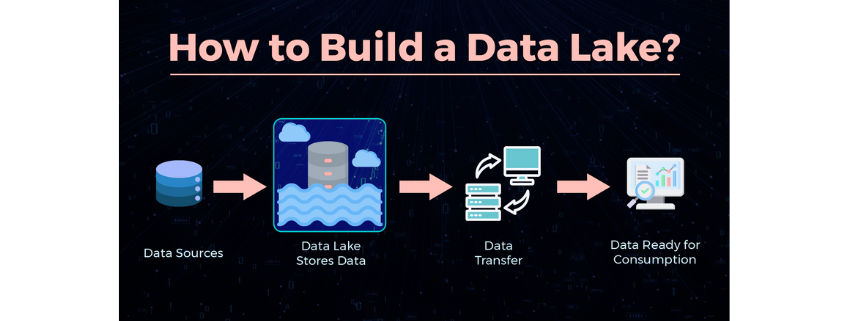
A data lake functions as a vast digital pool - where organizations can dump data in its raw and native form. That's to say - structured, semi-structured, or completely unstructured - without worrying about immediate organization. Information from sensors, logs, social media feeds, and enterprise systems all flow into one low-cost, scalable storage system - like Amazon S3, Azure Data Lake Storage, or Hadoop. Professionals aiming to deepen their AWS expertise often prepare for certifications like the AWS Certified Solutions Architect. Associate, which builds the skills needed to design secure, scalable, and cost-efficient data solutions.
This architecture offers incredible flexibility for data scientists - who need to experiment freely, running exploratory analytics or training machine-learning models on unprocessed data. However - the very freedom that makes a data lake appealing can also make it risky. Without proper governance, cataloging, and access controls - the repository can quickly devolve into a confusing, unmanageable “data swamp.” Effective metadata management and clear usage policies - are therefore - essential to extract meaningful, timely insights from such a vast, ever-growing data environment.
Source: ProjectPro
What is Data Warehouse?
A data warehouse - by contrast - is a highly structured storage system designed for business intelligence (BI) and reporting. Data is cleaned, transformed, and organized before entering the warehouse - a process known as ETL (Extract, Transform, Load).
This makes sure that every dataset stored inside is consistent, accurate - and ready for analysis. Platforms - like Snowflake, Amazon Redshift, Google BigQuery, and Microsoft Synapse Analytics - are popular examples.
Data warehouses are optimized for complex SQL queries and dashboards - and empower business analysts and decision-makers to derive insights quickly. While they provide reliable, governed data, they lack the flexibility of a data lake for handling raw or unstructured information.
Data Lakes vs Data Warehouses: Table of Differences
Before we deep-dive into the nuances - it helps to see how data lakes and data warehouses differ at a glance. Although both are designed to store and manage large volumes of data - their purpose, structure, and users are fundamentally distinct. The table below provides a clear side-by-side comparison, which helps you understand how each system fits into the broader data ecosystem - and when one might be preferred over the other.
Feature |
Data Lake |
Data Warehouse |
| Data Type | Structured, semi-structured, and unstructured | Structured only |
| Data Processing | Schema-on-read (data structured when accessed) | Schema-on-write (data structured before storage) |
| Purpose | Big data analytics, AI/ML, real-time processing | Business intelligence, reporting, dashboards |
| Storage Cost | Low (commodity hardware, scalable) | Higher (optimized hardware or cloud services) |
| Users | Data scientists, engineers | Business analysts, decision-makers |
| Performance | Slower for ad hoc queries | Faster for pre-defined queries |
| Technology Stack | Hadoop, Spark, AWS S3, Azure Data Lake | Snowflake, Redshift, BigQuery, Synapse |
| Data Governance | Complex, requires cataloging | Strong, due to structured design |
Data Lakes vs Data Warehouses: Detailed Differences
Data lakes and data warehouses might seem like two paths leading to the same goal - organizing and analyzing data - but they differ in philosophy, structure, and purpose. Understanding these contrasts can help professionals design smarter data strategies - and avoid costly architectural missteps.
1. Data Lakes vs Data Warehouses: Data Structure and Flexibility
A data lake is built for freedom. It stores information in its raw, unfiltered state - be it text files, logs, images, videos, or JSON objects - without enforcing a predefined structure. This makes it ideal for teams that experiment constantly - like data scientists and AI engineers who need granular, original data - to test models or spot emerging trends.
A data warehouse - in contrast - is like a well-organized library. Every piece of data is cleaned, labeled, and indexed before being shelved. This structure boosts consistency and speed - but sacrifices flexibility. When new or unconventional data types arrive - to integrate them into a warehouse often requires complex redesigns or ETL adjustments.
2. Data Lakes vs Data Warehouses: Data Ingestion and Processing
In a data lake, the approach is schema-on-read - the structure is applied only when someone accesses or queries the data. This “store now, organize later” philosophy allows rapid ingestion from multiple sources without transformation delays. It’s particularly useful for streaming or IoT data that changes formats frequently.
Data warehouses, on the other hand - operate on schema-on-write. Data must be transformed, validated, and standardized - before entering the warehouse. While this increases upfront processing time, it makes sure that all stored data follows strict integrity and formatting rules - which leads to faster, more reliable query responses later on.
3. Data Lakes vs Data Warehouses: Performance and Scalability
Performance is where data warehouses shine. They are optimized for speed, especially when handling repetitive, structured queries - like sales reports or trend dashboards. Columnar storage, indexing, and query optimization algorithms deliver near-instant responses for business analytics.
Data lakes trade some performance for scalability. Because they’re built on inexpensive, distributed storage - like Amazon S3 or Hadoop clusters - they can scale horizontally to accommodate petabytes of data. To improve performance, organizations often pair them with processing engines - like Apache Spark, Presto, or Databricks SQL - which empower efficient query execution across massive datasets.
4. Data Lakes vs Data Warehouses: Cost and Maintenance
From a cost perspective, data lakes are the economical choice for raw storage. Their use of commodity hardware or cloud object storage makes them suitable for retaining vast datasets over long periods. However, low storage costs can hide operational challenges - poorly managed lakes can become chaotic and expensive to query.
Data warehouses - by contrast, involve higher infrastructure and maintenance expenses due to ETL workflows, compute power, and storage optimization. Yet the investment pays off in reliability and performance - especially for organizations where data accuracy directly influences business decisions.
5. Data Lakes vs Data Warehouses: Use Cases
Each system serves a distinct audience.
Data Lakes: Suited for advanced analytics, predictive modeling, and data discovery. Typical users include data engineers and AI researchers - working with raw, diverse datasets.
Data Warehouses: Perfect to get structured reports, track performance, and business intelligence dashboards - where data consistency is non-negotiable.
6. Data Warehouse vs Data Lake: Governance and Security
Governance in data lakes can be tricky. Since the data is raw and diverse, enforcing access control, lineage tracking, and compliance requires additional tools like AWS Glue, Apache Atlas, or Azure Data Catalog. Without them, it’s easy for a lake to turn into a “data swamp.”
Data warehouses, on the other hand, inherently support strong governance. Role-based access control, encryption, auditing, and data masking are standard features - which make them suitable for industries with strict compliance needs such as finance or healthcare.
7. Data Warehouse vs Data Lake: Emerging Middle Ground: The Data Lakehouse
Recently - a hybrid model called the data lakehouse has emerged - aiming to merge the best of both systems. It combines the low-cost, scalable architecture of a lake with the transactional reliability of a warehouse. Platforms such as Databricks Lakehouse and Snowflake’s Unistore exemplify this evolution, offering unified environments where raw and structured data coexist, enabling real-time analytics without redundant data movement.
What Should You Choose Between Data Lakes and Data Warehouses?
Selecting the right data architecture isn’t about which technology is newer. It’s about what aligns with your organization’s priorities and data ambitions. Companies that experiment with machine learning models, streaming analytics, or unstructured data - typically gain more value from a data lake. Its open, schema-agnostic design welcomes information in every form and volume - which gives data teams the creative freedom to explore trends, train algorithms, and generate unconventional insights.
Conversely, a data warehouse provides the rigor you need - if your success depends on accurate reports, standardized metrics, and regulatory compliance. Its structured environment makes sure there's consistency - which makes it indispensable for departments like finance, operations, or business strategy.
In reality - few enterprises rely solely on one system. Many adopt a hybrid or lakehouse model - where the data lake captures raw inputs while the warehouse delivers curated, analysis-ready outputs. This blended approach fuses the scalability of a lake with the precision of a warehouse, offering both experimentation and reliability within a unified analytics ecosystem.
Final Thoughts
In today’s data-driven world, both data lakes and data warehouses are indispensable. They represent two sides of the same analytics coin - one built for exploration, the other for execution. As businesses move toward cloud-native architectures and lakehouse models - the boundary between the two continues to blur.
If you’re ready to master these technologies and transform how organizations handle data, explore upGrad KnowledgeHut’s Cloud Computing courses. Learn from experts who’ve built scalable data solutions for enterprises worldwide and prepare to lead in the era of intelligent data management.
Frequently Asked Questions (FAQs)
1. What is a data warehouse in ETL?
In ETL (Extract, Transform, Load), a data warehouse is the final storage system where cleaned and transformed data is loaded for analysis and reporting. It serves as a centralized repository that integrates data from multiple sources to support business intelligence and decision-making.
2. Is SQL a data warehouse?
No, SQL (Structured Query Language) is not a data warehouse - it’s a programming language used to manage and query data within databases or data warehouses like Snowflake, Redshift, or BigQuery.
3. What are the disadvantages of a data warehouse?
Data warehouses can be expensive to build and maintain, require complex ETL processes, and may lack flexibility in handling unstructured or rapidly changing data formats. They’re best suited for stable, structured data environments.
4. What are the 5 main data types in databases?
The five primary data types commonly used in databases are integer (numbers), float (decimals), text/string (characters), date/time, and boolean (true/false) - each serving distinct purposes in data storage and querying.
1639 articles published
KnowledgeHut is an outcome-focused global ed-tech company. We help organizations and professionals unlock excellence through skills development. We offer training solutions under the people and proces...
Get Free Consultation
By submitting, I accept the T&C and
Privacy Policy