
- Home
- Blog
- It Service Management
- IT Asset Lifecycle Management: Stages, Benefits & Best Practices
IT Asset Lifecycle Management: Stages, Benefits & Best Practices
Updated on Nov 18, 2025 | 1.69K+ views
Share:
Table of Contents
View all
- What is IT Asset Lifecycle Management?
- Why IT Asset Lifecycle Management Matters Today?
- Why is IT Asset Lifecycle Management Important?
- Stages of the IT Asset Lifecycle Management
- Benefits of IT Asset Lifecycle Management
- IT Asset Lifecycle Management Best Practices
- IT Asset Lifecycle Management Use Cases
- Final Thoughts
In today’s hyper-connected enterprise - IT assets don’t only support the business. They run it. From laptops and servers to cloud subscriptions and network gear - every asset has a lifecycle that determines its cost, reliability, risk exposure, and long-term value. Yet in many organizations, asset management is still treated like housekeeping instead of a strategic discipline.
That’s where IT Asset Lifecycle Management (ITALM) comes in. A strong ITALM framework helps you control your asset environment end-to-end - reducing waste, tightening compliance, preventing downtime, and strengthening financial accountability.
Whether you're an ITSM leader, a project manager, or part of an ops team trying to streamline chaos - to master ITALM is no longer optional. It’s the backbone of efficient, secure, and predictable IT operations.
Master the Right Skills & Boost Your Career
Avail your free 1:1 mentorship session
What is IT Asset Lifecycle Management?
IT Asset Lifecycle Management (ITALM) is the structured process of how to strategically tackle and manage IT assets - from acquisition to retirement - to maximize value and minimize risk. It unifies procurement, configuration, usage, maintenance, upgrades, and disposal - into one integrated lifecycle.
Think of IT assets like employees - each one joins the organization, gets onboarded, performs work, requires care - and eventually exits. ITALM ensures that every stage is documented, traceable, and optimized.
At its core, ITALM answers critical questions such as:
- What assets do we have?
- Who owns them?
- How are they performing?
- When will they need upgrades or retirement?
- What compliance or security concerns exist?
This process works hand-in-hand with the ITIL asset management lifecycle - and provides structure in environments with complex tech stacks. Modern enterprises often use IT asset lifecycle management software - to automate tracking, reduce administrative overhead, and maintain real-time visibility.
In short, ITALM transforms IT assets from cost centers into controllable, predictable, and value-generating resources.
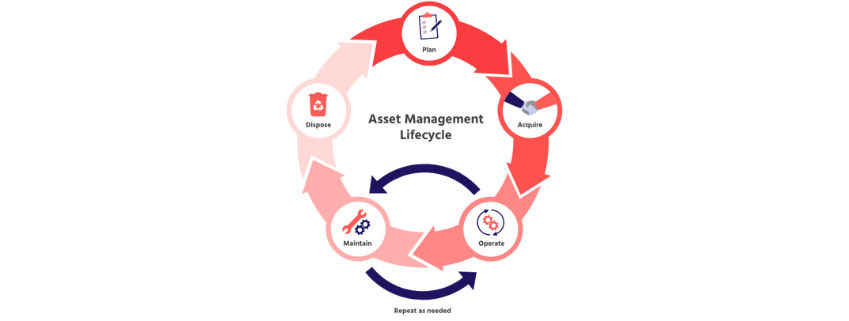
Source: FMX
Why IT Asset Lifecycle Management Matters Today?
IT teams today face an environment defined by rapid technological evolution, hybrid work, cloud sprawl - and escalating security threats. Assets are multiplying faster than teams can document them. Shadow IT is creeping into every department. Compliance audits are more demanding than ever.
In this reality, unmanaged assets aren’t just inefficiencies - they’re liabilities. A forgotten SaaS subscription can leak data. An unpatched server can invite cyberattacks. A warranty lapse can delay mission-critical recovery.
IT Asset Lifecycle Management matters today because it reinstates control in a world where assets constantly move, change, update, and expand. It ensures that:
- Every asset is accounted for
- Every configuration is compliant
- Every upgrade decision is data-driven
- Every dollar spent on IT has provable ROI
ITALM also allows more accurate forecasting and resource planning - which is critical for organizations that navigate shrinking budgets and rising expectations.
Simply put, ITALM empowers high-performing teams to stay proactive instead of reactive - anticipating risks before they erupt and optimizing spending long before the CFO asks.
Why is IT Asset Lifecycle Management Important?
ITALM is important because it directly impacts operational efficiency, cost control, and organizational security - three pillars that define the resilience of a modern enterprise.
From a financial perspective - ITALM eliminates wasteful spending by ensuring assets are properly utilized, retired on time, and upgraded only when necessary. It offers clarity on Total Cost of Ownership (TCO) across the lifecycle - and allows leadership to make smarter investment decisions.
From a governance perspective, ITALM ensures assets comply with internal policies, security standards, and regulatory requirements - reducing audit-related stress and exposure to penalties.
From an operational standpoint, structured lifecycle management prevents surprise failures, extended downtimes, and untraceable vulnerabilities.
In essence, ITALM is not a back-office function - it's a strategic advantage. Organizations that implement it effectively experience smoother IT operations, stronger cybersecurity posture, and improved business continuity.
For project managers, it reduces firefighting and increases predictability - two invaluable benefits when delivering complex technology projects.
Stages of the IT Asset Lifecycle Management
The asset lifecycle management process traditionally consists of 6 essential stages. Each stage is integral to maintaining control, visibility, and optimization across your asset environment.
1. Planning
This is where strategy meets foresight. Current needs, budget constraints, scalability requirements, and business goals are evaluated by the IT teams. Planning includes - to identify hardware standards, choose approved vendors, forecast demand - and align purchases with security and compliance frameworks. Strong planning prevents impulsive buying and makes sure that assets integrate smoothly into the existing ecosystem.
2. Procurement
Procurement involves acquiring assets through approved channels - whether purchasing, leasing, or subscribing to cloud solutions. This stage must make sure there's compatibility, negotiate best pricing, optimize licensing agreements, and validate vendor warranties. A disciplined procurement process helps organizations avoid overbuying, underutilization, and vendor lock-in.
3. Deployment & Configuration
Once assets arrive, they are installed, imaged, configured, and assigned to users or systems. In this stage - to tag assets, register them in the CMDB, apply security baselines, and configure monitoring systems. Proper deployment is essential - misconfigured assets are one of the biggest contributors to security vulnerabilities and support overhead.
4. Operation & Maintenance
This is the longest stage of the lifecycle. Assets are now fully in use and need to regular support, patching, updates, and performance monitoring. Maintenance makes sure there's reliability - and extends an asset’s lifespan. This stage also includes license renewals, warranty tracking, and alignment with SLAs. A good ITIL-aligned ITSM practice will integrate these tasks into change management and incident workflows.
5. Optimization
Optimization is about maximizing value. IT teams review utilization data, performance metrics, and cost trends - to identify opportunities for consolidation, upgrades, or reassignments. For instance, underutilized cloud resources can be scaled down - while overworked servers may need load balancing. Optimization transforms assets from cost items into strategic tools.
6. Retirement & Disposal
Every asset must eventually exit the ecosystem. Retirement involves decommissioning, wiping data securely, disposing hardware responsibly - and terminating associated licenses or subscriptions. This stage protects the organization from residual security risks and ensures compliance with environmental regulations. Proper retirement also frees up budgets and prevents shelfware.
This full lifecycle makes sure that assets are traceable, cost-efficient, compliant, and aligned with organizational goals - at every stage.
Benefits of IT Asset Lifecycle Management
Implementing a mature ITALM framework delivers several tangible business benefits:
- Cost Optimization – Organizations avoid redundant purchases, eliminate unused licenses, and reduce maintenance costs.
- Enhanced Security – Real-time visibility makes sure patches, upgrades, and retirements happen before vulnerabilities are exploited.
- Improved Compliance – Audits become smoother with accurate asset records, license tracking, and policy alignment.
- Reduced Downtime – Predictive maintenance and proactive upgrades minimize interruptions.
- Higher Productivity – End users get reliable, well-maintained assets - that support seamless workflows.
- Better Decision Making – Leaders gain data-backed insights on asset performance, replacement cycles, and ROI.
In a world where IT is the backbone of every business initiative - these benefits multiply across teams, projects, and long-term strategic outcomes.
IT Asset Lifecycle Management Best Practices
To unlock the full value of ITALM - organizations must go beyond process checklists and embrace strategic best practices:
1. Maintain a Single Source of Truth
Use a unified, accurate CMDB or asset management system. Fragmented spreadsheets create blind spots and errors.
2. Automate Wherever Possible
Modern IT asset lifecycle management software can automate discovery, tracking, alerts, renewals, and compliance monitoring - which reduces manual effort and risk.
3. Enforce Standardization
Standard hardware builds, approved software catalogs - and controlled procurement channels prevent chaos and shadow IT.
4. Include Security at Every Stage
Apply security configs during deployment, track vulnerabilities - and make sure there's timely patching. Security should never be an afterthought.
5. Monitor Utilization in Real Time
Data-driven optimization saves significant money. Use analytics tools to track performance, usage, and lifecycle health.
6. Integrate with ITIL Processes
ITALM works best when aligned with incident, change, and configuration management to maintain consistency across IT operations.
7. Plan for Retirement Early
Don’t wait for until assets fail. Scheduled renewals and end-of-life planning prevent downtime and security gaps.
These practices strengthen control, reduce risk - and make sure there's long-term efficiency across the entire IT ecosystem.
IT Asset Lifecycle Management Use Cases
ITALM plays a critical role in solving real-world IT challenges. Common use cases include:
1. Reducing Cloud Waste
With cloud resources multiplying across teams, ITALM helps identify idle instances, unused storage, and redundant SaaS licenses - and lowers operational costs dramatically.
2. Strengthening Cybersecurity
Unpatched assets create entry points for attackers. ITALM makes sure there's timely patching, secure configuration - and rapid retirement of vulnerable systems.
3. Enabling Smooth Employee Onboarding & Offboarding
Lifecycle management streamlines provisioning and deprovisioning - which makes sure employees receive the right tools on day one and access is revoked immediately upon exit.
4. Improving Audit Readiness
With accurate asset records and license tracking - organizations can pass internal and external audits with confidence.
5. Supporting Hybrid Work Environments
ITALM helps track distributed assets - laptops, monitors, VPN licenses, collaboration tools - and makes sure that remote teams stay productive.
6. Predicting Budget Needs
By tracking aging assets and performance trends - leaders can forecast replacement cycles and negotiate better vendor contracts.
These use cases show how ITALM directly contributes to efficiency, security, governance, and financial planning.
Final Thoughts
Mastering IT Asset Lifecycle Management isn’t just about tracking hardware - it’s about building a more secure, cost-efficient, compliant, and future-ready IT environment. The organizations that excel at ITALM enjoy stronger stability, faster innovation, and far fewer operational surprises.
If you’re looking to deepen your expertise in ITSM, governance, and service management best practices, explore upGrad KnowledgeHut’s ITIL & ITSM Certifications - designed to help you lead with confidence and drive lasting organizational impact.
Frequently Asked Questions (FAQs)
1. What are the 5 P’s of asset management?
The 5 Ps are Plan, Procure, Produce, Protect, and Perform. Together, they ensure assets are strategically acquired, effectively utilized, properly safeguarded, and continually optimized throughout their lifecycle.
2. What are the 4 fundamentals of asset management?
The core fundamentals are Asset Identification, Asset Tracking, Lifecycle Management, and Performance Optimization. These pillars help organizations maintain visibility, reduce risk, and maximize value from every asset.
3. Who are the big 3 asset managers?
The world’s ‘Big 3’ asset managers are BlackRock, Vanguard, and State Street Global Advisors. They collectively manage trillions in global assets and significantly influence financial markets worldwide.
4. What are the 5 Ps of asset management?
The 5 P’s stand for Plan, Procure, Produce, Protect, and Perform, forming a structured framework to guide the complete lifecycle of asset strategy, utilization, security, and improvement.
1639 articles published
KnowledgeHut is an outcome-focused global ed-tech company. We help organizations and professionals unlock excellence through skills development. We offer training solutions under the people and proces...
Get Free Consultation
By submitting, I accept the T&C and
Privacy Policy
Ready to fast-track your ITSM career?