
- Blog Categories
- Project Management
- Agile Management
- IT Service Management
- Cloud Computing
- Business Management
- BI And Visualisation
- Quality Management
- Cyber Security
- DevOps
- Most Popular Blogs
- PMP Exam Schedule for 2025: Check PMP Exam Date
- Top 60+ PMP Exam Questions and Answers for 2025
- PMP Cheat Sheet and PMP Formulas To Use in 2025
- What is PMP Process? A Complete List of 49 Processes of PMP
- Top 15+ Project Management Case Studies with Examples 2025
- Top Picks by Authors
- Top 170 Project Management Research Topics
- What is Effective Communication: Definition
- How to Create a Project Plan in Excel in 2025?
- PMP Certification Exam Eligibility in 2025 [A Complete Checklist]
- PMP Certification Fees - All Aspects of PMP Certification Fee
- Most Popular Blogs
- CSM vs PSM: Which Certification to Choose in 2025?
- How Much Does Scrum Master Certification Cost in 2025?
- CSPO vs PSPO Certification: What to Choose in 2025?
- 8 Best Scrum Master Certifications to Pursue in 2025
- Safe Agilist Exam: A Complete Study Guide 2025
- Top Picks by Authors
- SAFe vs Agile: Difference Between Scaled Agile and Agile
- Top 21 Scrum Best Practices for Efficient Agile Workflow
- 30 User Story Examples and Templates to Use in 2025
- State of Agile: Things You Need to Know
- Top 24 Career Benefits of a Certifed Scrum Master
- Most Popular Blogs
- ITIL Certification Cost in 2025 [Exam Fee & Other Expenses]
- Top 17 Required Skills for System Administrator in 2025
- How Effective Is Itil Certification for a Job Switch?
- IT Service Management (ITSM) Role and Responsibilities
- Top 25 Service Based Companies in India in 2025
- Top Picks by Authors
- What is Escalation Matrix & How Does It Work? [Types, Process]
- ITIL Service Operation: Phases, Functions, Best Practices
- 10 Best Facility Management Software in 2025
- What is Service Request Management in ITIL? Example, Steps, Tips
- An Introduction To ITIL® Exam
- Most Popular Blogs
- A Complete AWS Cheat Sheet: Important Topics Covered
- Top AWS Solution Architect Projects in 2025
- 15 Best Azure Certifications 2025: Which one to Choose?
- Top 22 Cloud Computing Project Ideas in 2025 [Source Code]
- How to Become an Azure Data Engineer? 2025 Roadmap
- Top Picks by Authors
- Top 40 IoT Project Ideas and Topics in 2025 [Source Code]
- The Future of AWS: Top Trends & Predictions in 2025
- AWS Solutions Architect vs AWS Developer [Key Differences]
- Top 20 Azure Data Engineering Projects in 2025 [Source Code]
- 25 Best Cloud Computing Tools in 2025
- Most Popular Blogs
- Company Analysis Report: Examples, Templates, Components
- 400 Trending Business Management Research Topics
- Business Analysis Body of Knowledge (BABOK): Guide
- ECBA Certification: Is it Worth it?
- Top Picks by Authors
- Top 20 Business Analytics Project in 2025 [With Source Code]
- ECBA Certification Cost Across Countries
- Top 9 Free Business Requirements Document (BRD) Templates
- Business Analyst Job Description in 2025 [Key Responsibility]
- Business Analysis Framework: Elements, Process, Techniques
- Most Popular Blogs
- Best Career options after BA [2025]
- Top Career Options after BCom to Know in 2025
- Top 10 Power Bi Books of 2025 [Beginners to Experienced]
- Power BI Skills in Demand: How to Stand Out in the Job Market
- Top 15 Power BI Project Ideas
- Top Picks by Authors
- 10 Limitations of Power BI: You Must Know in 2025
- Top 45 Career Options After BBA in 2025 [With Salary]
- Top Power BI Dashboard Templates of 2025
- What is Power BI Used For - Practical Applications Of Power BI
- SSRS Vs Power BI - What are the Key Differences?
- Most Popular Blogs
- Data Collection Plan For Six Sigma: How to Create One?
- Quality Engineer Resume for 2025 [Examples + Tips]
- 20 Best Quality Management Certifications That Pay Well in 2025
- Six Sigma in Operations Management [A Brief Introduction]
- Top Picks by Authors
- Six Sigma Green Belt vs PMP: What's the Difference
- Quality Management: Definition, Importance, Components
- Adding Green Belt Certifications to Your Resume
- Six Sigma Green Belt in Healthcare: Concepts, Benefits and Examples
- Most Popular Blogs
- Latest CISSP Exam Dumps of 2025 [Free CISSP Dumps]
- CISSP vs Security+ Certifications: Which is Best in 2025?
- Best CISSP Study Guides for 2025 + CISSP Study Plan
- How to Become an Ethical Hacker in 2025?
- Top Picks by Authors
- CISSP vs Master's Degree: Which One to Choose in 2025?
- CISSP Endorsement Process: Requirements & Example
- OSCP vs CISSP | Top Cybersecurity Certifications
- How to Pass the CISSP Exam on Your 1st Attempt in 2025?
- Most Popular Blogs
- Top 7 Kubernetes Certifications in 2025
- Kubernetes Pods: Types, Examples, Best Practices
- DevOps Methodologies: Practices & Principles
- Docker Image Commands
- Top Picks by Authors
- Best DevOps Certifications in 2025
- 20 Best Automation Tools for DevOps
- Top 20 DevOps Projects of 2025
- OS for Docker: Features, Factors and Tips
- More
- Agile & PMP Practice Tests
- Agile Testing
- Agile Scrum Practice Exam
- CAPM Practice Test
- PRINCE2 Foundation Exam
- PMP Practice Exam
- Cloud Related Practice Test
- Azure Infrastructure Solutions
- AWS Solutions Architect
- IT Related Pratice Test
- ITIL Practice Test
- Devops Practice Test
- TOGAF® Practice Test
- Other Practice Test
- Oracle Primavera P6 V8
- MS Project Practice Test
- Project Management & Agile
- Project Management Interview Questions
- Release Train Engineer Interview Questions
- Agile Coach Interview Questions
- Scrum Interview Questions
- IT Project Manager Interview Questions
- Cloud & Data
- Azure Databricks Interview Questions
- AWS architect Interview Questions
- Cloud Computing Interview Questions
- AWS Interview Questions
- Kubernetes Interview Questions
- Web Development
- CSS3 Free Course with Certificates
- Basics of Spring Core and MVC
- Javascript Free Course with Certificate
- React Free Course with Certificate
- Node JS Free Certification Course
- Data Science
- Python Machine Learning Course
- Python for Data Science Free Course
- NLP Free Course with Certificate
- Data Analysis Using SQL
Chief Product Officer (CPO): Role, Skills, and Career Path
Updated on Aug 18, 2025 | 1.56K+ views
Share:
In today’s cut-throat business landscape, just a single product can decide whether a company soars or sinks. But winning in the market takes a whole lot more than a spark of inspiration - it demands vision, alignment, flawless execution, and constant refinement.
That’s where the Chief Product Officer (CPO) comes into the picture. This is the leader who makes sure the product in development is exactly what customers will value, while also fueling the company’s growth. From setting the product vision to uniting teams across departments, the CPO is the vital link between high-level business strategy and the people turning ideas into reality.
If you’re curious about what it really takes to reach this position, what kind of salary it commands, and why it’s become indispensable in modern organizations, this article will walk you through it all.
Master the Right Skills & Boost Your Career
Avail your free 1:1 mentorship session
Who is a Chief Product Officer?
Think of the Chief Product Officer as the company’s compass for value creation. Not a 'super' product manager, but the person who decides where the product should go, why it matters, and how it will win in the market.
Their role is deceptively simple on paper - they just need to paint a vision for the product, keep it in sync with the company’s bigger mission, and make sure every launch actually moves the business forward. But in reality, it’s a balancing act that sits at the intersection of strategy, market needs, and execution discipline.
They report straight to the CEO, sharing the table with the likes of the CTO, CFO, and CMO. Each brings their own lens: the CTO worries about tech choices, the CMO obsesses over customer reach, and the CPO? They make sure the product - the thing customers buy into - is both irresistible and profitable.
In a small startup, you might still catch the CPO scribbling wireframes on a whiteboard or jumping into a sprint retro. In a sprawling enterprise, they could be approving an acquisition, mapping a five-year product portfolio, or steering a multi-continent team toward a unified goal. Different settings, different scales - but the same core truth: the CPO guards the product vision and the grit it takes to deliver on it.
Core Responsibilities of a CPO
A CPO is the strategic engine that drives a product from 'an interesting idea' to 'market-defining success'. The CPO, unlike the product manager who wrestles with sprints and roadmaps, operates at a higher altitude - aligning every move with the organization's long-term mission, market realities, and growth ambitions. Here’s what the role truly entails:
1. Crafting and Owning the Product Vision
Think of the CPO as the product’s chief storyteller. They’re the ones sketching the long arc of where the product needs to go - and why it matters. It's not merely a motivational poster, but a precise, actionable north star that guides every feature decision, resource allocation, and product iteration.
From high-level product maps to visionary pitches that win executive buy-in, the CPO keeps the destination clear even when the path gets hazy.
2. Steering Strategy and Lifecycle Execution
It’s not enough to define 'what' and 'why'. The CPO must also shape 'how' and 'when'.
That means setting success metrics (KPIs) that truly measure value, selecting the right technical architecture in lockstep with the CTO, and aligning go-to-market moves with the CMO.
From the first whiteboard sketch to the sunset of a legacy version, the CPO is accountable for ensuring the product evolves deliberately, not reactively.
3. Uniting Cross-Functional Teams
A CPO’s success isn’t measured by how well they lead a single team - but by how efficiently they get engineering, design, marketing, sales, and customer success marching to the same beat.
They break down silos, settle disputes before they interfere with delivery, and make sure all parties involved know how their involvement advances the product. In other words, they turn potential turf wars into championship-winning teamwork.
4. Championing the Product in the Market
Internally, the CPO is the product’s architect. Externally, they’re its loudest, most persuasive advocate.
This means carrying out or commissioning extensive market research, honing the value proposition of the product, and providing marketing with a compelling story that stands out. They keep one foot in the customer’s world, applying insights to improve what exists today and creating the foundation for tomorrow’s wins.
5. Building and Elevating Talent
A strong CPO doesn’t just build products - they build people. They mentor emerging product leaders, shape the skill mix of their teams, and weigh in on critical hiring decisions. They’re not afraid to challenge their team, but they also clear roadblocks, share hard-won lessons, and set the stage for career-defining growth.
While every company’s Chief Product Officer job description varies, most include ownership of the product roadmap, innovation leadership, and collaboration with the CTO.
Important Skills of a CPO
The CPO role is the crossroads of vision, action, and influence. To excel here, you need to hone a special blend of abilities few leaders truly master.
- Looking Ahead: Foresee market shifts long before they show up in industry briefings. Think of emerging trends as launchpads, not landmines.
- Decisive Use of Data: Make daring choices backed by solid evidence - but recognize when the metrics miss the bigger picture.
- Commanding Presence: Motivate people to outperform themselves without breathing down their necks. Lead with trust, not control.
- Customer-First Mindset: Create solutions that click with users. See the product through their eyes and share in their frustrations.
- Tech-Savvy Insight: Understand the language of engineers well enough to connect strategy with code. Negotiate trade-offs that actually work.
- Adaptive Drive: Shift course quickly when the ground changes beneath you, while keeping your team grounded in purpose.
- Persuasive Clarity: Turn complexity into stories that spark action, win over stakeholders, and unlock budgets.
A truly outstanding CPO doesn’t just possess these traits - they fuse them into a leadership style that earns confidence from the C-suite to the dev floor. That’s when vision stops being a slide deck and starts becoming your competitive advantage.
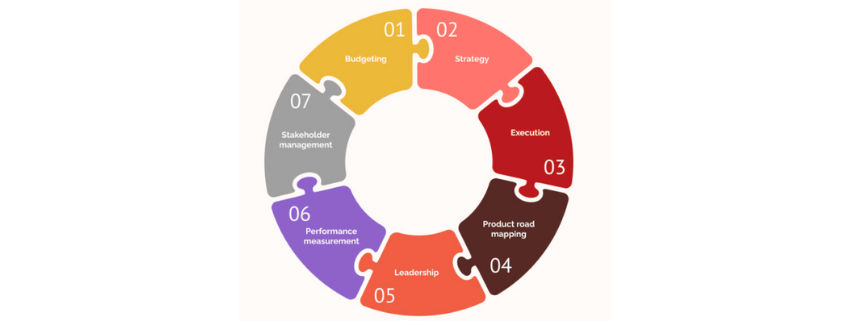
Source: digital-adoption.com
How to Become a CPO?
There’s no single, straight-shot career ladder to the Chief Product Officer’s chair. But if you look at enough CPO journeys, a pattern starts to emerge—one built on skill stacking, credibility, and timing.
Some start right inside the product function as junior product managers. Others come in sideways - maybe as UX designers mapping out user flows, business analysts crunching requirements, or engineers who slowly develop a knack for market-facing decisions. However you enter, the early years are about understanding the messy, iterative reality of building something people will actually use.
Climbing the product ladder - from associate PM to senior, then to director or VP - shifts your focus from ‘What feature should we build?’ to ‘Where should we take this product over the next 18 months?’. That’s where you start owning not just execution, but direction.
Along the way, the best future CPOs actively broaden their skill set. Some take executive courses or a dedicated Chief Product Officer program to sharpen business instincts and leadership chops. Others immerse themselves in market dynamics, finance, or sales strategy so they can speak the CEO’s language just as well as they speak the product team’s.
Results matter too - more than titles. Have a track record of successful launches, improved KPIs, and teams that deliver even when the brief is half-baked? That’s the kind of history boards pay attention to.
And don’t underestimate visibility. Speak at an industry conference, write a piece that gets shared around LinkedIn, or join a panel where other executives are listening. People can’t champion you if they’ve never heard of you.
At the end of the day, ambition matters - but it’s not the magic key. Earning the CPO title comes from delivering measurable results, building trust, and demonstrating leadership that inspires talented teams to rally behind you.
Many aspiring CPOs also invest in top Agile certifications to sharpen their skills in guiding cross-functional teams and staying ahead in rapidly evolving markets.
Chief Product Officer Salary & Job Outlook
If you’ve ever wondered what a Chief Product Officer actually takes home, the answer is - it depends, and quite a lot. Geography, the sector you’re in, and even the company’s growth stage can swing the numbers dramatically.
In the U.S., for instance, Indeed pegs the average around $208,779 per year, but that’s often just the “cash” part. At the top end of the tech world, performance bonuses, stock options, and equity slices can push total pay well into seven figures.
Hop over to India, and the story changes, though not in opportunity. Glassdoor lists typical salaries between ₹11.8 lakh and ₹39.8 lakh annually, but leaders in hot sectors like SaaS, fintech, or e-commerce routinely land far higher packages - especially when a bit of equity sweetens the pot.
Other markets hold their own:
- UK: roughly £146,900 a year
- Canada: around $107,407 CAD
- Singapore: close to $144,000 SGD
- Australia: about AU$219,854 per PayScale data
Numbers aside, what’s really interesting is the demand curve. As companies shift to a product-led growth mindset - where the product itself is the growth engine - CPOs have moved from 'nice to have' to 'absolutely essential'. This is true in mature economies and even more so in fast-scaling startups across emerging markets.
Bottom line? For leaders with a knack for steering strategy, inspiring teams, and delivering results, the CPO role isn’t just well-paid - it’s becoming one of the most influential seats in modern business.
| Chief Product Officer Salary | Avg Salary |
| USA | $208,779 (Indeed) |
| India | ₹11.8L - ₹39.8 LPA (Source: Glassdoor) |
| UK | £146900 per year (Source: Glassdoor) |
| Canada | $107407 per year (Source: Glassdoor) |
| Singapore | $144,000 per year (Source: Glassdoor) |
| Australia | AU$219,854 per year (Source: Payscale) |
Why Do Companies Need a CPO?
Walk into any boardroom today and you’ll hear the same refrain - the market is moving faster than ever. Customers are more demanding, competitors are quicker to copy, and technology cycles are shortening. Having brilliant engineers or a slick tech stack isn’t enough anymore - products have to keep evolving, almost in real time, just to stay in the game.
Here’s where things often fall apart. Without a single leader owning the product vision, teams tend to chase the latest opportunity - or panic over the latest threat - without asking whether it fits the bigger picture. One quarter, the focus is on adding features to keep up with a competitor; the next, it’s about cutting costs. The result? Momentum gets lost, and the product starts to feel like a patchwork of short-term fixes.
A capable Chief Product Officer changes that. They tie product decisions directly to the company’s mission and revenue goals, making sure resources aren’t spread thin over “interesting” ideas that won’t move the needle. They’re also the voice reminding everyone - engineering, marketing, finance - that the end game is a product customers will love and keep coming back to.
Think of them as both strategist and quality guardian - the person who decides which opportunities to pursue, which to walk away from, and how to aptly deliver an experience customers trust. In industries like SaaS or fintech, that consistency can mean the difference between dominating a category and slowly fading out of it.
In short, a CPO isn’t a fancy extra on the org chart. In today’s market, they’re as essential as your CTO or CFO - and companies that realize this sooner tend to be the ones still standing five years down the line.
Conclusion
Being a Chief Product Officer isn’t just a fancy title — it’s standing in the middle of a tug-of-war between vision and execution. One day you’re deep in strategy talks, the next you’re knee-deep in customer feedback that changes everything. You’re not just steering a ship; you’re trying to read the weather, fix the sails, and keep the crew inspired - all at the same time. It’s messy, unpredictable, and exactly why the role can be so addictive for the right person.
If you’re an emerging product leader, it can be the leap that defines your career. If you’re a founder or CEO, the right CPO can be the force that turns a good product into a market leader. In the end, the gap between 'it works' and 'it wins' is often bridged by the insight and leadership of a truly great CPO.
If you’re ready to move into senior leadership, upGrad KnowledgeHut top Agile certifications can give you the edge to succeed in competitive industries.
Frequently Asked Questions (FAQs)
1. Is CPO higher than CTO?
One isn’t automatically above the other - it comes down to the company’s hierarchy. The CPO drives product vision and strategy, while the CTO leads tech innovation. In many setups, they’re peers who both report to the CEO.
2. What does a Chief Product Officer do?
A CPO frames the product vision, paves the roadmap, and makes sure offerings meet both customer needs and business goals. They lead diverse teams and connect market realities with the company’s goals.
3. What is the background of a Chief Product Officer?
Many CPOs come from product management, UX/design, engineering, or strategy roles. They usually bring a blend of technical know-how, business insight, and leadership skills.
4. What is the average tenure of a Chief Product Officer?
CPOs typically stay in the role for 3–5 years. In fast-paced sectors like tech startups, shorter stints are common due to rapid shifts in priorities.
5. What is the highest salary of CPO?
At top global companies, CPOs can earn over $500,000 a year - bonuses and stock options in high-growth or listed firms can push that into the millions.
1639 articles published
KnowledgeHut is an outcome-focused global ed-tech company. We help organizations and professionals unlock excellence through skills development. We offer training solutions under the people and proces...
Get Free Consultation
By submitting, I accept the T&C and
Privacy Policy
Ready to learn about Agile Certifications Roadmap?