
DSDM vs Scrum: How to Choose the Right Agile Path for your Project?
Updated on Aug 21, 2025 | 1.91K+ views
Share:
Table of Contents
View all
DSDM (Dynamic Systems Development Method) is an effective and business-focused Agile methodology that's often overlooked by being in the shadow of Scrum’s ease of use and widespread acceptance.
Both approaches aim towards agility, teamwork, and quicker delivery. But to get there, however, they take very different routes to get there.
Understanding the differences between Scrum and DSDM could influence the results of your future projects, whether you're gauging which approach is the best for for your team as a project manager or checking out new frameworks as an Agile practitioner. To help you make an informed decision, we will be dissecting every aspect of each approach in this blog, including advantages, disadvantages, similarities, and trade-offs.
Master the Right Skills & Boost Your Career
Avail your free 1:1 mentorship session
What is DSDM?
DSDM is one of the earliest Agile frameworks – and also one of the most structured. It was designed in 1994 as a solution to the growing need for a regulated approach to Rapid Application Development (RAD). DSDM imposes a strong emphasis on upfront planning, business involvement, and clearly defined roles, unlike many Agile frameworks that came later. It’s centered around eight guiding principles, including active user involvement, frequent delivery, and collaboration.
What sets DSDM apart? It doesn’t shy away from governance. While it’s still Agile at heart, DSDM blends adaptability with control - making it an apt fit for projects with non-negotiable timelines, budgets, and business needs. It’s not simply about building fast - it’s about building right.
Simply put, DSDM is for teams and organizations that want to reap the benefits of Agile, but also rely on structure, predictability, and stakeholder alignment from the get-go. It’s Agile with a plan.
What is Scrum Methodology?
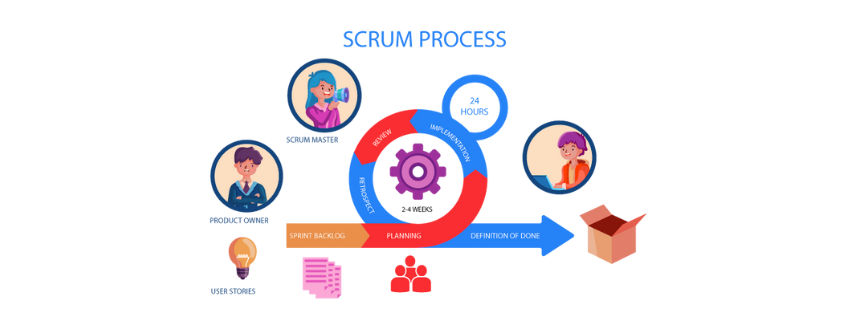
Scrum is amongst the most popular Agile frameworks, and it’s for a good reason too. It’s lightweight, simple and easy to understand, and highly implementable. Originally developed in the early 1990s, Scrum was created to help teams successfully fulfill complex projects quicker and more effectively, by breaking down work into short, timeboxed iterations called sprints. Every sprint results in a potentially usable piece of the product - and that’s where the magic begins.
Scrum inspires collaboration, clarity, and continuous improvement. It functions best in dynamic settings with continuous feedback and rapid change. The Scrum Master, Product Owner, and Development Team together have unique responsibilities and function as a self-organizing unit.
It is Scrum’s simplicity is what sets it apart. It drives in just the right amount of structure to help you stay on track without getting in the way instead. One sprint at a time, it assists teams in adapting, experimenting, and churning tangible results.
Source: Nimblework
DSDM vs Scrum: Table of Differences
Aspect |
Scrum |
DSDM |
| 1. Approach | Lightweight, flexible, iterative | Formalized, structured, business-driven |
| 2. Planning | Evolving, sprint by sprint | Upfront with MoSCoW prioritization |
| 3. Roles | 3 core roles | Multiple specialized roles |
| 4. Stakeholder Involvement | Limited but regular (reviews, planning) | Constant, hands-on business involvement |
| 5. Documentation | Minimal, team-focused | Formal reporting and checkpoints |
| 6. Change Management | Continuous reprioritization | Scope flexible, but time/cost/quality fixed |
| 7. Culture | Autonomous, experimental | Disciplined, controlled, aligned |
DSDM vs Scrum: Diving Deeper
Although Scrum and DSDM both come under the Agile umbrella, their execution couldn't be any more contrasting. If Scrum feels like a speedboat that adjusts its direction with every ripple - DSDM is more like a well-crewed vessel, sailing on fixed coordinates with steady oversight. The difference isn’t cosmetic - it’s baked into how each framework manages risk, collaboration, and change.
Here’s how they diverge:
1. Adaptability vs. Formal Structure
Scrum thrives on uncertainty. Teams shuffle priorities when needed and deliver value progressively through short sprints.
DSDM introduces more guardrails, laying down detailed rules and defining a wider spread of roles to ensure business interests stay front and center.
2. DSDM vs Scrum: Planning Mindset
Planning is a constant process in Scrum. Rather than locking everything in upfront,
each sprint is an opportunity to adjust course.
On the other hand, DSDM invests early in outlining timelines, costs, and quality benchmarks - while leaving scope open to negotiation through MoSCoW prioritization.
3. DSDM vs Scrum: Role Definition
Scrum intentionally keeps things lean by having just three roles: Product Owner, Scrum Master, and Development Team.
DSDM expands the cast, adding business and technical roles like Business Sponsor, Visionary, and Technical Coordinator - creating a more formal hierarchy.
4. DSDM vs Scrum: Engagement with Stakeholders
Scrum brings in stakeholders at key moments - sprint reviews, planning, backlog refinement. But the development team largely self-organizes.
DSDM expects near-constant business input, keeping decision-makers heavily involved to ensure the project never drifts from business goals.
5. DSDM vs Scrum: Governance and Documentation
With Scrum, our goal is to deliver working software, keep documentation to a minimum and decision-making within the team.
DSDM allows for agility but weaves in formal checkpoints, reporting practices, and governance mechanisms to keep control visible.
6. DSDM vs Scrum: Managing Change
Scrum assumes change is inevitable - where the backlog is a living artifact, reshuffled as new priorities emerge.
DSDM fixes time, cost, and quality upfront, so adjustments are mostly handled within the scope dimension.
7. DSDM vs Scrum: Cultural Mindset
Scrum thrives in environments that value autonomy, trial-and-error, and fast feedback loops.
DSDM works best in settings where discipline, predictability, and alignment with broader business strategy are non-negotiable.
Similarities Between DSDM and Scrum Methodologies
From a distance, Scrum and DSDM might seem like completely different approaches: one is flexible and lightweight, and the other is structured and heavily dependent on governance. But when you look more closely, you'll notice that they share the same Agile DNA.
Both the frameworks are iterative and incremental. They try to deliver value sooner and more frequently by breaking down the work into manageable pieces rather than waiting until the end. A key idea in both is timeboxing, which aids teams in maintaining focus and completing tasks within predetermined timelines.
In both approaches, collaboration is key. Whether it's the daily stand-ups in Scrum or regular workshops in DSDM, every decision is made with emphasized communication and team alignment. Every framework also encourages client participation in the project, through and through, making sure that the final product genuinely satisfies the needs of the users.
Another common trait? Continuous improvement. Both Scrum and DSDM incorporate regular review and reflection points to support teams' learning and development, whether it's through a sprint retrospective or a DSDM post-project review.
Their common goal of providing excellent results via cooperation, flexibility and openness is evident despite possible differences in structure, roles, and level of planning. Fundamentally, both seek to improve teams' speed, intelligence, and adaptability to change.
Conclusion
Scrum or DSDM - the apt option will be according to your project’s goals, complexities, and need for control or flexibility. Both frameworks welcome the Agile mindset and yet offer completely diverse paths to success. Knowing the differences between Scrum and DSDM can empower you to steer your projects more effectively and clearly, regardless of whether you prefer the simplicity and speed of Scrum or the structure and business alignment of DSDM.
If you're prepared to move beyond theory and delve deeper into Agile practice, UpGrad KnowledgeHut Agile courses provide expert-led courses on Scrum, DSDM, and other topics. To stand out in a competitive environment, get certified, practice your skills in real-world situations, and learn from professionals in the field.
Take the next step in your quest for stronger, more intelligent project delivery by looking into our Agile certifications now.
Frequently Asked Questions (FAQs)
1. Is DSDM a waterfall?
No, it’s an Agile framework that focuses on iterative development, frequent delivery, and active user involvement - although it does incorporate some upfront planning.
2. Is DSDM still used?
Yes, it's still used, especially in organisations that require a balance between Agile flexibility and strong governance - like finance, government, and large enterprise projects.
3. Who developed the DSDM?
DSDM was developed in 1994 by a consortium of vendors and experts in the UK, aiming to formalise a structured Agile approach to Rapid Application Development (RAD).
4. What are the main differences between FDD and DSDM?
FDD (Feature-Driven Development) focuses on designing and building features with strong technical leadership. DSDM, on the other hand, emphasises business involvement, timeboxing, and broader project governance.
5. What are the advantages of DSDM?
DSDM offers strong business alignment, fixed budgets and timelines, active stakeholder involvement, and a structured approach to Agile delivery - making it ideal for high-control environments.
1639 articles published
KnowledgeHut is an outcome-focused global ed-tech company. We help organizations and professionals unlock excellence through skills development. We offer training solutions under the people and proces...
Get Free Consultation
By submitting, I accept the T&C and
Privacy Policy
Ready to learn about Agile Certifications Roadmap?