
- Home
- Blog
- Cloud Computing
- Azure AD Premium P1 vs P2: Which is Right For You?
Azure AD Premium P1 vs P2: Which is Right For You?
Updated on Sep 26, 2023 | 8 min read | 9.71K+ views
Share:
Table of Contents
View all
- What is Active Directory?
- What is Azure Active Directory (AAD)?
- How Does Azure AD Work With On-premises Active Directory?
- Azure Active Directory Premium P1 vs P2: Features Comparison
- Azure Active Directory Premium P1 vs. P2: Pricing Comparison
- Active Directory Premium P1 vs. P2: Which Plan is Right for You?
- Conclusion
Cloud services form the basis for modern apps due to their scalability, security, and availability. One of the critical cloud services is identity and access management, which handles the processes and policies that help organizations manage and secure access to their cloud resources and apps. You can learn more about this by enrolling in Microsoft Cloud Solution Architect to further enhance your knowledge.
Identity and Access Management, or IAM, is a key feature of all cloud platforms. Microsoft Azure provides IAM in the cloud and external apps built internally for the company using its Active Directory (AD) service. Active Directory offers two subscription-based tiers: P1 and P2.
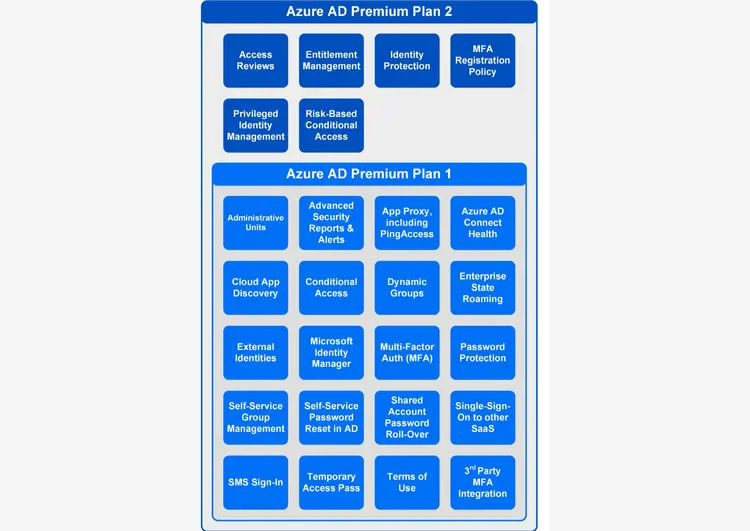
In this article, we will compare Azure ad premium P1 vs. P2 in detail, based on which you can choose the correct option for your use case.
Master the Right Skills & Boost Your Career
Avail your free 1:1 mentorship session
What is Active Directory?
Active Directory is a directory service to manage authentication and authorization for users and resources in the Windows Server operating system. The information about all the entities like users, computers, and resources like hardware devices, shared files, and folders in an organization is present in Active Directory, allowing users to access multiple resources with a single set of credentials (Single sign-on).
An Active Directory is similar to a tracking directory that helps arrange and store the information, providing access and permissions based on that information. Active Directory uses Lightweight Directory Access Protocol (LDAP) for directory access, enabling it to run on any platform and app. The organizations use Active Directory, particularly for the following use cases:
- High security
- Remote connection
- Centralized storage
- Easy search
- Single sign-on (SSO)
- Multiple password policies
- Backup & Recovery
Active Directory Objects are entities inside an organization identified by Name, Role, etc. The various objects of Active Directory are Forest, Domain, Organization unit, User, Group, Contact, Computer, Shared folder, Printer, subnet, and site, etc. Active Directory Domain is a logical grouping of objects. In a domain, you can combine any number of objects to assign common policies and rules to them for efficient management. Having all the objects present in the exact physical location is also optional.
What is Azure Active Directory (AAD)?
Azure Active Directory or Azure AD is a cloud-based IAM service provided by Microsoft that enables authentication and authorization for cloud and on-premises applications and comes integrated with Office 365 and Microsoft 365 subscriptions.
Azure AD is different from Active Directory in some ways. Azure AD provides cloud-specific services, unlike traditional Active Directory. Active Directory does not support mobile devices by default without third-party solutions, while Azure AD has built-in Microsoft Intune for mobile device management. Moreover, Active Directory works only for Windows, while Azure AD can also work with Linux.
As an IT Admin of a company, you have a lot of internal cloud apps for the company. With Azure AD, you can perform efficient IAM in the following ways:
- Automate the user provisioning between your existing Windows Server AD and your apps.
- When a new employee joins your company, you can assign security groups and grant access to specific apps and data based on their role.
- Enforce security policies and access controls to implement data privacy regulations of the organization.
- Use Application Proxy to allow users to work from home remotely.
- Monitor the security of your apps for any unusual activity or potential vulnerability.
- When the company adopts a new tool, seamlessly integrate it with the Azure AD
As a developer, you can integrate Single Sign On (SSO) and Multi-factor Authentication (MFA) in the apps and use Azure AD APIs to develop custom experiences using the company’s data.
How Does Azure AD Work With On-premises Active Directory?
Azure AD Connect is an on-premises Microsoft tool created to match and accomplish hybrid identity goals. ‘Connect’ allows you to sync user data between Azure AD and Active Directory to access resources in both environments with the same credentials. Enroll in our comprehensive Cloud Computing training to master Azure AD Connect and unlock a world of cloud possibilities.
Azure Active Directory Premium P1 vs P2: Features Comparison
1. Azure ad Premium P1 Features
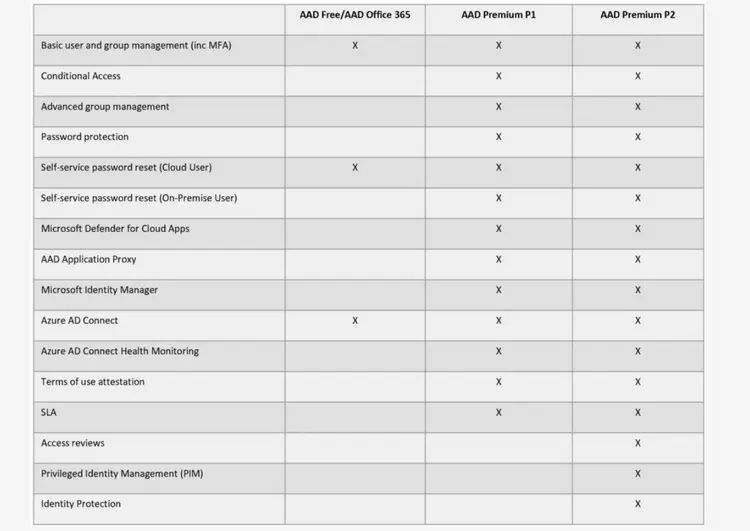
Premium P1 builds on top of the basic functionalities of Azure AD Free edition and will upgrade to Microsoft Entra ID P1 in the future. It provides the following features:
- Monitoring And Analytics: P1 allows you to monitor and generate reports of the activities happening in IAM. This allows you to analyze the security and catch any anomalies within your company.
- Role-based access control (RBAC): Assigning different access levels based on user role. For instance, an IT Admin can add, edit, read, and delete the security APIs, and a developer can only read them.
- Customizable user sign-in page for your company.
- Microsoft Identity Manager (MIM): Comes with advanced identity synchronization features to track user identity throughout the lifecycle of their membership in the company.
- Cloud authentication with Pass-through authentication and password hash synchronization
- Password Reset: Self-service password reset/change/unlock with on-premises write-back.
- Application Proxy: Allows users to access on-premises web applications securely by passing their sign-in tokens through the web applications that use Integrated Windows Authentication.
- Microsoft Defender: Protecting sensitive data in Software as a Service (SaaS) apps is a bug challenge for companies. Moreover, employees accessing the apps outside the company’s perimeter have also introduced new attack vectors outside the scope of traditional cloud access security brokers (CASBs). Defender comes with Fundamental cloud access security broker (CASB) functionality, SaaS Security Posture Management (SSPM, App-to-app protection, and Advanced threat protection to enhance your security to the next level.
2. Azure AD Premium P2 features
It is the most comprehensive tier of Azure AD. It will upgrade to Microsoft Entra ID P2 in the future. Here are some of its key features:
- Privileged Identity Management (PIM): Offers ‘as-needed’ and ‘just-in-time’ upgrades for the admins to higher roles such as Fabric Administrator and Global Administrator and provides access to Azure resources, Azure AD resources, and more services like Microsoft 365 or Microsoft Intune.
- Access Reviews: Double-check who can access what resources and decide if they still need it. This is useful for high-privilege security groups or applications that have sensitive data.
- Terms of use attestation: It is a digital agreement process where users must accept specific terms or policies before accessing certain resources or apps, ensuring compliance and accountability.
- Token Protection: This feature offers Conditional Access policies and Identity Protection to ensure that tokens used for access are highly secure and minimize the risk of unauthorized access.
- Risk events investigation, security information, and event management (SIEM) connectivity
- Risk-based Conditional Access (sign-in risk, user risk): Virtual security guard that evaluates the safety of both the login attempt and the user profiles, allowing or denying access based on potential risks without the users’ knowledge.
- Identity Secure Score: Provides a security assessment of an organization's identity configuration, helping organizations identify and address security weaknesses.
- Audit and Activity Logs: Offers advanced auditing and reporting capabilities, allowing organizations to track and investigate user and administrator activities.
Azure Active Directory Premium P1 vs. P2: Pricing Comparison
Let us now discuss the Azure P1 vs. P2 license below:
1. Azure AD Premium P1 Cost:
Standalone Offers $6.00 per user/month. The other option comes with Microsoft 365 E3 for enterprise customers and Microsoft 365 Business Premium for small to medium businesses.
2. Azure AD Premium P2 Cost:
Standalone offers $9.00 per user/month. The second option includes Microsoft 365 E5 for enterprise customers.
Active Directory Premium P1 vs. P2: Which Plan is Right for You?
Both plans offer advanced and automated management users in the company. The planning decision largely depends on your company’s Identity and Access Management needs.
Premium P1 enhances identity management, user access control, and multi-factor authentication and is suitable for companies wishing to improve their traditional IAM. Premium P2 provides a higher level of governance of identities beyond Premium P1, which is suitable for companies with complex security requirements and a higher focus on automated security measures.
You must choose the plan that aligns best with your company’s security and compliance objectives, considering the additional features and capabilities offered by Premium P2.
Conclusion
That wraps up our comparison between Azure AD P1 vs. P2. In summary, Microsoft Azure provides rich user and identity management features for organizations through Active Directory. Azure AD premium tier comes with two main plans: Premium P1 and Premium P2.
The choice between Azure AD Premium P1 and P2 depends on your organization's unique requirements and priorities. Azure AD Premium P1 offers essential identity and access management features, while Azure AD Premium P2 is best for organizations with advanced security, compliance, and governance needs. Consider the level of security, compliance, and control you require, and choose the Azure AD Premium plan that aligns best with your priorities. Check out KnowledgeHut's Microsoft Solution Architect program to learn more.
You May Also Like:
Top 12 Azure Skills that are demand in 2023
Top Azure Tools in 2023
Azure Resume: Tips, Templates, Examples
How to Get Free Azure Credits in 2023?
Azure Career Path Guide to build your career in 2023
Azure Monitor vs Azure Advisor: What to Choose?
Azure Front Door vs Application Gateway
How to Prepare for Microsoft Azure Exam?
Is Azure Certification Worth It?
Top Azure Tips and Tricks in 2023
Frequently Asked Questions (FAQs)
1. What is included in both Azure AD Premium P1 and P2?
Both plans contain main features, including Single Sign-on (SSO), Cloud Authentication, Role-based access control (RBAC), and User and group management.
2. Can I upgrade from P1 to P2 or switch between plans?
Yes, you can follow the below steps to upgrade the plan:
- Login to the Azure Portal
- Navigate to Azure AD
- Select the Plan
- Upgrade or Switch
- Follow the Prompts
- Review and Confirm
- Billing Adjustment
3. Is there a free trial available for Azure AD Premium P1 and P2?
Yes, Microsft provides a 30-day free trial for both Premium P1 and P2 plans.
7 articles published
Experienced Senior Content Developer with a demonstrated history of working in the computer software industry. Enthusiastic and dedicated person in the field of Computer Science. Skilled at my work ar...
Get Free Consultation
By submitting, I accept the T&C and
Privacy Policy