
- Blog Categories
- Project Management
- Agile Management
- IT Service Management
- Cloud Computing
- Business Management
- BI And Visualisation
- Quality Management
- Cyber Security
- DevOps
- Most Popular Blogs
- PMP Exam Schedule for 2025: Check PMP Exam Date
- Top 60+ PMP Exam Questions and Answers for 2025
- PMP Cheat Sheet and PMP Formulas To Use in 2025
- What is PMP Process? A Complete List of 49 Processes of PMP
- Top 15+ Project Management Case Studies with Examples 2025
- Top Picks by Authors
- Top 170 Project Management Research Topics
- What is Effective Communication: Definition
- How to Create a Project Plan in Excel in 2025?
- PMP Certification Exam Eligibility in 2025 [A Complete Checklist]
- PMP Certification Fees - All Aspects of PMP Certification Fee
- Most Popular Blogs
- CSM vs PSM: Which Certification to Choose in 2025?
- How Much Does Scrum Master Certification Cost in 2025?
- CSPO vs PSPO Certification: What to Choose in 2025?
- 8 Best Scrum Master Certifications to Pursue in 2025
- Safe Agilist Exam: A Complete Study Guide 2025
- Top Picks by Authors
- SAFe vs Agile: Difference Between Scaled Agile and Agile
- Top 21 Scrum Best Practices for Efficient Agile Workflow
- 30 User Story Examples and Templates to Use in 2025
- State of Agile: Things You Need to Know
- Top 24 Career Benefits of a Certifed Scrum Master
- Most Popular Blogs
- ITIL Certification Cost in 2025 [Exam Fee & Other Expenses]
- Top 17 Required Skills for System Administrator in 2025
- How Effective Is Itil Certification for a Job Switch?
- IT Service Management (ITSM) Role and Responsibilities
- Top 25 Service Based Companies in India in 2025
- Top Picks by Authors
- What is Escalation Matrix & How Does It Work? [Types, Process]
- ITIL Service Operation: Phases, Functions, Best Practices
- 10 Best Facility Management Software in 2025
- What is Service Request Management in ITIL? Example, Steps, Tips
- An Introduction To ITIL® Exam
- Most Popular Blogs
- A Complete AWS Cheat Sheet: Important Topics Covered
- Top AWS Solution Architect Projects in 2025
- 15 Best Azure Certifications 2025: Which one to Choose?
- Top 22 Cloud Computing Project Ideas in 2025 [Source Code]
- How to Become an Azure Data Engineer? 2025 Roadmap
- Top Picks by Authors
- Top 40 IoT Project Ideas and Topics in 2025 [Source Code]
- The Future of AWS: Top Trends & Predictions in 2025
- AWS Solutions Architect vs AWS Developer [Key Differences]
- Top 20 Azure Data Engineering Projects in 2025 [Source Code]
- 25 Best Cloud Computing Tools in 2025
- Most Popular Blogs
- Company Analysis Report: Examples, Templates, Components
- 400 Trending Business Management Research Topics
- Business Analysis Body of Knowledge (BABOK): Guide
- ECBA Certification: Is it Worth it?
- Top Picks by Authors
- Top 20 Business Analytics Project in 2025 [With Source Code]
- ECBA Certification Cost Across Countries
- Top 9 Free Business Requirements Document (BRD) Templates
- Business Analyst Job Description in 2025 [Key Responsibility]
- Business Analysis Framework: Elements, Process, Techniques
- Most Popular Blogs
- Best Career options after BA [2025]
- Top Career Options after BCom to Know in 2025
- Top 10 Power Bi Books of 2025 [Beginners to Experienced]
- Power BI Skills in Demand: How to Stand Out in the Job Market
- Top 15 Power BI Project Ideas
- Top Picks by Authors
- 10 Limitations of Power BI: You Must Know in 2025
- Top 45 Career Options After BBA in 2025 [With Salary]
- Top Power BI Dashboard Templates of 2025
- What is Power BI Used For - Practical Applications Of Power BI
- SSRS Vs Power BI - What are the Key Differences?
- Most Popular Blogs
- Data Collection Plan For Six Sigma: How to Create One?
- Quality Engineer Resume for 2025 [Examples + Tips]
- 20 Best Quality Management Certifications That Pay Well in 2025
- Six Sigma in Operations Management [A Brief Introduction]
- Top Picks by Authors
- Six Sigma Green Belt vs PMP: What's the Difference
- Quality Management: Definition, Importance, Components
- Adding Green Belt Certifications to Your Resume
- Six Sigma Green Belt in Healthcare: Concepts, Benefits and Examples
- Most Popular Blogs
- Latest CISSP Exam Dumps of 2025 [Free CISSP Dumps]
- CISSP vs Security+ Certifications: Which is Best in 2025?
- Best CISSP Study Guides for 2025 + CISSP Study Plan
- How to Become an Ethical Hacker in 2025?
- Top Picks by Authors
- CISSP vs Master's Degree: Which One to Choose in 2025?
- CISSP Endorsement Process: Requirements & Example
- OSCP vs CISSP | Top Cybersecurity Certifications
- How to Pass the CISSP Exam on Your 1st Attempt in 2025?
- Most Popular Blogs
- Top 7 Kubernetes Certifications in 2025
- Kubernetes Pods: Types, Examples, Best Practices
- DevOps Methodologies: Practices & Principles
- Docker Image Commands
- Top Picks by Authors
- Best DevOps Certifications in 2025
- 20 Best Automation Tools for DevOps
- Top 20 DevOps Projects of 2025
- OS for Docker: Features, Factors and Tips
- More
- Agile & PMP Practice Tests
- Agile Testing
- Agile Scrum Practice Exam
- CAPM Practice Test
- PRINCE2 Foundation Exam
- PMP Practice Exam
- Cloud Related Practice Test
- Azure Infrastructure Solutions
- AWS Solutions Architect
- IT Related Pratice Test
- ITIL Practice Test
- Devops Practice Test
- TOGAF® Practice Test
- Other Practice Test
- Oracle Primavera P6 V8
- MS Project Practice Test
- Project Management & Agile
- Project Management Interview Questions
- Release Train Engineer Interview Questions
- Agile Coach Interview Questions
- Scrum Interview Questions
- IT Project Manager Interview Questions
- Cloud & Data
- Azure Databricks Interview Questions
- AWS architect Interview Questions
- Cloud Computing Interview Questions
- AWS Interview Questions
- Kubernetes Interview Questions
- Web Development
- CSS3 Free Course with Certificates
- Basics of Spring Core and MVC
- Javascript Free Course with Certificate
- React Free Course with Certificate
- Node JS Free Certification Course
- Data Science
- Python Machine Learning Course
- Python for Data Science Free Course
- NLP Free Course with Certificate
- Data Analysis Using SQL
- Home
- Blog
- Project Management
- Levels of Management: Top, Middle and Lower in Organization
Levels of Management: Top, Middle and Lower in Organization
Updated on Sep 22, 2026 | 7 min read | 8.9K+ views
Share:
Table of Contents
View all
Management in any organization ensures tasks are effectively carried out to achieve business goals. It involves individuals at different levels with roles based on their skills, qualifications, and experience. These roles form a hierarchy, known as Levels of Management, where authority flows between superiors and subordinates.
Levels of management define roles and responsibilities within an organization. It ensures tasks are efficiently distributed, with clear duties and reporting lines. Knowing management levels is vital for coordination, decision-making, and organizational success. This blog will discuss the levels of management, their roles, responsibilities, and challenges at all levels to show how organizations operate.
For businesses aiming to build future-ready teams, KnowledgeHut Corporate Training offers flexible and scalable training solutions.
Ultimate PMP Formula Cheat Sheet
Get a quick, exam-ready PMP cheat sheet with all essential formulas and key concepts in one place.
Importance of Understanding Management Levels
Understanding management levels is important for keeping an organization running smoothly. There are 3 levels of management: top, middle, and lower. Each level has specific roles and responsibilities that contribute to achieving organizational goals.
Top-level management focuses on strategic planning and decision-making, setting the overall direction for the organization. Middle management acts as a bridge, translating top-level plans into actionable tasks for lower levels. Lower management handles day-to-day operations, ensuring tasks are executed efficiently.
When these levels work in harmony, organizations can achieve better communication, coordination, and productivity. Understanding these roles helps employees know whom to approach for guidance and ensures that everyone contributes effectively to organizational success. It promotes accountability and streamlines the decision-making process.
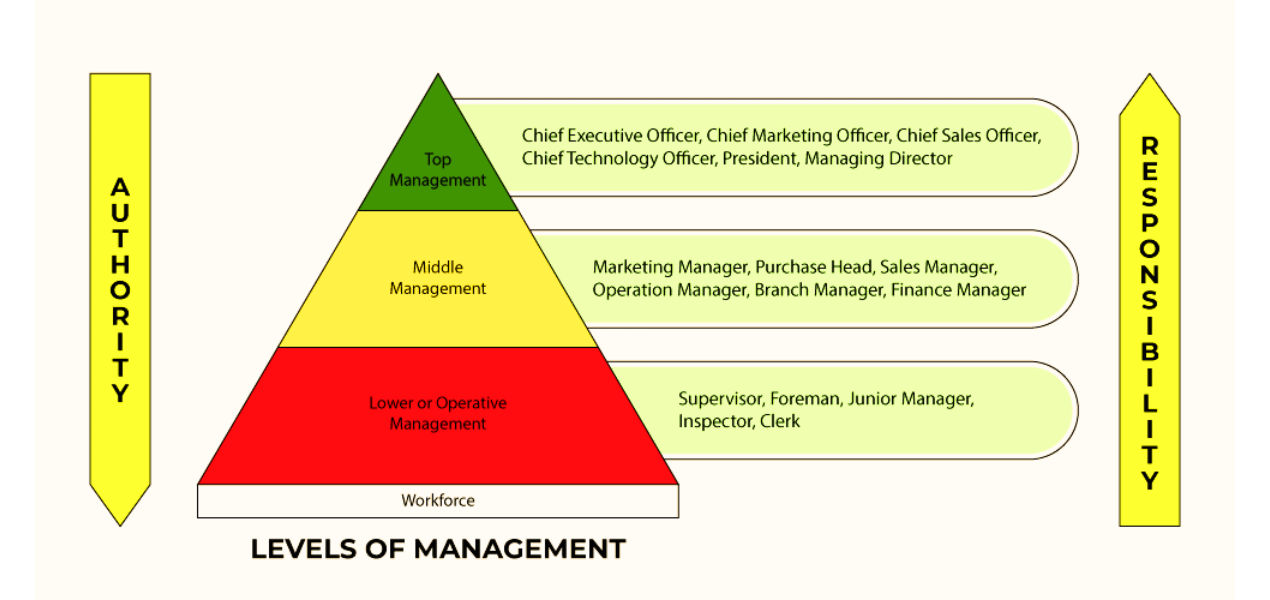
Source: geeksforgeek
Top-Level Management
Top-level management, often referred to as senior or executive management, plays a critical role in steering an organization toward success. This group comprises the highest-ranking officials. Levels of management with examples include the CEO, CFO, and Managing Directors. They set strategic directions and ensure the organization achieves its long-term goals.
Key Responsibilities and Duties
Top level management is responsible for the overall direction and performance of an organization. Their key responsibilities include:
- Strategic Planning: Developing and implementing long-term strategies to achieve organizational goals.
- Decision-Making: Making critical decisions that impact the entire organization.
- Resource Allocation: Allocating resources, such as budget and personnel, to support strategic initiatives.
- Risk Management: Identifying, assessing, and mitigating potential risks.
- Performance Monitoring: Tracking the organization's performance and taking corrective action as needed.
- External Relations: Building and maintaining relationships with stakeholders, such as investors, customers, and government officials.
- Leadership and Culture: Fostering a positive and productive organizational culture.
Skills Required at Top-Level Management
To excel in top-level management roles, individuals need a combination of technical and soft skills:
- Strategic Thinking: The ability to think critically, analyze complex situations, and develop innovative solutions.
- Leadership: Strong leadership skills to inspire and motivate teams.
- Decision-Making: The ability to make sound decisions under pressure.
- Communication: Effective communication skills to convey ideas clearly and persuasively.
- Financial Acumen: A strong understanding of financial statements and budgeting.
- Problem-Solving: The ability to identify and solve problems creatively.
- Adaptability: The ability to adapt to changing circumstances and embrace new challenges.
Top Top-Level Management Roles
Let us look at the example of top-level management roles in this position:
- Chief Executive Officer (CEO): Responsible for overall organizational performance and strategy.
- Chief Financial Officer (CFO): Manages the company’s financial planning, budgeting, and risk management.
- Chief Operating Officer (COO): Ensures operational efficiency and oversees daily business activities.
- Managing Director (MD): Drives business growth and ensures the company meets its objectives.
- President: Focuses on specific business areas, often managing multiple divisions.
Mid-Level Management
Middle level management acts as a bridge between upper management and lower-level employees. They ensure the smooth execution of organizational strategies and policies. Examples of middle-level management include Project Managers, Regional Managers, Department Heads, etc.
Key Responsibilities and Duties
Below are the roles and duties of mid-level managers:
- Strategic Implementation: Middle managers ensure that the strategies and objectives defined by upper management are communicated to teams and executed effectively.
- Team Leadership: They provide leadership, motivation, and guidance to their teams, fostering a positive work environment and improving overall productivity.
- Operational Management: Middle managers handle day-to-day operations, allocating resources, managing workflows, and ensuring that projects are completed on time and within budget.
- Performance Monitoring: They monitor team performance, identify issues, and implement corrective measures when necessary to meet organizational goals.
- Conflict Resolution: Middle managers address and resolve conflicts within teams, ensuring smooth collaboration and maintaining morale.
- Training and Development: They help develop team members' skills through training, mentoring, and career development initiatives, supporting long-term growth.
- Budgeting and Resource Allocation: Middle managers are responsible for managing department budgets, allocating resources efficiently, and ensuring cost-effectiveness.
- Reporting: They gather data and generate reports on team performance, project status, and other key metrics to present to upper management.
Skills Required at Middle-Level Management
To excel in mid-level management roles, individuals need a combination of technical and soft skills:
- Leadership and Team Management: The ability to inspire and manage teams effectively, ensuring collaboration and productivity.
- Communication Skills: Clear and effective communication to relay information from upper management to team members.
- Decision-Making: Ability to make informed decisions that align with organizational objectives.
- Problem-Solving: Strong analytical skills to identify problems and implement solutions.
- Time Management: Efficient handling of multiple tasks and priorities.
- Negotiation and Conflict Resolution: Ability to manage conflicts and negotiate solutions.
- Financial Acumen: Understanding of budgeting, financial management, and cost control.
Top Middle-Level Management Roles
What are the top roles at the middle level management? Let us have a look.
- Department Manager: Oversees specific departments like marketing, finance, or operations, ensuring their goals align with the organization’s objectives.
- Project Manager: Manages specific projects, overseeing timelines, budgets, and resources to ensure successful completion.
- Operations Manager: Manages day-to-day operations, focusing on efficiency, productivity, and process improvement.
- HR Manager: Responsible for managing employee relations, recruitment, training, and development.
- Sales Manager: Leads sales teams, setting targets and strategies to meet sales objectives.
- Product Manager: Oversees the development and delivery of products, ensuring market alignment and customer satisfaction.
- IT Manager: Manages IT infrastructure, systems, and teams to support organizational technology needs.
Lower-Level Management
Lower-level management is directly responsible for overseeing the day-to-day operations of teams and ensuring tasks are executed as planned. They typically manage non-managerial staff and are the first point of contact for implementing policies and ensuring work is done efficiently.
Lower-Level Management Key Responsibilities and Duties
Let us peek into the primary responsibilities and duties of a lower-level managers:
- Supervising Staff: Lower-level managers supervise front-line employees, ensuring tasks are carried out according to guidelines and performance standards.
- Task Assignment: They allocate specific duties to team members based on skills, workload, and priorities, ensuring a balanced and efficient workflow.
- Monitoring Performance: They monitor employees' performance, offering feedback, guidance, and support as necessary to maintain high standards.
- Training and Development: Lower-level managers often conduct on-the-job training, guiding new employees and helping existing team members improve their skills.
- Problem Solving and Issue Resolution: They address any immediate issues, challenges, or concerns faced by staff members, ensuring smooth operations.
- Ensuring Compliance: They ensure that their team members adhere to organizational policies, procedures, and safety regulations.
- Reporting: They provide feedback and progress reports to middle and upper management, highlighting any challenges or areas for improvement.
- Motivation and Team Building: Lower-level managers are responsible for motivating their teams, fostering a positive work environment, and promoting employee morale.
Skills Required at Lower-Level Management
Below is the list of skills required by the lower-level management:
- Leadership and Supervision: Ability to lead and guide teams effectively, ensuring employees are motivated and productive.
- Communication Skills: Strong verbal and written communication skills to provide clear instructions and feedback.
- Problem-Solving: Ability to quickly identify and resolve issues that may arise within the team.
- Time Management: Effective prioritization and management of tasks to ensure deadlines are met.
- Conflict Resolution: Ability to handle interpersonal conflicts among team members in a fair and constructive manner.
- Adaptability: Ability to quickly adapt to changes in procedures, goals, or team dynamics.
- Attention to Detail: Ensuring that work is done accurately and to the required standards.
Top Lower-Level Management Roles
Let us look at various management roles at the lower level:
- Team Leader: Leads small teams, ensuring that tasks are completed according to schedule and that employees are supported.
- Supervisor: Directly oversees the work of employees, provides guidance, and ensures adherence to company policies.
- Shift Manager: Manages operations during a specific shift, ensuring smooth processes and resolving issues as they arise.
- Foreman: Supervises workers in industries such as construction, manufacturing, or production, ensuring tasks are carried out safely and efficiently.
- Store Manager: In retail environments, manages daily store operations, including overseeing sales staff, inventory, and customer service.
- Service Manager: Oversees service operations in fields like hospitality, retail, or customer service, ensuring high-quality customer service and efficient workflows.
- Maintenance Manager: In charge of maintenance teams, ensuring machinery and equipment are functioning properly and are maintained regularly.
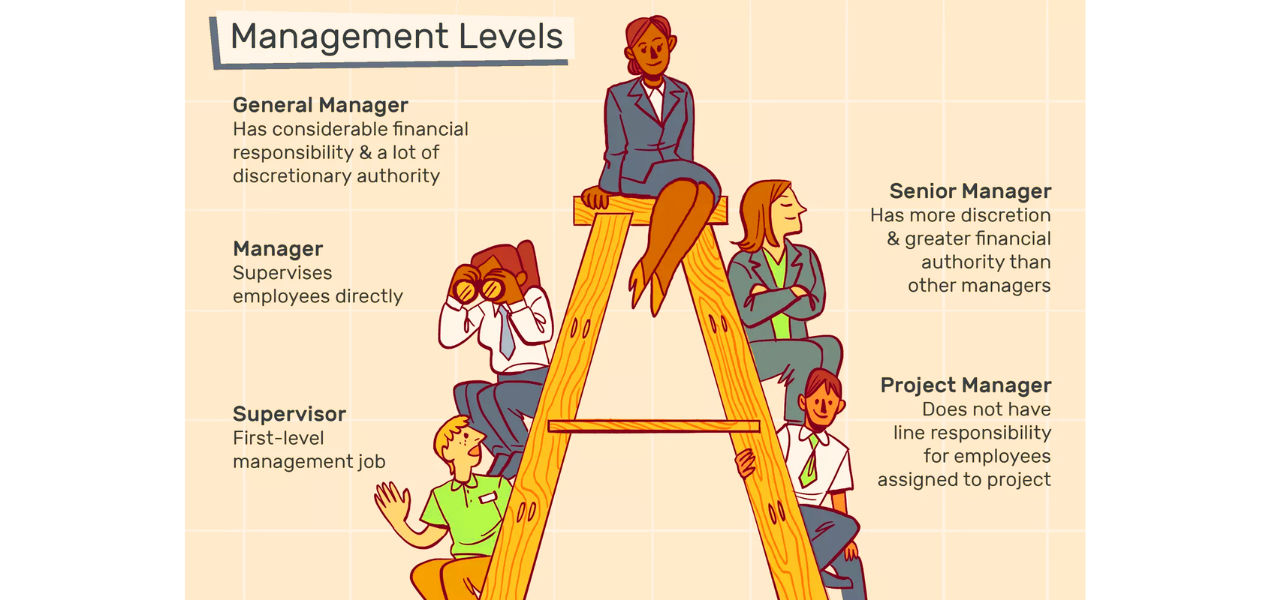
Source: liveabout.com
How Management Can Vary in Different Organizations?
Management styles and structures can vary significantly across different organizations. Factors such as industry, company culture, size, and leadership philosophy influence these variations. Some organizations may adopt a hierarchical structure with clear reporting lines, while others may prefer a more decentralized approach.
In small organizations, management is often less hierarchical, with fewer layers and more direct involvement in day-to-day operations. In contrast, large organizations may have multiple management layers, each with specific responsibilities, creating a more complex and formal structure.
The level of autonomy granted to employees, the decision-making process, and the emphasis on teamwork can also differ. Additionally, organizations may vary in their use of management tools and techniques, such as performance management systems, budgeting processes, and communication strategies. Understanding these differences is crucial for effective management and organizational success.
Challenges at Different Levels of Management
Each level faces unique challenges that require effective leadership, problem-solving skills, and adaptability to overcome. Management at different levels plays distinct roles essential for organizational success. Together, these levels work cohesively to drive smooth operations, effective communication, and the achievement of organizational objectives.
Top-Level Management:
- Strategic decision-making under uncertainty.
- Aligning the organization with market trends and competition.
- Managing stakeholder expectations.
Middle-Level Management:
- Translating strategic goals into actionable plans.
- Balancing directives from top management with team needs.
- Handling resistance to change.
Lower-Level Management:
- Ensuring productivity and employee engagement.
- Resolving immediate operational issues and conflicts.
- Managing time and resources effectively with limited authority.
Conclusion
Management levels are crucial for organizational structure, defining roles, responsibilities, and authority. This hierarchy ensures effective communication and coordination across all levels. Clearly defining duties and reporting lines fosters efficiency and accountability throughout the organization. Understanding the Top, Middle, and Operational levels is vital for organizational harmony and meeting business goals. Each level plays a unique role.
Top managers set goals, middle managers bridge the gap, and operational managers ensure effective daily tasks. A strong management hierarchy boosts operations and empowers employees. It also clarifies expectations and fosters growth. This leads to organizational success and sustainability in a competitive environment.
Frequently Asked Questions (FAQs)
What are the 4 types of manager's top level?
- CEO (Chief Executive Officer): The highest-ranking executive responsible for overall strategy and performance.
- COO (Chief Operating Officer): Oversees day-to-day operations and implements strategic plans.
- CFO (Chief Financial Officer): Manages the organization's finances, including budgeting, accounting, and financial planning.
- CMO (Chief Marketing Officer): Develops and executes marketing strategies to promote products or services.
What are the levels of management in an organization?
Levels of management refer to the hierarchy within an organization that defines authority and responsibilities. It is generally divided into three levels: top-level, middle-level, and lower-level management. Each level plays a specific role in planning, execution, and control of business activities.
Why are levels of management important in an organization?
Levels of management ensure proper division of work, smooth communication, and clear reporting structures. They help in assigning responsibilities based on skills and experience. This structure improves efficiency, coordination, and helps organizations achieve their goals effectively.
What is the role of top-level management?
Top-level management is responsible for setting long-term goals, strategic planning, and major decision-making. They guide the overall direction of the organization and ensure growth and sustainability. They also manage external relationships with stakeholders, investors, and government bodies.
What is the role of middle-level management?
Middle-level management acts as a bridge between top-level and lower-level management. They translate strategic plans into actionable tasks and ensure teams execute them properly. They also monitor performance, manage departments, and solve operational issues.
What does lower-level management do in an organization?
Lower-level management focuses on day-to-day operations and supervises frontline employees. They assign tasks, monitor performance, and ensure work is completed on time. They also handle immediate issues and maintain discipline at the operational level.
How do management levels contribute to organizational success?
Each management level contributes differently-top-level sets direction, middle-level executes plans, and lower-level ensures implementation. Together, they create a balanced workflow and efficient coordination. This teamwork leads to better productivity and organizational success.
What skills are required at different management levels?
Top-level managers need strategic thinking and leadership skills, middle-level managers require communication and decision-making skills, and lower-level managers need supervision and problem-solving abilities. Each level demands a mix of technical and soft skills based on responsibilities.
What challenges do managers face at different levels?
Top-level managers face strategic uncertainty and stakeholder pressure. Middle-level managers struggle with balancing execution and communication between teams. Lower-level managers deal with operational issues, employee conflicts, and maintaining productivity.
How does management structure vary across organizations?
Management structure depends on company size, industry, and culture. Small organizations have fewer layers and simpler hierarchies, while large organizations have multiple management levels. Some firms follow centralized decision-making, while others adopt decentralized structures.
454 articles published
Kevin D. Davis is a seasoned and results-driven Program/Project Management Professional with a Master's Certificate in Advanced Project Management. With expertise in leading multi-million dollar proje...
Get Free Consultation
By submitting, I accept the T&C and
Privacy Policy