
How to Conduct an AI-Powered Product Teardown?
Updated on Aug 31, 2026 | 0.7k+ views
Share:
Table of Contents
View all
Quick Overview
- An AI powered product teardown is a systematic analysis of an AI product that examines its user experience, value proposition, AI architecture, data strategy, metrics, and business model.
- Key areas of analysis include understanding the customer problem, mapping the user journey, evaluating model behavior and AI failure modes, and examining data and feedback loops.
- A strong teardown also assesses unit economics, product tradeoffs, competitive moat, and defensibility rather than focusing only on features and interface design.
- This guide explains how to conduct an AI powered product teardown, what areas to evaluate, why AI products require deeper analysis, and the common mistakes to avoid.
Build AI driven product leadership skills with SAFe® AI-Empowered Product Owner/Product Manager (6.0) and learn to apply AI across modern product management.
How to conduct an AI powered product teardown? step by step process
An AI powered product teardown works best when the analysis moves from the user problem to the underlying AI system and finally to the business model.
Looking at these areas together gives a more complete picture of the product.
Step-1 Define the Product, User, and Core Use Case
Start by identifying:
- What the product does
- Who it is built for
- What core problem it solves
- Where and how customers use it
- What the primary use case is
Step-2 Identify the Customer Problem and Value Proposition
Next, examine the problem the product is solving and whether the solution provides meaningful value.
Look at:
- Customer pain points
- Existing alternatives
- Main value proposition
- Reason customers may switch
- Frequency and importance of the problem
Step-3 Map the End-to-End User Experience
Review the full journey from first interaction to repeated usage.
Consider:
- Discovery
- Sign up
- Onboarding
- First value moment
- Core workflow
- Feedback
- Retention
Step-4 Analyze the AI Architecture
Examine how AI contributes to the product experience.
Consider:
- Foundation models
- Model selection
- Prompting
- Retrieval
- Tool use
- Agents
- Application logic
- Human intervention
Step-5 Examine the Data Strategy and Feedback Loops
Data can become an important part of an AI product's advantage.
Look for:
- Data sources
- Data quality
- Proprietary information
- User generated data
- Feedback signals
- Model improvement loops
Step-6 Evaluate Product Metrics and Tradeoffs
A strong teardown should connect product decisions with measurable outcomes.
Useful metrics may include:
- Activation
- Engagement
- Retention
- Conversion
- Accuracy
- Response time
- Cost per interaction
Step-7 Analyze the Business Model and Unit Economics
Understand how the product makes money and whether the economics can support growth.
Review:
- Pricing model
- Revenue sources
- Customer acquisition costs
- AI usage costs
- Gross margin
- Customer lifetime value
Step-8 Identify the Competitive Moat
Determine what makes the product difficult to replicate.
Potential sources include:
- Proprietary data
- Strong distribution
- Workflow integration
- Network effects
- Brand
- Customer relationships
- Technical advantages
Step-9 Form a Product Point of View
The final step is to turn observations into a clear opinion.
Summarize:
- What the product does well
- Where it falls short
- What creates its advantage
- What risks it faces
- What could improve its position
What is an AI powered product teardown?
An AI powered product teardown evaluates an AI product from the perspective of users, technology, data, business value, and competitive position. It looks at how these elements work together to create the overall product experience.
Why AI Products Require a Deeper Teardown
AI products behave differently from conventional software because their outputs can vary based on prompts, context, data, and model behavior.
A deeper teardown should therefore examine:
- Output quality
- Model limitations
- AI failure modes
- User trust
- Data dependencies
- Feedback loops
- AI related operating costs
This helps Product Managers understand not just what the product offers, but what powers the experience behind the interface.
What should an AI product teardown evaluate?
A useful AI powered product teardown should cover the complete product system rather than focusing only on features or interface design. Each area can reveal a different source of product value or risk.
1. User Problem and Product Value
Assess whether the product solves a meaningful problem and whether its AI capability actually improves the solution.
Look for:
- Clear customer value
- Frequency of the problem
- Importance of the outcome
- Improvement over existing alternatives
2. User Experience and Trust
AI can introduce uncertainty into the user experience, making trust particularly important.
Evaluate:
- Ease of interaction
- Transparency
- User control
- Feedback mechanisms
- Error handling
- Confidence in AI outputs
3. AI Architecture and Model Behavior
Understand how the AI system contributes to the product.
Consider:
- Model capabilities
- Context handling
- Retrieval
- Tool use
- Latency
- Output consistency
4. Data Strategy and Data Flywheel
Look at how data enters the product and whether usage creates better future outcomes.
However, a data advantage only matters when the data is relevant, reliable, and difficult for competitors to obtain.
5. Metrics and Product Tradeoffs
Evaluate both user and AI performance.
Metrics may include:
- Adoption
- Retention
- Conversion
- Accuracy
- Relevance
- Latency
- Cost
Every product makes tradeoffs, so the teardown should explain why those tradeoffs may have been made.
6. Business Model and Unit Economics
Understand how product usage translates into revenue and whether the underlying economics are sustainable.
Review:
- Pricing
- Customer acquisition
- Usage costs
- Gross margins
- Expansion
- Retention
7. Competitive Moat and Defensibility
Identify what protects the product from direct competition.
Consider whether the advantage comes from:
- Data
- Technology
- Distribution
- Workflow integration
- Network effects
- Customer switching costs
Build practical Agile skills with the Best Agile Management Certification Training Courses and advance your Agile career.
Common Mistakes to Avoid in an AI Product Teardown
A weak teardown often focuses on visible features and misses the underlying reasons a product succeeds. Avoiding these mistakes makes the analysis more useful for Product Managers and product teams.
1. Focusing Only on Features and UI
Features and interface design are easy to observe, but they do not explain the entire product.
The analysis should also examine:
- User problems
- AI behavior
- Data
- Economics
- Distribution
- Defensibility
2. Ignoring AI Failure Modes
AI systems can fail in ways that traditional software does not.
Review risks such as:
- Incorrect outputs
- Hallucinations
- Inconsistent responses
- Bias
- Poor retrieval
- Unexpected model behavior
Understanding these limitations helps explain the real quality of the product.
3. Assuming Complex AI Means Better Product
A technically sophisticated architecture does not automatically create a better product.
A simpler system may perform better when it:
- Solves the right problem
- Responds quickly
- Costs less
- Is easier to use
- Produces reliable results
The product outcome matters more than technical complexity alone.
4. Overlooking Data and Feedback Loops
A teardown that ignores data can miss one of the strongest sources of AI product advantage.
Ask:
- What data does the product collect?
- How is that data used?
- Does usage improve the system?
- Can competitors access similar data?
5. Ignoring Business Model and Unit Economics
A product may attract users but still struggle financially if AI costs are too high.
Always connect:
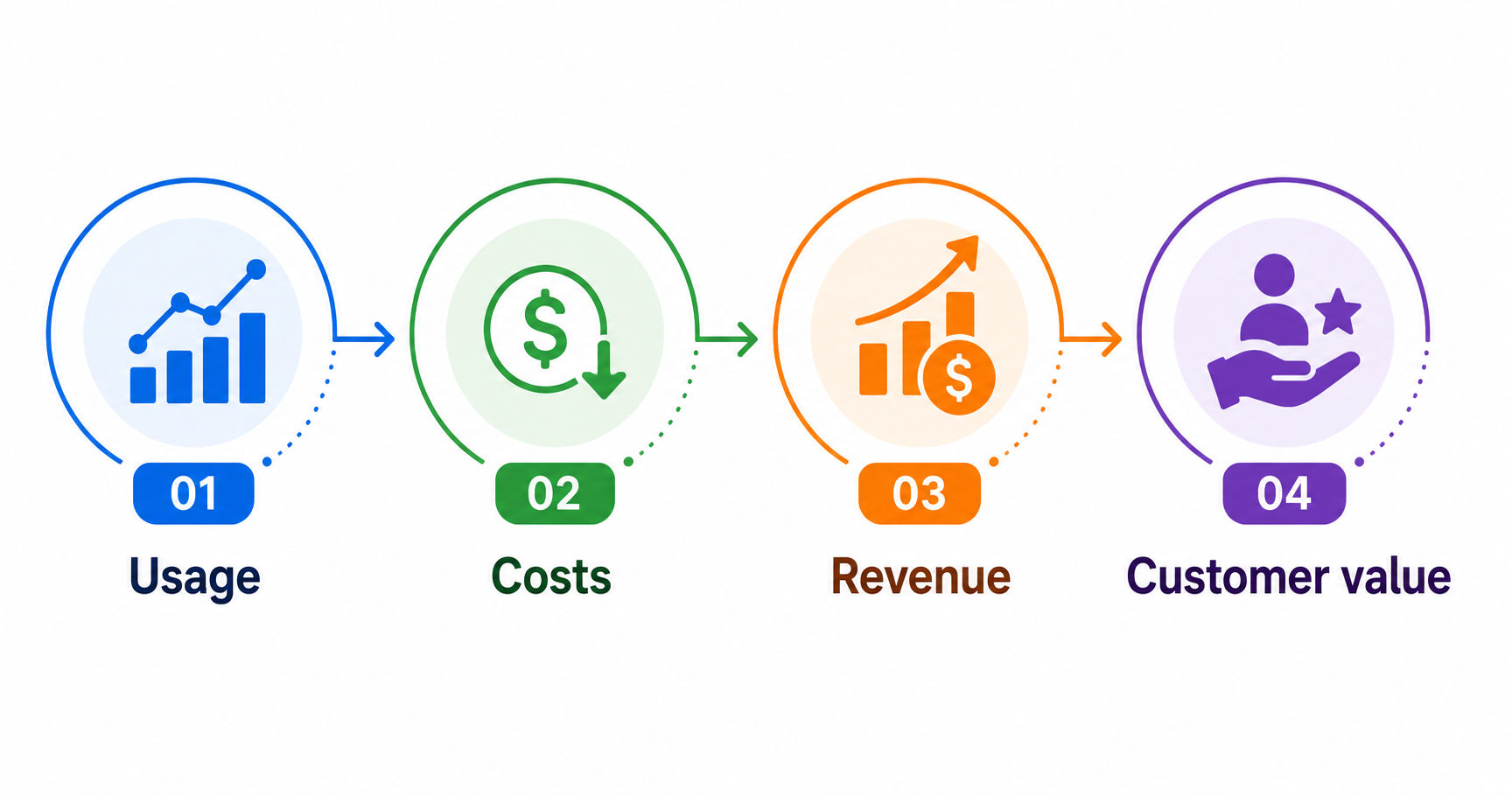
This is especially important for AI products with significant inference or infrastructure expenses.
6. Making Recommendations Without Considering Tradeoffs
Every product decision has consequences. A recommendation should explain what improves and what may become harder as a result.
For example, improving model quality may increase:
- Cost
- Latency
- Complexity
- Maintenance requirements
A good AI powered product teardown recognizes these tradeoffs instead of presenting every improvement as a clear win.
Learn How to Transition from Scrum Master to AI Product Manager and build the skills needed to move into AI focused product leadership.
Conclusion
An AI powered product teardown should go beyond features and UI to examine the customer problem, user experience, AI architecture, data strategy, metrics, economics, and competitive moat.
The key takeaway is to connect what the product does with why it works. A strong teardown should end with a clear product point of view, including the product's strengths, weaknesses, tradeoffs, risks, and sources of defensibility.
Contact our upGrad KnowledgeHut experts for personalized guidance on choosing the right course, career path, and certification to achieve your goals.
Frequently Asked Questions (FAQs)
1. How do you identify the most important insight from an AI product teardown?
The most important insight usually connects customer value, product performance, and business impact. Look for findings that explain why the product succeeds, where it is vulnerable, or what creates a meaningful competitive advantage.
2. How can Product Managers distinguish assumptions from evidence during a product teardown?
Separate what can be directly observed or supported by reliable sources from what is inferred. Product Managers can validate assumptions through product testing, customer feedback, public data, reviews, and competitor research before treating them as conclusions.
3. How can an AI product teardown reveal opportunities for a new product or feature?
A teardown can expose unmet customer needs, product gaps, workflow friction, or weaknesses in a competitor's AI experience. These findings can help identify opportunities to solve the same problem differently or improve an underserved part of the user's journey.
4. How can Product Managers evaluate whether an AI feature actually improves the user experience?
Compare the experience with and without the AI capability using measures such as task completion, time saved, accuracy, engagement, satisfaction, and retention. The feature should make the user's task easier or more valuable rather than simply adding AI.
5. How can an AI product teardown reveal hidden product weaknesses competitors may miss?
Looking beyond visible features can uncover weaknesses in data dependencies, model reliability, latency, cost, trust, scalability, or feedback loops. These areas may not be obvious from the product interface but can significantly affect long-term product performance.
6. How should Product Managers prioritize recommendations from a product teardown?
Recommendations should be ranked by customer impact, business value, effort, risk, and strategic importance. High impact opportunities that are practical to implement should generally receive priority over changes that only improve surface level features.
7. How can a product teardown help predict a competitor’s future product direction?
A teardown can reveal patterns in a competitor's product investments, AI capabilities, integrations, pricing, and customer experience. Repeated changes across these areas may indicate where the competitor is likely to expand or invest next.
8. What public data can Product Managers use when internal product data is unavailable?
Useful sources can include product documentation, pricing pages, public product demos, customer reviews, app store feedback, company announcements, job postings, research reports, and competitor websites. These sources can provide useful signals, but assumptions should be clearly separated from confirmed information.
9. How can Product Managers compare two AI products using the same teardown framework?
Use identical evaluation criteria for both products, such as user problems, experience, AI behavior, data strategy, metrics, business model, and competitive moat. A consistent framework makes differences easier to identify and reduces subjective comparisons.
10. How can an AI product teardown support product strategy and roadmap decisions?
A teardown can highlight competitor strengths, customer gaps, emerging capabilities, and areas where the current product may be vulnerable. Product teams can use these findings to prioritize roadmap opportunities, improve differentiation, and make more informed strategic decisions.
1639 articles published
KnowledgeHut is an outcome-focused global ed-tech company. We help organizations and professionals unlock excellence through skills development. We offer training solutions under the people and proces...
Get Free Consultation
By submitting, I accept the T&C and
Privacy Policy