
How to Become a SAFe Scrum Master (SSM): 2026 Complete Guide
Updated on Jul 28, 2026 | 195 views
Share:
Table of Contents
View all
Quick Overview
- To become a SAFe Scrum Master (SSM), complete the two-day training, pass the certification exam, and apply your skills in real Agile projects.
- The SSM certification validates your ability to facilitate Agile teams in a SAFe environment and is in high demand across enterprises adopting scaled Agile.
- Building strong Scrum, SAFe, facilitation, and coaching skills can help you advance into roles like Release Train Engineer and Agile Coach.
- In this guide, you'll learn the step-by-step certification process, required skills, career path, and tips to become a successful SAFe Scrum Master in 2026.
"If you're planning to advance your Agile career, the AI-Empowered SAFe® Scrum Master (6.0) course equips you with the knowledge to facilitate high performing teams in enterprise environments."
Master the Right Skills & Boost Your Career
Avail your free 1:1 mentorship session
Step by Step Guide to Becoming a SAFe Scrum Master
Learning How to Become a SAFe Scrum Master does not happen overnight. It involves building a strong Agile foundation, understanding Enterprise Agile principles, earning certification, and applying those skills in real projects. The following roadmap provides a practical path that many successful SAFe Scrum Masters have followed.
Career Timeline
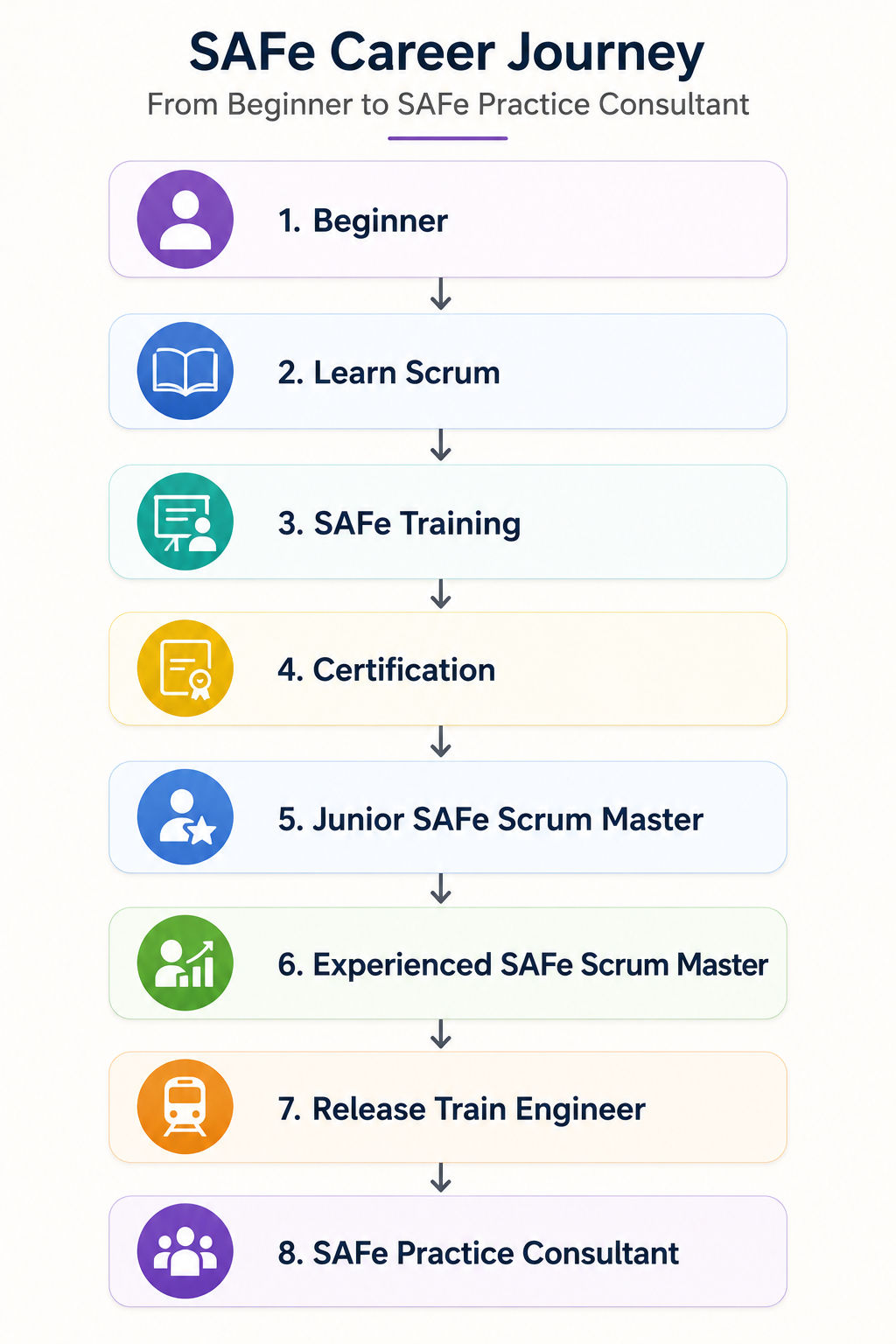
Step-1 Learn Agile and Scrum Fundamentals
Before exploring SAFe, it is important to understand Agile values, Scrum roles, ceremonies, and artifacts. These concepts form the foundation of every Agile framework.
For example, learning how Sprint Planning, Daily Scrum, Sprint Reviews, and Retrospectives work will make it much easier to understand how SAFe coordinates multiple Agile teams at scale.
Step-2 Understand the SAFe Framework
Once you have a solid Scrum foundation, the next step is learning how SAFe expands Agile across an entire organization. SAFe introduces concepts such as Agile Release Trains, Program Increment Planning, Lean thinking, and Value Streams that help multiple teams work toward common business objectives.
Understanding these concepts is an essential part of How to Become a SAFe Scrum Master because the role extends far beyond supporting a single Scrum team.
Step-3 Gain Scrum Experience
Practical experience is just as important as theoretical knowledge. Working as a Scrum Master, Agile team member, Product Owner, or Project Coordinator allows you to develop facilitation, communication, and problem-solving skills that employers value.
Even participating in internal Agile initiatives or volunteering to facilitate ceremonies can provide meaningful experience before pursuing larger Enterprise Agile roles.
Step-4 Attend Accredited SAFe Scrum Master Training
Formal SAFe Scrum Master training introduces the responsibilities of a Scrum Master within an Agile Release Train. Accredited courses provide structured learning, practical exercises, and real-world scenarios that prepare candidates for certification and enterprise environments.
For many professionals researching How to Become a SAFe Scrum Master, this training represents the transition from team level Agile practices to Enterprise Agile delivery.
Step-5 Prepare for the SSM Certification Exam
Preparing for the certification exam involves reviewing course materials, understanding SAFe principles, practicing sample questions, and revisiting important concepts such as servant leadership, PI Planning, and team facilitation.
Creating a study schedule and reviewing topics consistently often produces better results than trying to learn everything in a few days.
Step-6 Pass the Certification Exam
After completing the training and preparation, the next milestone is passing the certification exam. The exam evaluates your understanding of SAFe practices and your ability to apply Agile principles in enterprise environments.
Certification demonstrates your knowledge, but long-term success depends on how effectively you apply those concepts in real projects.
Step-7 Apply Your Knowledge in Real Projects
The best way to strengthen your skills is by working with Agile teams. Leading Scrum ceremonies, supporting PI Planning, removing team impediments, and collaborating with Release Train Engineers help build practical confidence.
For example, facilitating Sprint Reviews for several teams participating in the same Agile Release Train gives you firsthand experience with scaled collaboration.
Step-8 Continue Learning with Advanced SAFe Certifications
Enterprise Agile continues to evolve, making continuous learning essential. After gaining experience, many professionals pursue advanced certifications to deepen their expertise in Agile coaching, Release Train Engineering, Lean Portfolio Management, or enterprise transformation.
Understanding How to Become a SAFe Scrum Master is only the beginning. Continuous learning keeps your skills relevant as organizations adopt new delivery practices and emerging technologies.
By combining certification with practical experience, professionals position themselves for long term growth and leadership opportunities within the Enterprise Agile.
"If you're considering SAFe Scrum Master certification, read SAFe Scrum Master (SSM) Certification: Requirements, Benefits to understand the eligibility criteria, certification process, and career advantages."
Why Become a SAFe Scrum Master in 2026?
Organizations are investing more heavily in Enterprise Agile than ever before. As businesses manage larger digital transformation initiatives, coordinate distributed teams, and accelerate product delivery, they need professionals who can help Agile teams stay aligned and productive. This growing demand makes many professionals explore How to Become a SAFe Scrum Master as a long-term career choice.
Unlike traditional Scrum environments, Enterprise Agile requires collaboration across multiple teams working toward shared business goals. A SAFe Scrum Master helps teams remove impediments, improve communication, and contribute effectively within an Agile Release Train.
Learning How to Become a SAFe Scrum Master also creates opportunities for career progression into leadership roles such as Release Train Engineer, Agile Coach, and Enterprise Agile Coach.
As Enterprise Agile adoption expands, professionals who understand How to Become a SAFe Scrum Master will continue to find opportunities across diverse industries.
Skills You Need to Become a Successful SAFe Scrum Master
Certification provides knowledge, but long-term success depends on developing practical skills that help teams deliver value consistently. Organizations expect SAFe Scrum Masters to combine Agile expertise with leadership, coaching, and strong communication.
Professionals exploring How to Become a SAFe Scrum Master should focus on continuously improving these capabilities.
1. Agile and Scrum Fundamentals
Every SAFe Scrum Master should have a solid understanding of Agile values, Scrum events, roles, and artifacts. These fundamentals form the basis for managing work effectively within larger Enterprise Agile environments.
2. SAFe Principles
Understanding Lean Agile principles, Agile Release Trains, Program Increment Planning, and Value Streams enable Scrum Masters to support teams while keeping organizational goals in mind. This broader perspective distinguishes SAFe from traditional Scrum.
3. Facilitation Skills
Facilitation involves much more than running meetings. A SAFe Scrum Master guides productive discussions, encourages participation, and helps teams reach decisions efficiently while maintaining focus on business objectives.
For example, during PI Planning, effective facilitation ensures every team understands dependencies before work begins.
4. Communication
Clear communication keeps Product Owners, Scrum teams, stakeholders, and leadership aligned. Whether explaining business priorities or resolving misunderstandings, strong communication reduces delays and strengthens collaboration.
5. Stakeholder Management
Enterprise Agile involves many stakeholders with different expectations. A SAFe Scrum Master balances these perspectives while ensuring teams remain focused on delivering customer value.
Building trust through transparency and regular communication helps maintain alignment throughout delivery.
6. Conflict Resolution
Disagreements are common in large Agile environments. Effective Scrum Masters encourage constructive discussions, understand different viewpoints, and help teams reach practical solutions without disrupting delivery.
7. Metrics and Reporting
Tracking meaningful Agile metrics helps teams improve continuously. Instead of focusing only on velocity, Scrum Masters monitor predictability, flow, team health, and delivery trends to support informed decision making.
8. AI Literacy for Agile Teams
AI tools are increasingly supporting backlog refinement, reporting, sprint analytics, and documentation. While AI improves efficiency, Scrum Masters should understand how to use these tools responsibly while keeping collaboration and decision making centered on people.
"If you're planning to build a career in enterprise Agile, SAFe Certifications: List of Best SAFe Certifications 2026 helps you understand the best certification options available in 2026."
Best Tools Every SAFe Scrum Master Should Learn
Modern Agile teams rely on digital tools to improve collaboration, planning, communication, and reporting. While tools do not replace Agile practices, they make it easier to coordinate work across distributed teams and Agile Release Trains.
Jira is widely used for backlog management, Sprint Planning, issue tracking, and monitoring team progress. It remains one of the most requested tools in Scrum Master job descriptions.
Azure DevOps combines Agile planning with source control, automated testing, and deployment capabilities. Organizations using Microsoft technologies often rely on this platform to manage software delivery.
Microsoft Teams enables virtual meetings, file sharing, and communication across business and technical teams, making it especially useful for hybrid work environments.
Slack supports real-time collaboration through channels, integrations, and notifications that keep Agile teams connected throughout the day.
AI copilots for Agile are becoming increasingly common for generating reports, summarizing meetings, identifying delivery risks, and supporting backlog refinement. These tools reduce administrative effort while allowing Scrum Masters to focus more on coaching and collaboration.
Metrics dashboards provide visibility into delivery performance, sprint progress, dependency status, and team health. Reviewing these dashboards helps Scrum Masters identify trends and support continuous improvement.
"Choosing the right SAFe certification starts with understanding its value. Is SAFe® 4.5 Certification Worth The Price? explains the costs, career benefits, and factors to consider before enrolling."
Career Path After Becoming a SAFe Scrum Master
Becoming a SAFe Scrum Master is often the beginning of a rewarding Agile career rather than the destination. As professionals gain experience leading teams, facilitating Agile events, and supporting Enterprise Agile initiatives, they become eligible for broader leadership roles. Understanding How to Become a SAFe Scrum Master also helps professionals plan their long-term career growth within the SAFe ecosystem.
1. Junior Scrum Master
Most professionals begin by supporting an experienced Scrum Master while learning Agile ceremonies, team facilitation, and backlog management. This stage helps build confidence in working with Agile teams and understanding day-to-day delivery.
2. Scrum Master
As experience grows, professionals independently facilitate Scrum events, remove impediments, coach teams, and improve collaboration. This role develops leadership and communication skills that prepare professionals for scaled Agile environments.
3. Senior Scrum Master
Senior Scrum Masters often mentor other Scrum Masters, support multiple teams, and help organizations improve Agile maturity. They also participate in larger planning activities beyond individual teams.
4. SAFe Scrum Master
At this stage, professionals begin working within Agile Release Trains and collaborate closely with Product Management, Release Train Engineers, Product Owners, and business stakeholders. Learning How to Become a SAFe Scrum Master enables professionals to contribute effectively to Enterprise Agile delivery.
5. Release Train Engineer
Many experienced SAFe Scrum Masters transition into Release Train Engineer roles after gaining experience with Program Increment Planning, dependency management, and cross team coordination. The RTE supports the entire Agile Release Train and drives enterprise wide collaboration.
6. Agile Coach
Agile Coaches focus on improving Agile adoption across teams and departments. Instead of supporting a single Agile Release Train, they coach leaders, Scrum Masters, and teams to strengthen Agile practices throughout the organization.
7. Enterprise Agile Coach
Enterprise Agile Coaches work with senior leadership to scale Agile across business units. They guide organizational transformation, improve delivery models, and help enterprises build long term Agile capability.
8. SAFe Practice Consultant
SAFe Practice Consultants train, coach, and guide organizations through SAFe implementation. They support leadership teams, facilitate major transformation initiatives, and help organizations adopt Enterprise Agile successfully.
9. Enterprise Transformation Leader
This leadership position focuses on driving large scale business transformation through Agile practices. Enterprise Transformation Leaders align strategy, technology, operations, and culture to help organizations respond more effectively to changing market demands.
For professionals researching How to Become a SAFe Scrum Master, this career path demonstrates that certification can open doors to increasingly strategic leadership opportunities across the Enterprise Agile.
"Choosing the right certification can accelerate your Agile career. Explore Best Agile Management Certification Training Courses to understand which programs best match your professional goals."
Conclusion
Enterprise Agile continues to reshape how organizations deliver products, respond to customer expectations, and manage large-scale transformation. As companies coordinate more teams across complex delivery environments, the role of the SAFe Scrum Master has become increasingly valuable.
Understanding How to Become a SAFe Scrum Master begins with learning Agile and Scrum fundamentals, gaining practical experience, completing accredited training, earning certification, and applying those skills in real world projects.
If you are ready to build a career in Enterprise Agile, now is an excellent time to explore accredited SAFe Scrum Master Certification training and continue developing the knowledge and practical experience needed to grow into future leadership roles such as Release Train Engineer, Agile Coach, or SAFe Practice Consultant.
Contact our upGrad KnowledgeHut experts for personalized guidance on choosing the right course, career path, and certification to achieve your goals.
Frequently Asked Questions
Can beginners become a SAFe Scrum Master?
Yes. Beginners can become a SAFe Scrum Master by first learning Agile and Scrum fundamentals, completing accredited SAFe Scrum Master training, and earning certification. Practical experience gained through Agile projects further strengthens job readiness.
Is prior Scrum experience mandatory?
Prior Scrum experience is not mandatory for certification, but it is highly beneficial. Familiarity with Scrum roles, ceremonies, and Agile principles makes it easier to understand scaled Agile concepts and apply them effectively in Enterprise Agile environments.
How long does it take to become certified?
The timeline depends on your background. Professionals already familiar with Scrum can often complete training and certification within a few weeks, while beginners may spend additional time building Agile knowledge before taking the certification exam.
Is the SSM exam difficult?
The exam is manageable with proper preparation. Reviewing course materials, understanding SAFe principles, practicing sample questions, and participating actively during training significantly improve your chances of passing on the first attempt.
Which is better, SSM or CSM?
The right choice depends on your career goals. CSM focuses on Scrum for individual teams, while SSM prepares professionals to work within Enterprise Agile environments using the SAFe framework. Those interested in large scale Agile transformation often choose SSM.
Can I work remotely as a SAFe Scrum Master?
Yes. Many organizations now employ remote and hybrid SAFe Scrum Masters. Using collaboration tools, facilitating virtual ceremonies, and maintaining effective communication enable Scrum Masters to support distributed Agile teams successfully.
What industries hire SAFe Scrum Masters?
SAFe Scrum Masters are hired across information technology, banking, healthcare, retail, manufacturing, telecommunications, consulting, and other industries implementing Enterprise Agile. Demand continues to increase as organizations scale Agile across business functions.
What certification should I pursue after SSM?
After gaining practical experience, many professionals pursue certifications such as Release Train Engineer, SAFe Practice Consultant, Lean Portfolio Management, or Agile Coach credentials to expand their leadership opportunities within Enterprise Agile.
Do SAFe Scrum Masters need coding skills?
No. Coding is not a requirement for becoming a SAFe Scrum Master. However, understanding software development concepts, Agile practices, and technical workflows helps improve collaboration with development teams and other technical stakeholders.
Is SAFe Scrum Master certification worth it in 2026?
Yes. As organizations continue adopting Enterprise Agile, certified SAFe Scrum Masters remain in demand across multiple industries. Combined with practical experience and continuous learning, the certification can support long term career growth and advancement into leadership roles.
1639 articles published
KnowledgeHut is an outcome-focused global ed-tech company. We help organizations and professionals unlock excellence through skills development. We offer training solutions under the people and proces...
Get Free Consultation
By submitting, I accept the T&C and
Privacy Policy
Ready to learn about Agile Certifications Roadmap?