
Implementing SAFe Course: What to Expect and How to Prepare
Updated on Jul 28, 2026 | 169 views
Share:
Table of Contents
View all
Master the Right Skills & Boost Your Career
Avail your free 1:1 mentorship session
Quick Overview
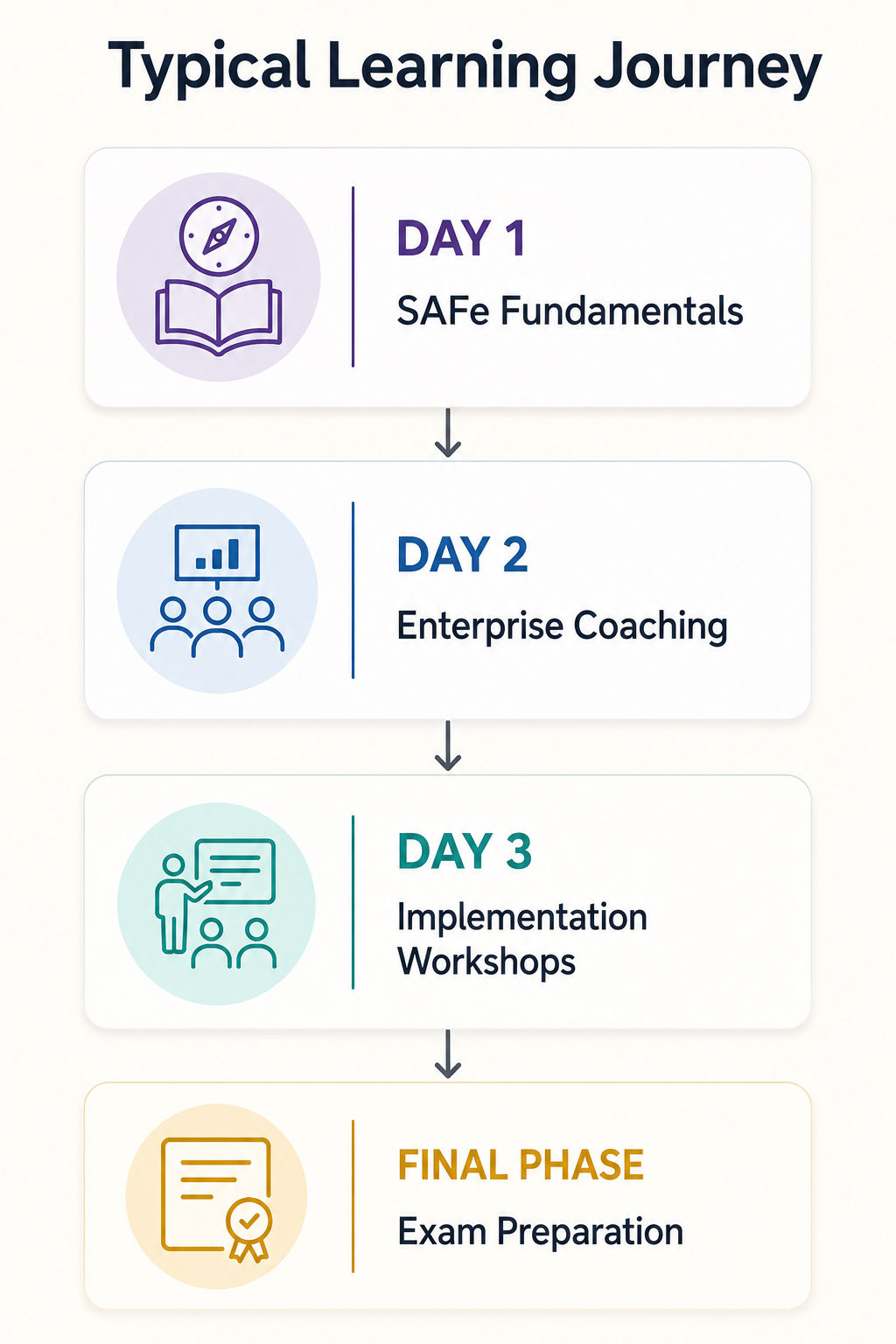
- The Implementing SAFe Course is a 4-day training program that prepares professionals to lead enterprise Agile transformations and earn SPC certification.
- It combines expert led learning with hands on workshops, PI Planning simulations, and real-world implementation exercises.
- A strong foundation in Agile, Scrum, Lean, and SAFe helps you get the most from the course and prepare for the SPC exam.
- In this guide, you'll learn what to expect, how to prepare, who should attend, and what comes next after the course.
If you're planning to lead enterprise Agile transformations, the AI-Empowered Implementing SAFe® with SPC Certification (6.0) course equips you with the skills to implement SAFe while leveraging AI in modern Agile environments.
What to Expect During the Implementing SAFe Course
Unlike traditional classroom programs that rely heavily on lectures, the Implementing SAFe Course emphasizes participation, discussion, and practical application. Every activity is designed to help participants experience what enterprise transformation looks like in real organizations.
1. Interactive Classroom Sessions
Training sessions are led by experienced instructors who have worked on enterprise Agile transformations. Rather than presenting theory alone, they explain how SAFe principles solve common business challenges using practical examples from different industries.
Participants are encouraged to ask questions, share workplace experiences, and discuss challenges faced by their own organizations. These conversations make learning more relevant and engaging.
2. Hands on Workshops
A significant portion of the course is dedicated to practical workshops where participants apply the concepts they learn. These sessions often include PI Planning simulations, coaching exercises, and transformation planning activities that mirror real business situations.
For example, learners may work together to identify dependencies between teams, prioritize features, and develop an implementation roadmap for a fictional enterprise.
3. Group Activities
Collaboration is an essential part of enterprise Agile transformation. Throughout the course, participants solve case studies, discuss implementation strategies, and work in groups to address realistic organizational challenges.
These activities expose learners to different perspectives while strengthening communication and facilitation skills that are essential for SAFe Practice Consultants.
4. Practical Implementation Scenarios
One of the most valuable aspects of the training is its focus on real implementation scenarios. Participants explore topics such as executive engagement, organizational resistance, change management, and enterprise adoption.
Professionals looking for How to Prepare Implementing SAFe certification should expect an active learning environment where participation is just as important as technical knowledge.
Check out Top 8 SPC Job Roles to learn about the roles, responsibilities, and career paths available.
How to Prepare Before Attending the Implementing SAFe Course
One of the most frequently asked questions is How to Prepare Implementing SAFe certification before attending the official training. Although the course is designed for experienced professionals, spending time on the fundamentals makes learning far more productive.
1. Learn Agile and Scrum Fundamentals
A solid understanding of Agile values, Scrum roles, Sprint planning, reviews, and retrospectives provides a strong foundation for advanced SAFe concepts. Participants who already understand Agile practices usually find it easier to connect team level execution with enterprise transformation.
2. Understand Lean Principles
Lean thinking is central to SAFe. Before attending the course, spend time understanding concepts such as delivering customer value, reducing waste, continuous improvement, and decentralized decision making.
For example, think about how reducing approval delays in your own workplace could improve delivery speed. Relating Lean principles to familiar situations makes them easier to understand.
3. Familiarize Yourself with SAFe Terminology
Terms such as Agile Release Train, Program Increment, Value Stream, Solution Train, and Lean Portfolio Management appear frequently throughout the training. Becoming familiar with these concepts beforehand allows you to focus on implementation instead of definitions.
Professionals searching How to Prepare Implementing SAFe certification often underestimate the value of simply understanding the common terminology before the course begins.
4. Read the SAFe Big Picture
The SAFe Big Picture provides a visual overview of the framework and explains how different roles, events, and practices connect with one another.
Do not worry about memorizing every section. The goal is to understand how the overall framework is organized, so classroom discussions become easier to follow.
5. Review Enterprise Agile Concepts
Enterprise Agile involves much more than managing development teams. Read about organizational alignment, cross functional collaboration, portfolio management, business agility, and leadership engagement.
Understanding these ideas beforehand will help you appreciate why enterprise transformation requires a structured framework rather than isolated Agile practices.
6. Reflect on Your Organization's Challenges
One of the best ways to prepare is to think about the challenges your own organization faces.
Ask yourself questions such as:
- Why do projects experience delays?
- Where do teams struggle to collaborate?
- What prevents faster decision making?
- How could leadership support Agile adoption more effectively?
These reflections allow you to relate classroom discussions directly to your own workplace.
Professionals preparing How to Prepare Implementing SAFe certification often gain the most value when they enter the course with real business questions they hope to solve.
What Is the Implementing SAFe Course?
The Implementing SAFe Course is an advanced training program created for professionals who want to lead enterprise Agile transformations. While many Agile certifications focus on managing individual teams, this course teaches participants how to introduce and sustain Agile practices across an entire organization.
The primary objective is to prepare learners for the responsibilities of a SAFe Practice Consultant (SPC). These professionals help organizations adopt SAFe, coach leaders, launch Agile Release Trains, and create a culture of continuous improvement.
For example, knowing the stages of PI Planning is useful. Guiding hundreds of employees through their first PI Planning event, resolving dependencies, and aligning business priorities is the practical expertise this course develops.
Professionals researching How to Prepare Implementing SAFe certification often discover that success depends as much on practical thinking as technical knowledge. The course is designed with this philosophy in mind.
Before enrolling in an SPC program, explore SPC Certification: Is It Worth It for Mid-Level Managers? to understand who benefits most from the certification.
Who Should Attend the Implementing SAFe Course?
The Implementing SAFe Course is intended for professionals who want to influence organizational change rather than simply support individual Agile teams. If your career goals involve enterprise leadership, this training provides valuable knowledge and practical experience.
Ideal Professional Profiles
Agile Coaches, Scrum Masters, Release Train Engineers, Program Managers, Enterprise Coaches, Consultants, and Transformation Leaders are among the professionals who benefit most from this course.
For example, a Scrum Master who currently facilitates one or two teams may use the course to develop the skills needed to support organization wide Agile transformation.
Recommended Experience
Although prior SAFe experience is not always required, participants benefit from having experience with Scrum, Agile delivery, Lean thinking, stakeholder collaboration, or cross functional leadership.
Professionals researching How to Prepare Implementing SAFe certification should remember that practical experience often matters more than memorizing concepts. Understanding how teams operate, communicate, and solve problems provides an excellent foundation for the course.
Want to know how SAFe certification can impact your career growth? Read Leading SAFe Certification Salary Benchmarks for the latest salary insights and industry trends.
What Happens After Completing the Course?
Completing the Implementing SAFe Course is an important milestone, but it is only the beginning of your journey as a transformation leader. The knowledge you gain becomes truly valuable when you apply it to real organizational challenges. Professionals who understand How to Prepare Implementing SAFe certification before attending the course are often able to focus more on practical application and long-term learning.
SPC Certification Exam
After completing the training, eligible participants can take the SAFe Practice Consultant certification exam. The exam assesses your ability to apply SAFe principles in practical situations rather than simply recall definitions. Questions are based on enterprise transformation, Lean leadership, coaching, Agile Release Trains, and implementation strategies.
A good preparation strategy is to review the course material while it is still fresh, revisit the SAFe framework, and practice applying concepts to real business scenarios. Instead of memorizing terminology, think about how you would respond if your own organization faced a transformation challenge. This approach makes exam preparation more meaningful and effective.
Applying Learning at Work
The real value of the course becomes evident when you start applying what you have learned in your workplace. Certified professionals often support Agile Release Train launches, coach business and technology leaders, facilitate PI Planning events, and help organizations improve collaboration across teams.
For example, if several departments in a company struggle with conflicting priorities and delayed releases, a SAFe Practice Consultant can help establish better planning, improve communication, and create alignment around shared business objectives. These practical improvements demonstrate the impact of enterprise Agile transformation.
Professionals who spend time understanding How to Prepare Implementing SAFe certification before training are generally more confident when applying the concepts because they can focus on solving organizational problems rather than learning the basics.
Continuous Learning
Enterprise Agile is constantly evolving, and successful SAFe professionals continue learning long after they earn their certification. Staying engaged with the SAFe community, following framework updates, attending webinars, and participating in professional discussions help keep your knowledge current.
As you gain practical experience, you may also choose to explore advanced responsibilities within enterprise transformation, mentor other Agile professionals, or contribute to larger organizational improvement initiatives. Continuous learning ensures that your skills remain relevant as business needs, and Agile practices continue to develop.
Before choosing an Agile certification, explore Best Agile Management Certification Training Courses to understand the most popular credentials and their career benefits.
Conclusion
The Implementing SAFe Course is much more than a certification program. It prepares professionals to lead enterprise Agile transformation with confidence by combining leadership, coaching, Lean thinking, and practical implementation skills.
If you have been searching for How to Prepare Implementing SAFe certification, the best approach is to build a strong understanding of Agile, Scrum, Lean principles, and the SAFe framework before attending the course.
Contact our upGrad KnowledgeHut experts for personalized guidance on choosing the right course, career path, and certification to achieve your goals.
Frequently Asked Questions
How should I prepare before attending the Implementing SAFe Course?
Start by building a solid understanding of Scrum, Agile values, Lean principles, and enterprise Agile concepts. Reviewing the SAFe Big Picture and becoming familiar with common SAFe terminology will help you follow the training more comfortably. This is one of the most effective ways to approach How to Prepare Implementing SAFe certification.
Is prior SAFe experience required?
No. Previous SAFe experience is helpful but not mandatory. Professionals with experience in Scrum, Agile delivery, or leadership roles generally adapt quickly because they already understand the fundamentals of Agile ways of working.
How interactive is the Implementing SAFe training?
The course is highly interactive. It combines instructor led discussions, group activities, practical workshops, transformation exercises, and real business case studies. Participants are encouraged to share experiences and solve implementation challenges together.
What skills are most important for success?
A good understanding of Agile, Lean thinking, communication, coaching, facilitation, collaboration, and problem solving is valuable. An open mindset and willingness to learn from practical experiences also contribute to success during the course.
How difficult is the SPC certification exam?
The exam is considered advanced because it focuses on enterprise level Agile implementation. Candidates who actively participate in the training, review the official learning material, and practice applying concepts to real scenarios usually feel well prepared.
Can Scrum Masters attend the course?
Yes. Experienced Scrum Masters are among the professionals who benefit the most. The course helps them move beyond team level facilitation and develop the skills needed to support organization wide Agile transformation.
What is the duration of the Implementing SAFe Course?
The course is typically delivered over four days of instructor led training. The exact schedule may vary depending on the authorized training provider, but it generally combines classroom learning with practical workshops and discussions.
What career opportunities are available after SPC certification?
After earning SPC certification, professionals can pursue roles such as SAFe Practice Consultant, Enterprise Agile Coach, Agile Transformation Consultant, Release Train Engineer, Lean Portfolio Consultant, or Transformation Program Manager.
How soon should I take the certification exam after training?
It is generally recommended to take the exam while the course content is still fresh in your mind. Reviewing your notes, practicing scenario based questions, and revisiting key concepts soon after training can improve your confidence.
Is the Implementing SAFe Course worth it?
For professionals who want to lead enterprise Agile transformation, the course is a valuable investment. It develops practical implementation skills, leadership capabilities, and coaching expertise that extend well beyond exam preparation. Those who understand How to Prepare Implementing SAFe certification before attending often gain even greater value from the learning experience because they can focus on applying concepts in real organizational settings.
1639 articles published
KnowledgeHut is an outcome-focused global ed-tech company. We help organizations and professionals unlock excellence through skills development. We offer training solutions under the people and proces...
Get Free Consultation
By submitting, I accept the T&C and
Privacy Policy
Ready to learn about Agile Certifications Roadmap?