
- Blog Categories
- Project Management
- Agile Management
- IT Service Management
- Cloud Computing
- Business Management
- BI And Visualisation
- Quality Management
- Cyber Security
- DevOps
- Most Popular Blogs
- PMP Exam Schedule for 2025: Check PMP Exam Date
- Top 60+ PMP Exam Questions and Answers for 2025
- PMP Cheat Sheet and PMP Formulas To Use in 2025
- What is PMP Process? A Complete List of 49 Processes of PMP
- Top 15+ Project Management Case Studies with Examples 2025
- Top Picks by Authors
- Top 170 Project Management Research Topics
- What is Effective Communication: Definition
- How to Create a Project Plan in Excel in 2025?
- PMP Certification Exam Eligibility in 2025 [A Complete Checklist]
- PMP Certification Fees - All Aspects of PMP Certification Fee
- Most Popular Blogs
- CSM vs PSM: Which Certification to Choose in 2025?
- How Much Does Scrum Master Certification Cost in 2025?
- CSPO vs PSPO Certification: What to Choose in 2025?
- 8 Best Scrum Master Certifications to Pursue in 2025
- Safe Agilist Exam: A Complete Study Guide 2025
- Top Picks by Authors
- SAFe vs Agile: Difference Between Scaled Agile and Agile
- Top 21 Scrum Best Practices for Efficient Agile Workflow
- 30 User Story Examples and Templates to Use in 2025
- State of Agile: Things You Need to Know
- Top 24 Career Benefits of a Certifed Scrum Master
- Most Popular Blogs
- ITIL Certification Cost in 2025 [Exam Fee & Other Expenses]
- Top 17 Required Skills for System Administrator in 2025
- How Effective Is Itil Certification for a Job Switch?
- IT Service Management (ITSM) Role and Responsibilities
- Top 25 Service Based Companies in India in 2025
- Top Picks by Authors
- What is Escalation Matrix & How Does It Work? [Types, Process]
- ITIL Service Operation: Phases, Functions, Best Practices
- 10 Best Facility Management Software in 2025
- What is Service Request Management in ITIL? Example, Steps, Tips
- An Introduction To ITIL® Exam
- Most Popular Blogs
- A Complete AWS Cheat Sheet: Important Topics Covered
- Top AWS Solution Architect Projects in 2025
- 15 Best Azure Certifications 2025: Which one to Choose?
- Top 22 Cloud Computing Project Ideas in 2025 [Source Code]
- How to Become an Azure Data Engineer? 2025 Roadmap
- Top Picks by Authors
- Top 40 IoT Project Ideas and Topics in 2025 [Source Code]
- The Future of AWS: Top Trends & Predictions in 2025
- AWS Solutions Architect vs AWS Developer [Key Differences]
- Top 20 Azure Data Engineering Projects in 2025 [Source Code]
- 25 Best Cloud Computing Tools in 2025
- Most Popular Blogs
- Company Analysis Report: Examples, Templates, Components
- 400 Trending Business Management Research Topics
- Business Analysis Body of Knowledge (BABOK): Guide
- ECBA Certification: Is it Worth it?
- Top Picks by Authors
- Top 20 Business Analytics Project in 2025 [With Source Code]
- ECBA Certification Cost Across Countries
- Top 9 Free Business Requirements Document (BRD) Templates
- Business Analyst Job Description in 2025 [Key Responsibility]
- Business Analysis Framework: Elements, Process, Techniques
- Most Popular Blogs
- Best Career options after BA [2025]
- Top Career Options after BCom to Know in 2025
- Top 10 Power Bi Books of 2025 [Beginners to Experienced]
- Power BI Skills in Demand: How to Stand Out in the Job Market
- Top 15 Power BI Project Ideas
- Top Picks by Authors
- 10 Limitations of Power BI: You Must Know in 2025
- Top 45 Career Options After BBA in 2025 [With Salary]
- Top Power BI Dashboard Templates of 2025
- What is Power BI Used For - Practical Applications Of Power BI
- SSRS Vs Power BI - What are the Key Differences?
- Most Popular Blogs
- Data Collection Plan For Six Sigma: How to Create One?
- Quality Engineer Resume for 2025 [Examples + Tips]
- 20 Best Quality Management Certifications That Pay Well in 2025
- Six Sigma in Operations Management [A Brief Introduction]
- Top Picks by Authors
- Six Sigma Green Belt vs PMP: What's the Difference
- Quality Management: Definition, Importance, Components
- Adding Green Belt Certifications to Your Resume
- Six Sigma Green Belt in Healthcare: Concepts, Benefits and Examples
- Most Popular Blogs
- Latest CISSP Exam Dumps of 2025 [Free CISSP Dumps]
- CISSP vs Security+ Certifications: Which is Best in 2025?
- Best CISSP Study Guides for 2025 + CISSP Study Plan
- How to Become an Ethical Hacker in 2025?
- Top Picks by Authors
- CISSP vs Master's Degree: Which One to Choose in 2025?
- CISSP Endorsement Process: Requirements & Example
- OSCP vs CISSP | Top Cybersecurity Certifications
- How to Pass the CISSP Exam on Your 1st Attempt in 2025?
- Most Popular Blogs
- Top 7 Kubernetes Certifications in 2025
- Kubernetes Pods: Types, Examples, Best Practices
- DevOps Methodologies: Practices & Principles
- Docker Image Commands
- Top Picks by Authors
- Best DevOps Certifications in 2025
- 20 Best Automation Tools for DevOps
- Top 20 DevOps Projects of 2025
- OS for Docker: Features, Factors and Tips
- More
- Agile & PMP Practice Tests
- Agile Testing
- Agile Scrum Practice Exam
- CAPM Practice Test
- PRINCE2 Foundation Exam
- PMP Practice Exam
- Cloud Related Practice Test
- Azure Infrastructure Solutions
- AWS Solutions Architect
- IT Related Pratice Test
- ITIL Practice Test
- Devops Practice Test
- TOGAF® Practice Test
- Other Practice Test
- Oracle Primavera P6 V8
- MS Project Practice Test
- Project Management & Agile
- Project Management Interview Questions
- Release Train Engineer Interview Questions
- Agile Coach Interview Questions
- Scrum Interview Questions
- IT Project Manager Interview Questions
- Cloud & Data
- Azure Databricks Interview Questions
- AWS architect Interview Questions
- Cloud Computing Interview Questions
- AWS Interview Questions
- Kubernetes Interview Questions
- Web Development
- CSS3 Free Course with Certificates
- Basics of Spring Core and MVC
- Javascript Free Course with Certificate
- React Free Course with Certificate
- Node JS Free Certification Course
- Data Science
- Python Machine Learning Course
- Python for Data Science Free Course
- NLP Free Course with Certificate
- Data Analysis Using SQL
- Home
- Blog
- Artificial Intelligence
- How Does AI Help Marketers Understand Customer Intent?
How Does AI Help Marketers Understand Customer Intent?
Updated on Aug 13, 2026 | 456 views
Share:
Table of Contents
View all
- How AI helps marketers understand and predict customer intent
- What is customer intent in marketing?
- How AI identifies different types of customer intent
- How AI uses customer data to identify intent
- AI techniques used to analyze customer intent
- How AI improves customer intent analysis
- AI customer intent analysis across the marketing funnel
- Conclusion
Quick Overview
- AI helps marketers understand customer intent by analyzing search queries, website behavior, conversations, purchases, and engagement signals to identify what customers are looking for.
- Technologies such as NLP, sentiment analysis, machine learning, predictive analytics, and generative AI help uncover patterns and context behind customer actions.
- AI can identify different types of intent, including informational, navigational, commercial investigation, and transactional intent.
- This guide explains how AI detects customer intent, analyzes customer data, predicts next actions, and supports personalization across different stages of the marketing funnel.
Build future ready marketing skills with AI Driven Digital Marketing Training.
How AI helps marketers understand and predict customer intent
AI for customer intent helps marketers analyze large volumes of customer information and identify patterns that may not be easy to detect manually. It can process search behavior, website activity, conversations, and engagement signals to build a clearer picture of intent.
1. Analyzing search queries and customer behavior
Search queries can reveal what a customer is looking for at a particular moment.
AI can analyze:
• Search terms
• Query patterns
• Pages visited
• Products viewed
• Time spent on pages
• Previous interactions
This helps marketers distinguish between general information seeking and stronger purchase interest.
2. Identifying patterns across customer interactions
A single customer interaction may not reveal much about intent. AI can combine signals across multiple touchpoints.
It can identify:
• Repeated product views
• Frequent content engagement
• Changes in browsing behavior
• Recurring questions
• Increased interaction frequency
These patterns help marketers understand whether customer interest is increasing, decreasing, or changing.
3. Understanding context behind customer searches
The same keyword can represent different intentions depending on the context.
AI can consider:
• Previous searches
• Customer history
• Current session behavior
• Conversation context
• Product or service interactions
This allows AI for customer intent to interpret searches more accurately instead of relying only on individual keywords.
4. Predicting customer needs and next actions
AI can use historical behavior and current signals to estimate what a customer may need next.
Possible predictions can involve:
• Continued research
• Product comparison
• Purchase consideration
• Repeat purchase
• Support requirements
Predictive intent analysis helps marketers plan more relevant messages and experiences.
What is customer intent in marketing?
Customer intent refers to the underlying purpose behind a customer's search, interaction, or action. It helps marketers understand what the customer wants to accomplish rather than simply identifying who the customer is.
Types of customer intent
Common customer intent categories include:
• Informational intent
• Navigational intent
• Commercial investigation intent
• Transactional intent
Understanding these categories helps marketers align content, messaging, and offers with the customer's current objective.
Customer intent vs customer needs
Customers need to describe the problem or requirement a customer wants to address. Customer intent describes the action or purpose behind the customer's current interaction.
For example, a customer may need a solution to a business problem while showing informational intent during the research stage.
Why understanding customer intent matters
Understanding intent helps marketers:
• Deliver more relevant content
• Improve customer segmentation
• Personalize communication
• Prioritize high value prospects
• Reduce irrelevant messaging
• Support better customer experiences
This is where AI for customer intent becomes valuable because marketers can analyze many behavioral signals simultaneously.
Explore whether AI will replace SEO specialists and content marketers and how these roles are evolving with AI.
How AI identifies different types of customer intent
AI can classify customer interactions based on language, behavior, search patterns, and context. This allows marketers to understand where customers are in their decision journey.
1. Informational intent
Informational intent indicates that a customer is looking to learn or understand something.
Signals may include:
• Educational searches
• How to queries
• Definition based questions
• Guide or research content consumption
AI can identify these patterns and help marketers provide educational content.
2. Navigational intent
Navigational intent occurs when a customer is trying to reach a particular brand, website, product, or resource.
Signals can include:
• Brand searches
• Product page searches
• Login or location queries
• Searches for specific resources
AI can use these signals to distinguish known brand interest from broader research.
3. Commercial investigation intent
Commercial investigation indicates that a customer is evaluating available options before planning.
Signals may include:
• Comparison searches
• Reviews
• Pricing research
• Feature comparisons
• Repeated product visits
AI for customer intent can help identify these stronger consideration signals and support more relevant communication.
4. Transactional intent
Transactional intent shows a stronger likelihood of taking action such as purchasing, subscribing, registering, or booking.
Signals may include:
• Pricing page visits
• Cart activity
• Checkout behavior
• Product availability searches
• Purchase related queries
Recognizing transactional intent can help marketers prioritize customers who are closer to conversion.
Build in demand skills with Artificial Intelligence Courses with Certification Online and prepare for AI focused career opportunities.
How AI uses customer data to identify intent
AI customer intent analysis depends on combining different data sources rather than relying on a single interaction. The quality and relevance of these signals directly influence the quality of intent predictions.
Search and website behavior
Website activity can provide valuable intent signals.
AI can analyze:
• Search queries
• Page visits
• Navigation paths
• Click behavior
• Session duration
• Content engagement
Purchase and transaction history
Past transactions can provide important context about future behavior.
AI can identify:
• Purchase frequency
• Product preferences
• Repeat purchases
• Average order behavior
• Changes in purchasing patterns
This helps marketers understand whether current activity matches previous customer behavior.
Customer conversations and feedback
Customer conversations can provide direct clues about intent.
AI can analyze:
• Chat interactions
• Support conversations
• Reviews
• Survey responses
• Email communication
• Open ended feedback
Natural language analysis allows marketers to identify concerns, questions, expectations, and purchase signals.
Engagement and interaction signals
Engagement can indicate changes in customer interest.
Relevant signals include:
• Email opens
• Content clicks
• Video engagement
• Form interactions
• Social engagement
• Campaign responses
Combining these signals can make AI for customer intent more useful than relying on one isolated action.
Explore AI Search Optimization to understand how businesses can improve visibility across AI-powered search platforms.
AI techniques used to analyze customer intent
Different AI techniques can be applied to understand language, behavior, patterns, and future actions. The appropriate method depends on the data available and the business objective.
1. Natural language processing
Natural language processing helps AI understand text-based customer interactions.
It can identify:
• Keywords and phrases
• Customer questions
• Topics
• Intent categories
• Context
2. Sentiment analysis
Sentiment analysis identifies the emotional tone behind customer communication.
It can help detect:
• Positive sentiment
• Negative sentiment
• Frustration
• Satisfaction
• Concern
Sentiment can provide additional context when combined with customer behavior.
3. Predictive analytics
Predictive analytics use historical and current signals to estimate future customer behavior.
It can support:
• Purchase prediction
• Churn prediction
• Engagement prediction
• Lead prioritization
• Next action prediction
4. Machine learning and pattern recognition
Machine learning models can identify recurring relationships across large datasets.
They can help marketers discover:
• Behavioral patterns
• Customer segments
• Conversion signals
• Changes in engagement
• Similar customer behaviors
5. Generative AI and conversational analysis
Generative AI can analyze customer conversations and summarize intent in a more accessible way.
It can help marketers:
• Summarize conversations
• Identify customer priorities
• Extract important questions
• Detect purchase signals
• Organize qualitative feedback
Explore how Generative AI is reshaping Search Experience Optimization (SXO) and changing the way brands create search experiences.
How AI improves customer intent analysis
AI for customer intent improves traditional intent analysis by processing information faster and connecting signals across multiple customer touchpoints. This allows marketers to respond to intent changes more quickly.
Real time intent detection
AI can analyze customer signals as interactions occur rather than relying only on historical reports.
Real time signals can help identify:
• Increased purchase interest
• Sudden changes in behavior
• Support needs
• New research activity
Personalization based on intent
Intent data can help marketers tailor experiences based on what customers appear to need.
Personalization can involve:
• Relevant content
• Product recommendations
• Targeted messaging
• Timing of communication
• Customized offers
More accurate customer segmentation
Traditional segmentation often relies heavily on demographics or static attributes. AI can add behavioral and intent-based signals.
Segments can be created based on:
• Purchase readiness
• Engagement level
• Research stage
• Product interest
• Predicted behavior
Predictive customer journey analysis
AI can help marketers understand how customers move between stages.
It can identify likely transitions such as:
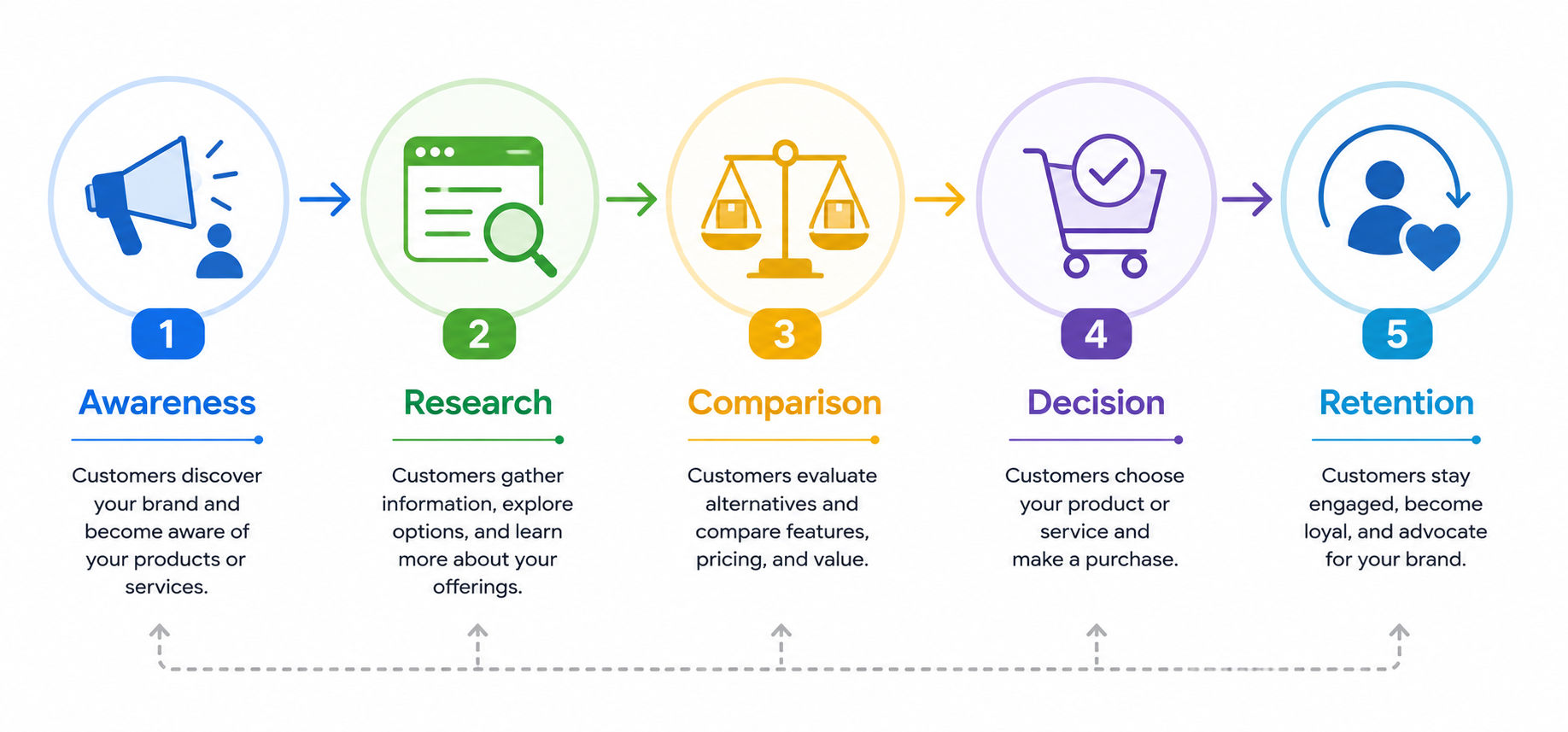
This helps teams anticipate changing intent and respond before the next customer action occurs.
AI customer intent analysis across the marketing funnel
Intent changes as customers move through the marketing funnel. AI for customer intent helps marketers recognize these changes and adapt content, communication, and engagement strategies accordingly.
1. Awareness stage intent
Customers at the awareness stage are usually looking for information and trying to understand a problem or opportunity.
AI can identify:
• Early informational searches
• Educational content engagement
• Broad topic interest
• Initial brand discovery
2. Consideration stage intent
At the consideration stage, customers begin evaluating potential solutions.
AI can identify:
• Comparison activity
• Product research
• Pricing interest
• Reviews and case study engagement
This can help marketers provide more detailed and relevant information.
3. Decision stage intent
Decision stage customers show stronger signals of conversion readiness.
AI can detect:
• Pricing page activity
• Product inquiries
• Cart behavior
• Demo requests
• Repeated high intent interactions
These signals can help marketing and sales teams prioritize opportunities.
4. Post purchase intent
Customer intent continues after purchase.
Customers may seek:
• Product support
• Setup information
• Additional products
• Upgrades
• Renewals
• Service assistance
AI can help identify these signals and support retention, cross selling, and customer experience strategies.
Conclusion
AI for customer intent helps marketers understand customer behavior, needs, and likely next actions more effectively. It is most useful when supported by reliable customer data, clear intent signals, and human judgment.
The key is to connect AI-driven intent insights with relevant marketing actions and personalization.
Contact our upGrad KnowledgeHut experts for personalized guidance on choosing the right course, career path, and certification to achieve your goals.
Frequently Asked Questions
1. How can marketers distinguish high intent customers from casual visitors using AI?
AI can combine signals such as repeated website visits, product views, search behavior, pricing interactions, and engagement history. Multiple high intent signals together can indicate stronger purchase interest than a single casual interaction.
2. How does AI handle ambiguous or conflicting customer intent signals?
AI can compare different signals and consider their context instead of relying on one action. When signals conflict or remain unclear, businesses can use additional customer data or human review before assigning a final intent category.
3. Can AI detect customer intent before a customer makes a purchase related action?
Yes. AI can identify early signals from searches, content engagement, browsing patterns, and previous interactions. These signals can help estimate purchase interest before direct action, such as a purchase or checkout.
4. How can customer intent scores be used to prioritize leads?
Intent scores can rank customers based on their likelihood of taking a desired action. Sales and marketing teams can use these scores to focus attention on leads showing stronger engagement and purchase related signals.
5. How can AI customer intent analysis improve marketing campaign timing?
AI can identify when customer behavior indicates increasing interest or changing needs. Marketers can use these signals to adjust the timing of messages, offers, follow ups, and other campaign activities.
6. How does AI identify changing customer intent across multiple interactions?
AI can compare customer behavior over time rather than evaluating each interaction separately. Changes in search activity, engagement, purchases, or conversations can indicate that the customer's intent has shifted.
7. Can AI combine intent signals from marketing, sales, and customer support?
Yes. AI can bring together signals from different customer touchpoints to create a broader view of intent. Combining these signals can provide more context than analyzing marketing, sales, or supporting data separately.
8. How can marketers measure the accuracy of AI predicted customer intent?
Accuracy can be evaluated by comparing predicted intent with actual customer actions. Metrics such as conversion rates, lead quality, and prediction accuracy can help determine whether the intent model produces useful results.
9. What causes AI customer intent predictions to become inaccurate over time?
Predictions can become less reliable when customer behavior, market conditions, products, or data patterns change. Poor data quality and outdated models can also affect accuracy, making regular monitoring and model updates important.
10. How can businesses use customer intent data without compromising customer privacy?
Businesses should collect only necessary customer information and follow applicable privacy and data protection requirements. Access controls, secure data handling, transparency, and appropriate consent can help protect customer information.
1639 articles published
KnowledgeHut is an outcome-focused global ed-tech company. We help organizations and professionals unlock excellence through skills development. We offer training solutions under the people and proces...
Get Free Consultation
By submitting, I accept the T&C and
Privacy Policy