
- Blog Categories
- Project Management
- Agile Management
- IT Service Management
- Cloud Computing
- Business Management
- BI And Visualisation
- Quality Management
- Cyber Security
- DevOps
- Most Popular Blogs
- PMP Exam Schedule for 2025: Check PMP Exam Date
- Top 60+ PMP Exam Questions and Answers for 2025
- PMP Cheat Sheet and PMP Formulas To Use in 2025
- What is PMP Process? A Complete List of 49 Processes of PMP
- Top 15+ Project Management Case Studies with Examples 2025
- Top Picks by Authors
- Top 170 Project Management Research Topics
- What is Effective Communication: Definition
- How to Create a Project Plan in Excel in 2025?
- PMP Certification Exam Eligibility in 2025 [A Complete Checklist]
- PMP Certification Fees - All Aspects of PMP Certification Fee
- Most Popular Blogs
- CSM vs PSM: Which Certification to Choose in 2025?
- How Much Does Scrum Master Certification Cost in 2025?
- CSPO vs PSPO Certification: What to Choose in 2025?
- 8 Best Scrum Master Certifications to Pursue in 2025
- Safe Agilist Exam: A Complete Study Guide 2025
- Top Picks by Authors
- SAFe vs Agile: Difference Between Scaled Agile and Agile
- Top 21 Scrum Best Practices for Efficient Agile Workflow
- 30 User Story Examples and Templates to Use in 2025
- State of Agile: Things You Need to Know
- Top 24 Career Benefits of a Certifed Scrum Master
- Most Popular Blogs
- ITIL Certification Cost in 2025 [Exam Fee & Other Expenses]
- Top 17 Required Skills for System Administrator in 2025
- How Effective Is Itil Certification for a Job Switch?
- IT Service Management (ITSM) Role and Responsibilities
- Top 25 Service Based Companies in India in 2025
- Top Picks by Authors
- What is Escalation Matrix & How Does It Work? [Types, Process]
- ITIL Service Operation: Phases, Functions, Best Practices
- 10 Best Facility Management Software in 2025
- What is Service Request Management in ITIL? Example, Steps, Tips
- An Introduction To ITIL® Exam
- Most Popular Blogs
- A Complete AWS Cheat Sheet: Important Topics Covered
- Top AWS Solution Architect Projects in 2025
- 15 Best Azure Certifications 2025: Which one to Choose?
- Top 22 Cloud Computing Project Ideas in 2025 [Source Code]
- How to Become an Azure Data Engineer? 2025 Roadmap
- Top Picks by Authors
- Top 40 IoT Project Ideas and Topics in 2025 [Source Code]
- The Future of AWS: Top Trends & Predictions in 2025
- AWS Solutions Architect vs AWS Developer [Key Differences]
- Top 20 Azure Data Engineering Projects in 2025 [Source Code]
- 25 Best Cloud Computing Tools in 2025
- Most Popular Blogs
- Company Analysis Report: Examples, Templates, Components
- 400 Trending Business Management Research Topics
- Business Analysis Body of Knowledge (BABOK): Guide
- ECBA Certification: Is it Worth it?
- Top Picks by Authors
- Top 20 Business Analytics Project in 2025 [With Source Code]
- ECBA Certification Cost Across Countries
- Top 9 Free Business Requirements Document (BRD) Templates
- Business Analyst Job Description in 2025 [Key Responsibility]
- Business Analysis Framework: Elements, Process, Techniques
- Most Popular Blogs
- Best Career options after BA [2025]
- Top Career Options after BCom to Know in 2025
- Top 10 Power Bi Books of 2025 [Beginners to Experienced]
- Power BI Skills in Demand: How to Stand Out in the Job Market
- Top 15 Power BI Project Ideas
- Top Picks by Authors
- 10 Limitations of Power BI: You Must Know in 2025
- Top 45 Career Options After BBA in 2025 [With Salary]
- Top Power BI Dashboard Templates of 2025
- What is Power BI Used For - Practical Applications Of Power BI
- SSRS Vs Power BI - What are the Key Differences?
- Most Popular Blogs
- Data Collection Plan For Six Sigma: How to Create One?
- Quality Engineer Resume for 2025 [Examples + Tips]
- 20 Best Quality Management Certifications That Pay Well in 2025
- Six Sigma in Operations Management [A Brief Introduction]
- Top Picks by Authors
- Six Sigma Green Belt vs PMP: What's the Difference
- Quality Management: Definition, Importance, Components
- Adding Green Belt Certifications to Your Resume
- Six Sigma Green Belt in Healthcare: Concepts, Benefits and Examples
- Most Popular Blogs
- Latest CISSP Exam Dumps of 2025 [Free CISSP Dumps]
- CISSP vs Security+ Certifications: Which is Best in 2025?
- Best CISSP Study Guides for 2025 + CISSP Study Plan
- How to Become an Ethical Hacker in 2025?
- Top Picks by Authors
- CISSP vs Master's Degree: Which One to Choose in 2025?
- CISSP Endorsement Process: Requirements & Example
- OSCP vs CISSP | Top Cybersecurity Certifications
- How to Pass the CISSP Exam on Your 1st Attempt in 2025?
- Most Popular Blogs
- Top 7 Kubernetes Certifications in 2025
- Kubernetes Pods: Types, Examples, Best Practices
- DevOps Methodologies: Practices & Principles
- Docker Image Commands
- Top Picks by Authors
- Best DevOps Certifications in 2025
- 20 Best Automation Tools for DevOps
- Top 20 DevOps Projects of 2025
- OS for Docker: Features, Factors and Tips
- More
- Agile & PMP Practice Tests
- Agile Testing
- Agile Scrum Practice Exam
- CAPM Practice Test
- PRINCE2 Foundation Exam
- PMP Practice Exam
- Cloud Related Practice Test
- Azure Infrastructure Solutions
- AWS Solutions Architect
- IT Related Pratice Test
- ITIL Practice Test
- Devops Practice Test
- TOGAF® Practice Test
- Other Practice Test
- Oracle Primavera P6 V8
- MS Project Practice Test
- Project Management & Agile
- Project Management Interview Questions
- Release Train Engineer Interview Questions
- Agile Coach Interview Questions
- Scrum Interview Questions
- IT Project Manager Interview Questions
- Cloud & Data
- Azure Databricks Interview Questions
- AWS architect Interview Questions
- Cloud Computing Interview Questions
- AWS Interview Questions
- Kubernetes Interview Questions
- Web Development
- CSS3 Free Course with Certificates
- Basics of Spring Core and MVC
- Javascript Free Course with Certificate
- React Free Course with Certificate
- Node JS Free Certification Course
- Data Science
- Python Machine Learning Course
- Python for Data Science Free Course
- NLP Free Course with Certificate
- Data Analysis Using SQL
- Home
- Blog
- Project Management
- Top 6 Project Characteristics for Guaranteed Success
Top 6 Project Characteristics for Guaranteed Success
Updated on Mar 21, 2024 | 7 min read | 3K+ views
Share:
Table of Contents
View all
Over the years, numerous insightful articles have increased across the internet, delving into the nuances of effective project management. Yet, in practice, every project inherently embodies certain key attributes that manifest at the surface level. Many elements coalesce to shape the characteristics of a project. Consequently, it's plausible to continuously encounter readings on this topic yet still find gaps in foundational understanding.
Hence, a more pragmatic approach entails learning from seasoned professionals who possess first-hand insights into various characteristics of a project. With this in mind, I am presenting the six 'not-to-miss' project aspects that comprehensively cover nearly every item on the list of attributes. These insights serve as invaluable guides, providing a holistic perspective and equipping aspiring project managers with the requisite knowledge to navigate the intricacies of project execution successfully.
Ultimate PMP Formula Cheat Sheet
Get a quick, exam-ready PMP cheat sheet with all essential formulas and key concepts in one place.
What are the Characteristics of a Project?
Projects are never one-of-a-kind. Thus, project characteristics are case-specific. Still, if you are searching for a few common characteristics of a good project, you are most likely to come across these parameters:
- Objectives
- Life Span
- Risk and Uncertainty
- Uniqueness
- Flexibility
- Cost
Getting these things sorted at the ground level can guarantee timely goal fulfillment. Also, it ensures optimal usage of resources and minimal project cost, and you can minimize the uncertainties involved.
Nowadays, many popular courses on Project Management are live for sale online. You can pursue an on-demand career in this field by gaining the required education from trained Project Management professionals.
Upon enrolling for one of these globally recognized certifications, you learn how to leverage project characteristics and become part of a powerful network. Eventually, you realize the importance of interpreting the characteristics of a project in project management.
Why are Project Characteristics Important?
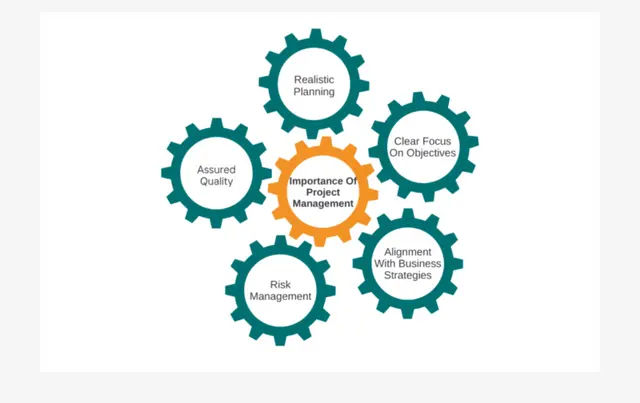
Understanding the key characteristics of a project enables managers to customize their approach toward attaining goals. These are some reasons you, too, should prioritize identifying any program's attributes:
- Assists Picking the Right Project Management Approach
With the right team and the right set of tools, a firm can successfully determine the correct set of characteristics. This, in turn, helps choose the right course of action.
- Allows Superior Risk Management
Potential issues will always exist no matter how well the project managers plan their execution. However, the risks will be remarkably minimized if the managers can explain the characteristics of a project without much friction.
- Helps Reduce the Project's Complexity
When the decision-makers are aware of all six characteristics of a project, they can determine the time complexity involved. It helps them recruit the required expertise and skills to successfully meet the agendas.
- Makes the Project Objectives Crystal Clear
When the project characteristics are well documented, it makes the work of project managers ten times easier. They can easily define the project scope and allocate necessary resources as per specific needs.
Top Characteristics of a Project
In this section, you will learn about the top characteristics of a project and examples in the real world:
1.Objectives
All projects have specific goals or objectives defined while they are being planned. These objectives are related to estimated time for completion, target revenue, improvement of work quality, etc. The success of a project is directly proportional to the repetitive fulfillment of these objectives.
Therefore, while counting the key project characteristics, you should not ignore the ‘objectives’ part. It gives time-to-time judgment on whether an individual or team is on the right track.
Here’s an example of a SMART project objective:
“The management aims to improve traffic to a specific landing page by 25% within the next two months by implementing customized suggestions offered by the new marketing tool.”
In the above scenario, there are plenty of parameters to scrutinize the project’s performance at regular intervals.
Are you wondering where to learn project management skills in a structured fashion?
Explore the best PRINCE2 training certification program that comes with 88 hours of self-paced learning modules. Additionally, you can evaluate your skills throughout the curriculum in exchange for no additional fees once you’ve enrolled now.
2. Life Span
Despite the unparalleled success of set characteristics of a project, no specific bunch of rules should be applicable forever. Any successful project has to be time-bound, and the involved teams should have diverse responsibilities to maintain the same level of productivity.
Here’s a relatable example for better understanding:
Suppose your marketing agency has got an offer to run ad campaigns for a manufacturing company for six months. However, after breaking down the task, you can see that there are three distinct areas that need to be addressed separately based on a prioritization checklist.
So, you allocate a team for the three different modules, after which they will work on the first subpart for the first three months. The second and third responsibilities need to be fulfilled within two months and one month, respectively.
3. Risk and Uncertainty
Project execution depends a lot on forecasting. Therefore, project managers always need to take care of potential adversities. For this reason, even before the real work starts, great project developers aim to adequately define a project. Finally, based on the data available, all relevant measures are adopted to reduce the uncertainty of outcomes.
Please try to understand the factor with the following example:
A construction company mandatorily assesses scenarios that can lead to project delays or cost overruns before they head out. For them, uncertainties may arise from issues like supply chain disruptions, soil conditions, labor shortages, and so on. So, they prefer hiring a professional who has at least 36 months of experience managing associated risks and handling vital project characteristics.
You can strategically step up to such a role by completing a globally acclaimed PMP self-paced training from KnowledgeHut upGrad. It offers a guaranteed ‘Exam-Pass Study Plan’ and over 500 Premium exam questions - a perfect combination to ace the standardized PMP test framework.
4. Uniqueness
While most sources attempt to explain the characteristics of a project, these citations frequently generalize the programs. It is utterly wrong, as projects have unique attributes.
No two projects are entirely identical, even if the parent organizations that have taken the initiatives are similar. To gauge the uniqueness, project managers primarily consider the features and area of application of the project.
Here’s a quick example:
Many cricket analysts all over the world, with the intention of attracting a global audience, have designed platforms like Cricket World, Cricwaves, Cricket365, etc. All these websites, though they primarily do the same work, i.e., presenting comprehensive performance analytics and introducing offbeat player profiles, are still significantly different in terms of specializations. This factor enhances the user experience for all fans.
5. Flexibility
A successful project should accommodate changes for good on the go. These alterations bring freshness to a project and help meet user needs more dynamically.
At present, are you employed at a reputed firm as a project manager?
If the answer is yes, and if you somehow face challenges in giving a new touch to running projects, consider exploring KnowledgeHut's Project Management certifications. These are not only pre-recorded lectures discussing project characteristics at a surface level but are recognized certifications that provide you with dedicated doubt-clearing sessions.
6. Cost
Cost and lifespan are two key project characteristics that go hand in hand. If the lifespan has to be cut down, the project cost goes up. It is simply because more resources are needed to achieve the objectives quicker.
Tools and Techniques for Managing Project Characteristics
Project management tools and techniques help save both time and money. Also, they bring in automation - the future we all dream about, irrespective of the sector.
These are some popular techniques you will come across while scrutinizing project management in the modern timeline:
- Gantt Charts
- Work Breakdown Structure
- Kanban Boards
- Professional Dashboards
- Risk Matrix
- Agile Project Management
- PERT, etc.
When mastered, all these topics can guide a project manager to function independently and directly efficiently. Most importantly, they slack the hard work required for each activity.
Conclusion
Starting on a prestigious career as a project management professional has never been more accessible, thanks to the availability of mentors boasting extensive industry experience. Beginning your journey by familiarizing yourself with the fundamental project characteristics through online resources is highly recommended. Subsequently, you can transition into a role within your desired sector, leveraging your newfound knowledge. To further enhance your expertise, consider upskilling through a reputable platform like KnowledgeHut upGrad.
The journey with us promises to be truly exhilarating, offering you the opportunity to effortlessly master all the necessary skill sets. With the guidance of seasoned professionals and access to top-tier educational resources, you can navigate the intricacies of project management with confidence and competence, paving the way for a successful and fulfilling career trajectory.
Frequently Asked Questions (FAQs)
1. How does a project’s life cycle relate to its characteristics?
The project's life cycle begins with initiation and continues until completion. Project characteristics like managers’ involvement, time complexity, and objectives vary across all these stages. As a result, the stakeholders need to monitor the progress closely and then update the tasks. It ensures that the entire life cycle aligns with the characteristics.
2. How is risk management related to project characteristics?
Risk management has a first-hand relationship with project characteristics as it is all about reducing potential threats. Various factors like a project's scope, budget, and rigidity determine the types and levels of risks. Hence, it is essential to form risk management strategies after minutely evaluating the characteristics of any project.
3. How do project characteristics affect team dynamics and collaboration?
Team collaboration is hugely affected due to project timelines. Complex projects call for diversified skill sets, while more elaborate tasks need team members with a certain specialization. Also, tight deadlines can generate more stress, fostering adaptability and the need for efficient task allocation.
454 articles published
Kevin D. Davis is a seasoned and results-driven Program/Project Management Professional with a Master's Certificate in Advanced Project Management. With expertise in leading multi-million dollar proje...
Get Free Consultation
By submitting, I accept the T&C and
Privacy Policy