
- Home
- Blog
- Project Management
- How to Transition into Project Management with PMP: Career Switcher's Guide
How to Transition into Project Management with PMP: Career Switcher's Guide
Updated on Jul 31, 2026 | 254 views
Share:
Table of Contents
View all
- Step-by-Step Roadmap to Transition into Project Management with PMP
- Transferable Skills That Make Career Switching Easier
- Is PMP the Right Certification for a Career Transition?
- Understanding PMP Eligibility as a Career Switcher
- Best Project Management Roles to Target After PMP
- Industries That Hire PMP Certified Career Switchers
- Tools Every Aspiring Project Manager Should Learn
- Common Career Switcher Challenges When Moving into Project Management
- How Long Does It Take to Transition into Project Management?
- Conclusion
Quick Overview
- Transitioning into project management with PMP involves building on existing skills, meeting eligibility requirements, earning PMP certification, and gaining practical project experience.
- Project management can be a practical career switch because skills such as leadership, communication, planning, coordination, and problem-solving transfer across industries.
- PMP certification adds professional credibility, but hands-on experience and strong project management skills are equally important for career growth.
- In this guide, the key steps, transferable skills, certification options, job roles, tools, and career transition timeline are covered.
Looking to transition into project management? UpGrad KnowledgeHut PMP Certification Training can help build the knowledge and skills needed for the PMP journey.
Ultimate PMP Formula Cheat Sheet
Get a quick, exam-ready PMP cheat sheet with all essential formulas and key concepts in one place.
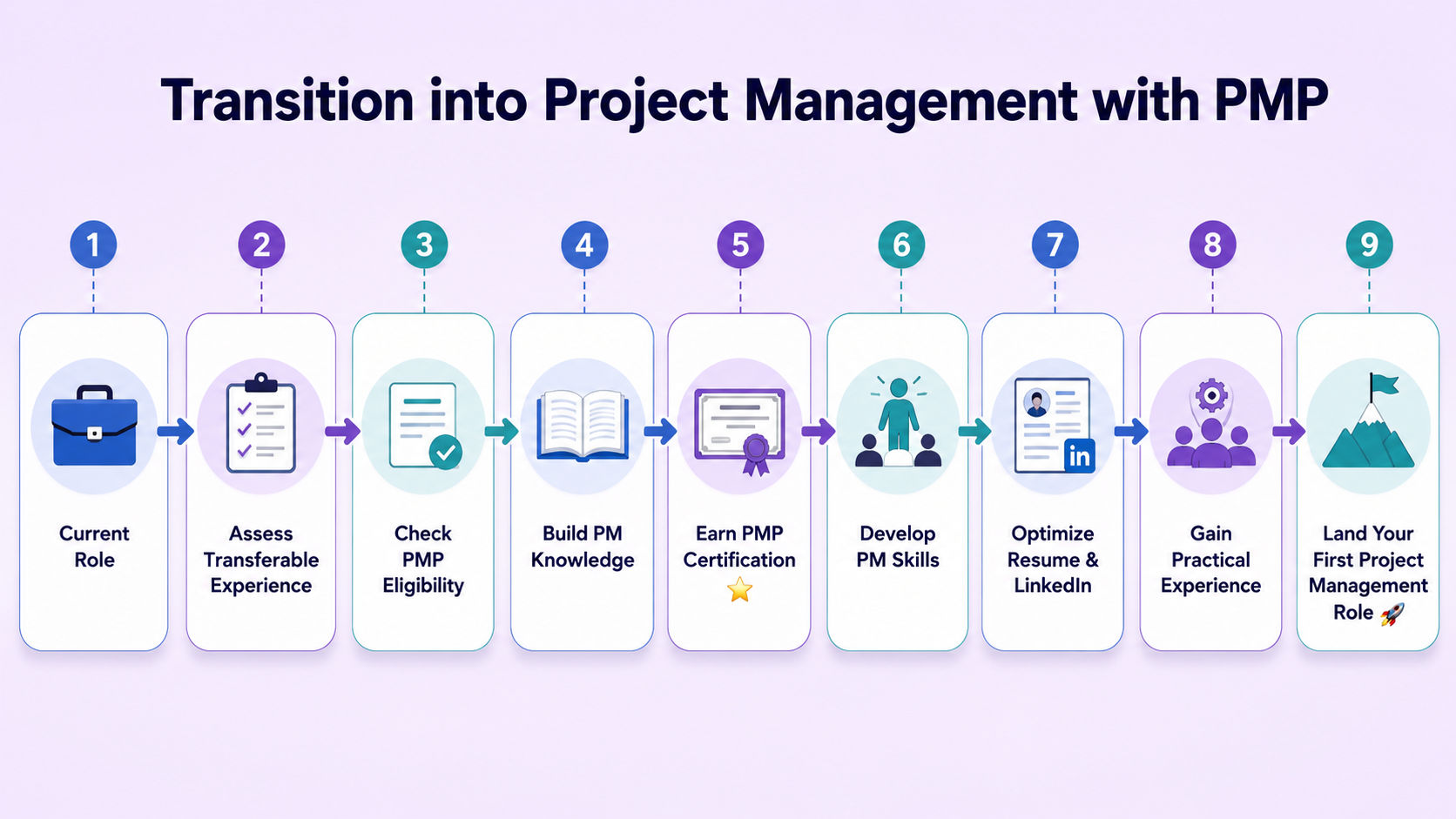
Step-by-Step Roadmap to Transition into Project Management with PMP
A successful transition into project management rarely happens overnight. The process typically involves a series of strategic steps that help transform existing professional experience into a strong project management profile while building credibility with employers.
Step 1: Assess Transferable Project Experience
One of the biggest misconceptions about project management is the belief that an official Project Manager title is required before pursuing PM opportunities.
In reality, project-related responsibilities exist across many roles and industries. Team coordination, initiative leadership, stakeholder communication, and process improvement often involve project management activities.
Look for experience involving:
- Coordinating teams
- Managing deadlines
- Leading initiatives
- Working with clients or stakeholders
- Overseeing budgets
- Improving business processes
- Implementing new systems or tools
For example, a marketing specialist leading a product launch, an engineer coordinating a plant upgrade, or an HR professional implementing an onboarding program may already possess relevant project experience.
Document details such as:
- Project objectives
- Individual responsibilities
- Team size
- Challenges addressed
- Measurable outcomes
These accomplishments create the foundation for a successful project management transition.
Step 2: Check PMP Eligibility
Before pursuing PMP certification, PMI eligibility requirements should be reviewed carefully.
PMP candidates must satisfy specific education and project experience requirements. An early eligibility assessment helps identify the most suitable certification path and avoids unnecessary delays.
For professionals with limited project experience, the Certified Associate in Project Management (CAPM) may serve as a stronger starting point.
General guidance includes:
- Experienced professionals with qualifying project experience should pursue PMP.
- Professionals with limited experience may benefit from CAPM before advancing to PMP.
Also Read: PMP Certification Eligibility
Step 3: Build Project Management Knowledge
A strong understanding of project management fundamentals is essential regardless of industry background.
Key areas of study include:
- Project initiation
- Planning
- Execution
- Monitoring and controlling
- Project closure
Modern organizations also expect familiarity with multiple delivery methodologies, including:
- Predictive (Waterfall)
- Agile
- Hybrid
Knowledge of different project delivery approaches significantly improves job readiness and marketability.
Step 4: Earn PMP Certification
PMP certification validates knowledge of globally recognized project management standards, frameworks, and best practices.
The certification process typically includes:
- Meeting eligibility requirements
- Completing required training hours
- Submitting an application
- Preparing for the examination
- Passing the PMP exam
For career switchers, PMP serves as a powerful credibility booster and signals a serious commitment to the project management profession.
Also Read: How to Get PMP Certification in 2026?
Step 5: Develop Practical Project Management Skills
Certification provides a strong foundation, but practical skills remain equally important for career success.
Leadership
Effective project managers align teams, influence decisions, and drive projects toward successful outcomes.
Stakeholder Management
Strong stakeholder engagement helps maintain alignment, reduce resistance, and support project success.
Risk Management
Identifying and addressing risks early minimizes disruptions and protects project objectives.
Budgeting
Financial awareness supports effective resource allocation and project cost control.
Scheduling
Project schedules must balance deadlines, resources, dependencies, and organizational priorities.
Communication
Clear and consistent communication improves collaboration and keeps stakeholders informed throughout the project lifecycle.
PM Software
Many employers expect familiarity with project management tools, including:
- Jir
- Microsoft Project
- Asana
- Trello
- Smartsheet
- Monday.com
Step 6: Reposition Resume and LinkedIn Profile
Professional branding plays a critical role in a successful career transition.
Rather than listing daily responsibilities, focus on project achievements and measurable business impact.
Before: "Coordinated marketing activities."
After: "Led a cross-functional product launch involving five departments and delivered campaign objectives 15% ahead of schedule."
Focus areas should include:
- Project outcomes
- Business impact
- Quantifiable achievements
- Leadership accomplishments
- PMP certification
A project-focused resume and LinkedIn profile help recruiters quickly recognize project management capabilities.
Step 7: Gain Practical Project Management Experience
Hands-on experience remains one of the most important factors for landing a project management role.
Opportunities to build project experience include:
- Volunteering for special projects
- Leading process improvement initiatives
- Managing internal programs
- Coordinating cross-functional teams
- Supporting PMO activities
- Participating in implementation projects
A portfolio of completed projects provides tangible evidence of project delivery skills and leadership capabilities.
Step 8: Apply for Project Management Roles Strategically
Many aspiring project managers target senior-level positions too early in the transition process. A more effective strategy involves pursuing entry-level and transitional PM roles that provide direct project management experience.
Common stepping-stone roles include:
- Project Coordinator
- Associate Project Manager
- Junior Project Manager
- PMO Analyst
- Project Scheduler
- Implementation Manager
Professional networking, PMI community involvement, industry events, and thorough interview preparation can significantly improve opportunities for securing a first project management role.
Transferable Skills That Make Career Switching Easier
One reason PMP for career switchers is so effective is that many project management competencies already exist within other professions.
Which Skills Transfer Directly to Project Management?
The following skills are highly transferable:
- Leadership
- Stakeholder Management
- Communication
- Planning & Scheduling
- Risk Management
- Budget Awareness
- Cross-functional Collaboration
- Problem Solving
What New Skills Should You Develop?
To strengthen your project management profile, focus on:
- Project lifecycle management
- Agile and Hybrid delivery
- Scope management
- Project scheduling
- Change management
- Quality management
- Project reporting
- Stakeholder engagement
- PMI terminology and best practices
- PM software expertise
Skills Gap Table
Existing Skill |
Project Management Skill to Build |
| Team coordination | Project planning |
| Budget tracking | Cost management |
| Team leadership | Stakeholder management |
| Task management | Scope management |
| Reporting | Project governance |
| Process improvement | Risk management |
Is PMP the Right Certification for a Career Transition?
The right certification depends on experience level, career goals, and project management background.
When PMP Is the Right Choice
PMP is a good option for professionals who:
- Meet PMI eligibility requirements
- Have strong project management experience
- Want faster career growth
- Target mid-level Project Manager roles
- Need a widely recognised certification
When CAPM May Be a Better Starting Point
CAPM can be a better choice for professionals who:
- Are starting a project management career
- Have limited project experience
- Want to explore project management opportunities
- Need to build basic project management knowledge
PMP vs CAPM for Career Changers
Criteria |
PMP |
CAPM |
| Best for | Experienced professionals | Beginners |
| Experience | Project experience required | Limited experience needed |
| Career stage | Mid-career transition | Early-career transition |
| Recognition | Very high | Good foundation |
| Career goal | Project Manager roles | Project support roles |
Also Read: CAMP vs PMP
For experienced professionals moving into project management, PMP offers stronger industry recognition, better career opportunities, and higher earning potential. CAPM provides a strong starting point for professionals building foundational project management skills.
Build a strong project management career with UpGrad KnowledgeHut Project Management Certifications, covering credentials for different experience levels and career goals.
Understanding PMP Eligibility as a Career Switcher
Understanding PMP requirements early helps create a clear certification plan and reduces the chances of application delays.
PMI evaluates candidates based on three main areas: academic background, project management experience, and formal training.
Key PMP Requirements
Education
No specific degree or academic background is required. PMI accepts qualifications from different industries and educational fields.
Experience
PMP focuses on practical project involvement, not job titles. Relevant experience may include:
- Project planning
- Resource coordination
- Schedule management
- Risk management
- Stakeholder communication
- Managing project deliverables
Training
Completion of formal project management education is required, typically 35 contact hours of training.
Also Read: Advantages and Disadvantages of PMP Certification
Best Project Management Roles to Target After PMP
After earning PMP certification, targeting the right entry and transition roles can help build practical project management experience. Senior Project Manager roles may require years of direct experience, so stepping-stone roles often provide a stronger path for career growth.
1. Project Coordinator
A support role focused on:
- Scheduling
- Documentation
- Meeting coordination
- Project communication
This role provides exposure to project operations while working with experienced Project Managers.
2. Associate Project Manager
A role with more ownership, often involving:
- Managing smaller projects
- Supporting larger projects
- Coordinating teams and activities
- Tracking project progress
3. Junior Project Manager
A role involving direct project delivery responsibilities, including:
- Managing project tasks
- Coordinating resources
- Supporting delivery timelines
- Working with guidance from senior professionals
4. PMO Analyst
A role focused on project governance and reporting, including:
- Project status tracking
- Reporting dashboards
- Process improvement
- Standardising project practices
5. Project Scheduler
A specialised role focused on:
- Timeline planning
- Resource scheduling
- Progress tracking
- Identifying schedule risks
6. Implementation Manager
Common in technology and software companies, this role focuses on:
- Customer implementations
- Product or system delivery
- Client coordination
- Successful project adoption
These roles provide valuable project experience and create a pathway toward Project Manager, Program Manager, and Portfolio Manager positions.
Industries That Hire PMP Certified Career Switchers
One major advantage of PMP certification is that project management skills apply across almost every industry. Professionals from different backgrounds can use PMP to move into project-focused roles in multiple sectors.
1. Information Technology (IT)
IT companies hire roles such as Implementation Managers and PMO Analysts to manage software deployments, system upgrades, and digital transformation projects.
PMP supports skills in:
- Project planning
- Delivery management
- Risk handling
- Stakeholder coordination
2. Construction
Construction companies hire Project Coordinators and Site Project Managers to manage schedules, budgets, resources, and contractors.
PMP helps demonstrate knowledge of:
- Project controls
- Risk management
- Timeline management
- Resource planning
3. Healthcare
Healthcare organisations need Project Managers and PMO Analysts for compliance projects, process improvements, and technology implementations.
PMP supports:
- Structured execution
- Stakeholder management
- Process discipline
- Project governance
4. Manufacturing
Manufacturing companies hire Project Managers and Operations Project Managers for facility upgrades, automation projects, and operational improvements.
PMP highlights skills in:
- Resource management
- Risk planning
- Process improvement
- Project delivery
5. Finance
Financial organisations hire Project Managers and PMO Analysts for regulatory projects, system upgrades, and business transformation initiatives.
PMP adds value through:
- Strong governance
- Documentation practices
- Controlled project execution
- Risk management
6. Marketing
Marketing teams hire Campaign Project Managers to manage product launches, branding projects, and marketing campaigns.
PMP demonstrates abilities in:
- Planning
- Communication
- Cross-functional coordination
- Delivering business outcomes
7. Government
Government organisations hire Project Managers and Program Coordinators for public programs, infrastructure projects, and operational initiatives.
PMP aligns well with:
- Accountability
- Governance standards
- Structured project delivery
8. Consulting
Consulting firms hire Associate Project Managers and Engagement Managers to manage client projects and deliver business solutions.
PMP strengthens credibility in areas such as:
- Client management
- Project delivery
- Reporting
- Stakeholder communication
Tools Every Aspiring Project Manager Should Learn
Modern project managers rely on technology to improve visibility, reporting, collaboration, and planning.
Tool |
Why Project Managers Use It |
| Microsoft Project | Scheduling and resource planning |
| Jira | Agile project tracking |
| Asana | Task and workflow management |
| Trello | Visual work management |
| Smartsheet | Collaborative planning and reporting |
| Monday.com | Team coordination and dashboards |
| Microsoft Excel | Budgeting and analysis |
| Confluence | Documentation and knowledge sharing |
Also Read: Tools of Project Management for Beginners
Common Career Switcher Challenges When Moving into Project Management
No Formal Project Manager Title
Many career switchers believe a Project Manager title is required to enter the profession. In reality, employers often value project-related responsibilities and measurable results more than job titles.
Demonstrating Relevant Experience
Translating previous work into project management language can be challenging. Highlighting planning, coordination, stakeholder management, and successful outcomes helps demonstrate PM readiness.
Competing Against Experienced PMs
Candidates with formal PM experience may appear to have an advantage. However, industry expertise, transferable skills, and PMP certification can help career switchers stand out in the hiring process.
Learning Project Management Terminology
Project management includes specialized concepts, frameworks, and methodologies. Building familiarity with PMI terminology, Agile practices, and project lifecycle processes strengthens credibility and confidence.
Building Confidence During Interviews
Explaining project achievements in a clear and structured way is often a challenge for career changers. Preparing real examples that showcase leadership, problem-solving, and project delivery can significantly improve interview performance.
How Long Does It Take to Transition into Project Management?
The timeline for moving into project management depends on existing experience, skills, industry background, and career goals.
Professionals already managing teams, initiatives, or business activities may transition faster than candidates with limited workplace experience. The starting point plays a bigger role than the number of months alone.
Estimated Transition Timeline by Background
Current Background |
Estimated Timeline |
| Team Lead | 3-6 months |
| Engineer | 4-9 months |
| Operations Professional | 4-9 months |
| Marketing Professional | 4-9 months |
| IT Professional | 3-8 months |
| Recent Graduate | 6-18+ months |
These timelines are general estimates and not guaranteed hiring periods. The actual transition speed depends on factors such as:
- Previous project experience
- Industry demand
- Location
- Certification progress
- Networking efforts
- Job market conditions
A strong combination of relevant experience, PMP certification, and project-focused positioning can help accelerate the transition into project management.
Conclusion
Transitioning into project management with PMP is possible without starting a career from scratch. Existing experience in leadership, coordination, planning, communication, or process improvement can provide a strong foundation for the move.
PMP certification adds credibility, while practical project experience and the right PM skills make the profile more job ready. With focused resume positioning, networking, and targeted applications, a career switch can turn into a clear path toward long-term project management growth.
Have A Query? Get in Touch With Our Customer Support | upGrad KnowledgeHut
Frequently Asked Questions (FAQs)
Is PMP enough to get a project management job?
No, PMP certification alone does not guarantee a project management job. Employers also look for practical project experience, leadership, communication, stakeholder management, industry knowledge, project management tools, and measurable results. A combination of PMP certification and hands-on project experience can create a much stronger profile.
Can a non-technical professional become a project manager with PMP?
Yes. Project management is not limited to IT or technical professionals. Professionals from HR, marketing, finance, operations, sales, administration, and other backgrounds can move into project management by combining transferable skills, PMP knowledge, and relevant project experience.
Can PMP help with a career change after 10+ years in another field?
A career change is possible even after several years in another profession. Extensive work experience can provide valuable leadership, stakeholder management, communication, and problem-solving skills. The main focus should be on connecting previous achievements with project management responsibilities.
What entry-level project management jobs can I get after PMP?
Potential entry points include Project Coordinator, PMO Analyst, Project Analyst, Associate Project Manager, and Junior Project Manager. The best option depends on existing experience, industry knowledge, and the level of project responsibility already handled.
Can an IT professional move into project management with PMP?
Yes, IT professionals can make the move by combining technical experience with project management skills. Experience in software delivery, system implementation, infrastructure, cloud, cybersecurity, or Agile teams can be valuable. PMP can further strengthen the profile by adding structured knowledge of project planning, delivery, leadership, and stakeholder management.
Can PMP help someone move from operations to project management?
Yes. Operations professionals often have experience in process improvement, resource planning, team coordination, vendor management, deadlines, and problem-solving. These skills can transfer well into project management, particularly in operations, transformation, implementation, and process improvement roles.
Can a marketing professional switch to project management with PMP?
Marketing professionals can have a strong starting point because campaigns, product launches, events, and website projects involve timelines, budgets, teams, vendors, and stakeholders. PMP can add formal project management knowledge to that existing experience.
How can a career switcher stand out against experienced project managers?
Industry expertise can become a major advantage. A professional moving from finance, healthcare, marketing, IT, or operations can target project roles within the same industry and highlight existing business knowledge alongside project management skills.
What project management experience is most valuable for a career switcher?
Experience involving ownership and accountability is especially valuable. Projects involving cross-functional teams, deadlines, budgets, stakeholders, risks, vendors, process changes, or measurable business outcomes can provide stronger evidence than simple task-based assignments.
How can a career switcher choose the right project management industry?
The best starting point is often an industry already familiar through previous work experience. Existing domain knowledge can make the transition easier because project management skills can be combined with an understanding of the industry's customers, processes, terminology, and business challenges.
1639 articles published
KnowledgeHut is an outcome-focused global ed-tech company. We help organizations and professionals unlock excellence through skills development. We offer training solutions under the people and proces...
Get Free Consultation
By submitting, I accept the T&C and
Privacy Policy