
Green Belt Project Charter
Updated on Jun 29, 2022 | 5 min read | 10.44K+ views
Share:
Table of Contents
View all
The project charter is a series of documents that establishes the initiative's objective and motivation. It serves as a working document for the team and a reference for the rest of the firm and functions as a compass for the Plan-Do-Study-Act cycle. Use it as a guide for project management, meeting deliverables, and so on. It may also be a useful tool for identifying problems since it clearly defines the breadth and business impact of the issue that the Six Sigma team seeks to resolve. The green belt project charter should also spell out the planned objectives and how its success will be determined.
Master Right Skills & Boost Your Career
Avail your free 1:1 mentorship session
How do you start your Project Charter?
Recognize and comprehend the issue. For example: When we tend to "throw on the fireman's outfit, grab the hose, and go into the blazing building" while solving an issue. We put out the fire but unintentionally left embers. Those embers light up again shortly after, and the fire explodes (the problem returns).
When it comes to process challenges, we do not usually use any formal problem-solving techniques. As a result, we keep fighting the same flames. As we all know, "insanity" is defined as doing the same thing repeatedly and expecting different results. This lunacy may be avoided using the Six Sigma DMAIC Methodology. The Project Charter should always be the first step in every Six Sigma project. Green belt certification online can prepare you with all the necessary steps in any project charter. "Plan your work and then do your work. "This is the Six Sigma practitioner's motto while establishing a Project Charter. The Project Charter serves as a road map for the Six Sigma project.
The Elements of a Good Six Sigma Green Belt Project Charter
Problem Statement
Begin the project charter by stating the problem clearly. The issue statement should quantify situations that negatively impact the business and must be solved through six sigma programs. The gap between the present and desired states is described in the problem statement. It defines the problem you are trying to solve or the opportunity to take advantage of in a neutral, non-opinionated manner.
In the issue description, rushing to a solution is a terrible idea if you do not offer a reason, solution, or assign blame. In the analysis phase, there will be time for root cause analysis. At this stage of the define phase, have an open mind. Because a micro problem statement is a more detailed description of the problem specified in the charter, a concise summary will serve.
Goals and Objectives
Continue with your aim at statement now. We want to take the Problem Statement and turn it into objectives (things that must be accomplished for the project to be considered a success) as well as comprehend the project's advantages.
The goal statement and the opportunity statement should be inextricably connected. It is SMART and describes the project's goal to treat the specific pain area (Specific, Measurable, Achievable, Relevant, and Time-bound).
The expected advantages should be included in the aim statement. Consider the expected return on investment by devoting valuable time, energy, and funds to this endeavor. Including a Critical to Quality tree in your appendix is a good idea and mentions the Critical to Quality criteria.
Business case
The justification for the project's need is presented in this section. It should give organizational executives a rapid understanding of the project's current necessity and how its completion will help them achieve their goals.
These are the questions that the business case should address:
- What is the importance of a project plan in the future of the company?
- Why should the project be completed sooner rather than later?
- What are the risks of failing to complete the project?
Project scope
The project scope establishes the project's boundaries. It aids in the understanding of the process's beginning and conclusion points, as well as project restrictions and dimensions. It attempts to define the scope of the project deliverables. It helped project champion, team leader, and the team defines the project's scope.
Also, remember that no organization's appetite for expense, schedule, or scope is limitless. As a result, there is always the option of doing a follow-up project to solve issues not addressed in the first. Identifying and designating project scope often necessitates compromises to focus on the organization's most pressing demands.
Milestones
Teams should make sure that a date is set for the completion of each DMAIC phase and that all team members agree that the dates are reasonably given to the group's goals. Make a list of tollgate meetings. The project sponsor or champion may establish goals in some situations, but the team should agree that milestone dates are possible.
If dates appear improbable, teams can consult with their sponsors and submit a counter-plan that includes logical reasoning for why the original timetable would not work. When it comes to timetables, utilize project management software to reverse engineer the tasks and activities required to meet all the objectives and guarantee that you have enough time to finish everything.
Stakeholders
In addition to end consumers, listing significant stakeholders on the charter helps the team recall who and what they are likely to affect. Having the list available during meetings decreases the likelihood that the team will make changes, which will have a bad or unintended effect on other process owners or processes. It helps lead the team to outside resources that can give support, access, or knowledge in project-related areas.
Stakeholders should review the assumptions and dependencies. They should be open and honest. They might be able to eliminate certain roadblocks or suggest better ways to mitigate the hazards. Sponsors having a broader or more complete picture of the company may be aware of dependencies that the team is unaware of.
Constraints & Dependencies
It Identifies the project's restrictions and dependencies, including certain global variables that must be true for the project to succeed, as well as the consequences if they are not. For example, if oil prices fall below Rs 90 per barrel, or if just around half of Indians support self-driving cars. Determine the most important aspects of the project and the show-stoppers. In other words, are there any probable circumstances that may completely derail our efforts?
Roles & Responsibilities of team members
When all team members have proper duties and understand their tasks in terms of the team's overall functioning, the team functions at its best.
Possible Project Charter additions
Prior risk analysis initiatives can occasionally lead to projects (like an FMEA). In that case, you had put them in the appendix as background information. Include the budget or reference analysis if desired, but it is not required.
Become a project management expert with our best PRINCE2 online course. Take control of your career and unlock new levels of success!
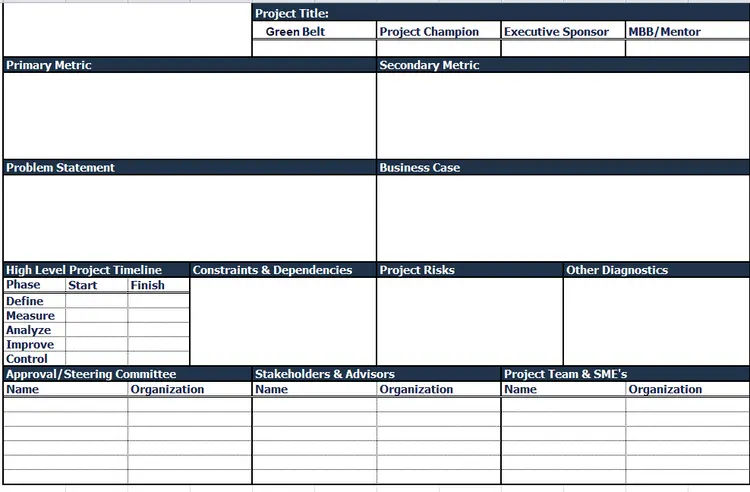
Project Charter Template
We have added a sample Project Charter that you can base your project charters on.
Conclusion
In a green belt certification online, you will learn about project charter, which is a tool for planning projects and serves as a communication and reference mechanism. A well-planned project with an efficient communication plan will certainly result in the project's success. This can be achieved with the skills learned during KnowledgeHut green belt certification online. Project Charter should be one of the most often cited papers in a project, and the whole project team should understand the Project Charter's content. This is an important aspect of any project's success.
Frequently Asked Questions (FAQs)
1. What is a green belt in the project charter?
The Project charter green belts are specialist team members that work part-time on Six Sigma initiatives. The Six Sigma approach is taught to Green Belts. Some businesses select all team members working on a Six Sigma project as Green Belts and offer them Six Sigma training.
2. How do you write a green belt project?
Here are the tips for creating awesome projects
- Look for a sponsor. You must start from the "real" beginning to give you the maximum boost.
- Identify a project's scope.
- Make an A3 document.
- In class, you can use your project.
- Begin with the measurement phase.
- Document the “Before” State.
- Use the Tools You Need.
- Select an Ongoing Measure.
3. What is the best way to draft a project charter?
Writing a Project Charter: A Step-by-Step Guide
- Pick a name for your project.
- Determine the project's purpose, objective (goal), and specifications.
- Make a financial plan.
- Create a list of deliverables.
- Examine the scope and risks.
- Make a timeline or a list of milestones.
- Make a list of key stakeholders.
- Roles and Responsibilities of the Layout Team
4. How might a project charter be used in a Six Sigma project?
Teams use the charter to define the process issue, the motivation for solving it, and what "success" looks like for those working on it. It is also utilized to explain what is not being spoken. It is the first stage in a Lean Six Sigma project and occurs in the DMAIC Define Phase.
5. What are the characteristics of a successful greenbelt project?
Over the course of around three months, the project should be completed. It must not be excessively large or insignificant. It should deal with a topic that is crucial to your company. You will need a Sponsor to provide direction, help you overcome obstacles, and get resources.
144 articles published
Shivendra Sharma, an accomplished author of the international bestseller 'Being Yogi,' is a multifaceted professional. With an MBA in HR and a Lean Six Sigma Master Black Belt, he boasts 15 years of e...
Get Free Career Counselling
By submitting, I accept the T&C and
Privacy Policy