
Scrum Master Hiring Trends 2026
Updated on Jul 29, 2026 | 331 views
Share:
Overview:
- In 2026, employers no longer want Scrum Masters who only facilitate daily stand-ups and manage Scrum ceremonies. They are looking for professionals who can support AI-augmented sprint planning, DevOps pipeline integration, and business value delivery.
- Modern Scrum Masters are expected to use Agile metrics, data-driven insights, and continuous improvement practices to optimize team workflows and improve delivery outcomes.
- Certifications such as CSM, PSM, and SAFe Scrum Master can improve hiring prospects, but practical experience, communication skills, and the ability to create measurable impact are what truly differentiate candidates.
This blog covers:
- What's driving the biggest Scrum Master hiring trends in 2026
- What employers look for when hiring Scrum Masters
- The skills and experience recruiters expect at each level
- Whether certifications like CSM, PSM, and SAFe still matter
- What 2026 job descriptions typically include
- How companies evaluate candidates
- How to prepare for where the market is heading
Want to build the skills employers look for in modern Scrum Masters? Get industry-recognized training with the Certified ScrumMaster (CSM) certification and learn Agile practices, Scrum frameworks, team facilitation, and servant leadership from experienced trainers. Start your journey toward becoming a certified Scrum professional with KnowledgeHut’s CSM Certification Training.
Master the Right Skills & Boost Your Career
Avail your free 1:1 mentorship session
What Are the Biggest Scrum Master Hiring Trends in 2026?
The role of the Scrum Master is not gone; it has evolved. The hiring trends in 2026 will be driven by AI-enabled planning, broader application of Agile practices beyond software engineering, scalable methodologies such as Scaled Agile Framework (SAFe), and ongoing scarcity of skilled professionals leading to higher pay scales.
- AI is impacting everyday tasks, not displacing the Scrum Master position – developers can employ AI to forecast sprint speed, recognize potential risks to the backlog, and automatically manage burndown metrics, allowing the Scrum Master to concentrate on coaching and aligning stakeholders
- DevOps knowledge is required – Scrum Master should be well-versed in common deployment bottlenecks and be able to help solve them in collaboration with software engineering teams
- Requirement for the position extended far beyond IT – banks, hospitals, and even non-profits are actively recruiting Scrum Masters for non-software projects
Hiring Trend Timeline
2023
- Growing adoption of Agile practices across teams
- Increased focus on hybrid work models
- Expansion of DevOps integration into Agile delivery
2024–2025
- Greater use of AI-assisted planning and delivery tools
- Increased demand for Agile coaches who can drive team maturity
- More focus on data-driven decision-making and business outcomes
2026 Hiring Expectations
- Strong Agile coaching and leadership skills
- Ability to support AI-enabled workflows
- Experience with remote and distributed team collaboration
- Understanding of DevOps, delivery metrics, and customer-focused outcomes
What Do Employers Look for When Hiring Scrum Masters in 2026?
Businesses employ those individuals who enable the team to function better, speed up processes, and overcome obstacles. These coaching skills manifest themselves in day-to-day activities through enhanced communication, support, problem solving, and success of others.
Agile Coaching Competency – Helping Teams Self-Organize Rather Than Managing Them
- Why employers care: Employers value Scrum Masters who create self-organizing teams that take ownership, solve problems independently, and continuously improve.
- Example: Coaching team members to identify solutions during retrospectives instead of providing direct answers or managing every decision.
- Interview example: "I worked with a team that depended on me for solutions. By using coaching questions and encouraging ownership, I helped them become more confident in resolving issues independently."
- Business impact: Improves accountability, speeds up decision-making, and increases delivery performance.
Facilitation Competency – Facilitating Agile Events That Drive Improvement
- Why employers care: Employers need Scrum Masters who make stand-ups, sprint reviews, and retrospectives productive and focused on outcomes.
- Example: Using structured facilitation techniques to encourage participation, identify improvement areas, and create actionable retrospective outcomes.
- Interview example: "I noticed retrospectives were becoming routine discussions, so I introduced new formats and tracked action items to create measurable improvements."
- Business impact: Improves collaboration, reduces meeting inefficiency, and supports continuous improvement.
Communication and Stakeholder Management Competency – Bridging Engineering, Product, and Leadership Teams
- Why employers care: Employers value Scrum Masters who create alignment between technical teams, Product Owner, and business stakeholders.
- Example: Communicating delivery progress, risks, dependencies, and priorities across different teams.
- Interview example: "I facilitated discussions between developers and stakeholders when priorities conflicted, helping everyone agree on realistic delivery expectations."
- Business impact: Reduces miscommunication, improves transparency, and strengthens stakeholder confidence.
Servant Leadership Competency – Leading Through Influence Rather Than Authority
- Why employers care: Organizations prefer Scrum Masters who empower teams through trust, coaching, and support instead of controlling decisions.
- Example: Removing obstacles, encouraging collaboration, and helping team members make decisions independently.
- Interview example: "Instead of solving a team conflict myself, I facilitated discussions that helped the team reach an agreement together."
- Business impact: Builds stronger teams, improves engagement, and increases team ownership.
Roadblock Identification and Removal Competency – Resolving Impediments Before They Impact Delivery
- Why employers care: Employers want Scrum Masters who identify blockers early and prevent delays that affect sprint goals and business commitments.
- Example: Resolving dependencies, approval delays, technical constraints, or communication gaps before they slow the team.
- Interview example: "I identified a recurring dependency issue and worked with external teams to create a smoother process that prevented future delays."
- Business impact: Improves predictability, reduces delivery risks, and protects sprint commitments.
Team Development Competency – Improving Teams Through Coaching and Metrics
- Why employers care: Employers look for Scrum Masters who develop team capability and maturity rather than only facilitating ceremonies.
- Example: Using retrospectives, velocity trends, cycle time, and quality metrics to identify improvement opportunities.
- Interview example: "I analyzed sprint metrics to identify estimation challenges and introduced improvements that helped the team deliver more consistently."
- Business impact: Creates high-performing teams, improves delivery quality, and increases productivity.
Scrum Methodology Competency – Understanding the Purpose Behind Scrum Practices
- Why employers care: Employers need Scrum Masters who understand the principles behind Scrum roles, events, and artifacts rather than simply following processes.
- Example: Helping teams understand why sprint reviews, retrospectives, and backlog refinement exist and how they create value.
- Interview example: "I helped my team understand the value of retrospectives by showing how previous improvement actions solved recurring problems.
- Business impact: Improves Agile adoption, strengthens team practices, and increases delivery effectiveness.
Product Owner Support Competency – Maintaining a Healthy Backlog and Team Focus
- Why employers care: Employers value Scrum Masters who help Product Owners maintain clear priorities and enable teams to focus on high-value work.
- Example: Supporting backlog refinement, improving user story clarity, and facilitating prioritization discussions.
- Interview example: "I partnered with the Product Owner to improve backlog refinement, reducing unclear requirements and improving sprint planning."
- Business impact: Reduces rework, improves prioritization, and increases business value delivery.
Outcome-Driven Competency – Connecting Agile Delivery with Business Results
- Why employers care: Employers increasingly evaluate Scrum Masters based on measurable outcomes rather than simply completing Scrum ceremonies.
- Example: Using Agile metrics, customer feedback, and delivery insights to identify improvements that support business goals.
- Interview example: "I helped the team move beyond velocity tracking by introducing cycle time and customer feedback metrics to improve delivery decisions."
- Business impact: Improves customer satisfaction, accelerates delivery, and increases return on Agile investment.
If you're weighing how to build this profile, a structured, trainer-led path like the Certified ScrumMaster (CSM) course is a common starting point, since it maps directly to most of the criteria above.
Why Employers Value Each Trait
Employer Expectation |
Why Companies Value It |
| Agile Coaching | Improves team maturity over time, not just sprint-to-sprint output |
| Facilitation | Keeps ceremonies short, useful, and outcome-focused |
| Communication | Reduces misalignment between business and engineering |
| Leadership | Drives adoption of Agile practices without formal authority |
| Continuous Improvement | Converts retrospectives into real process changes |
What Skills and Experience Do Employers Expect from Scrum Master
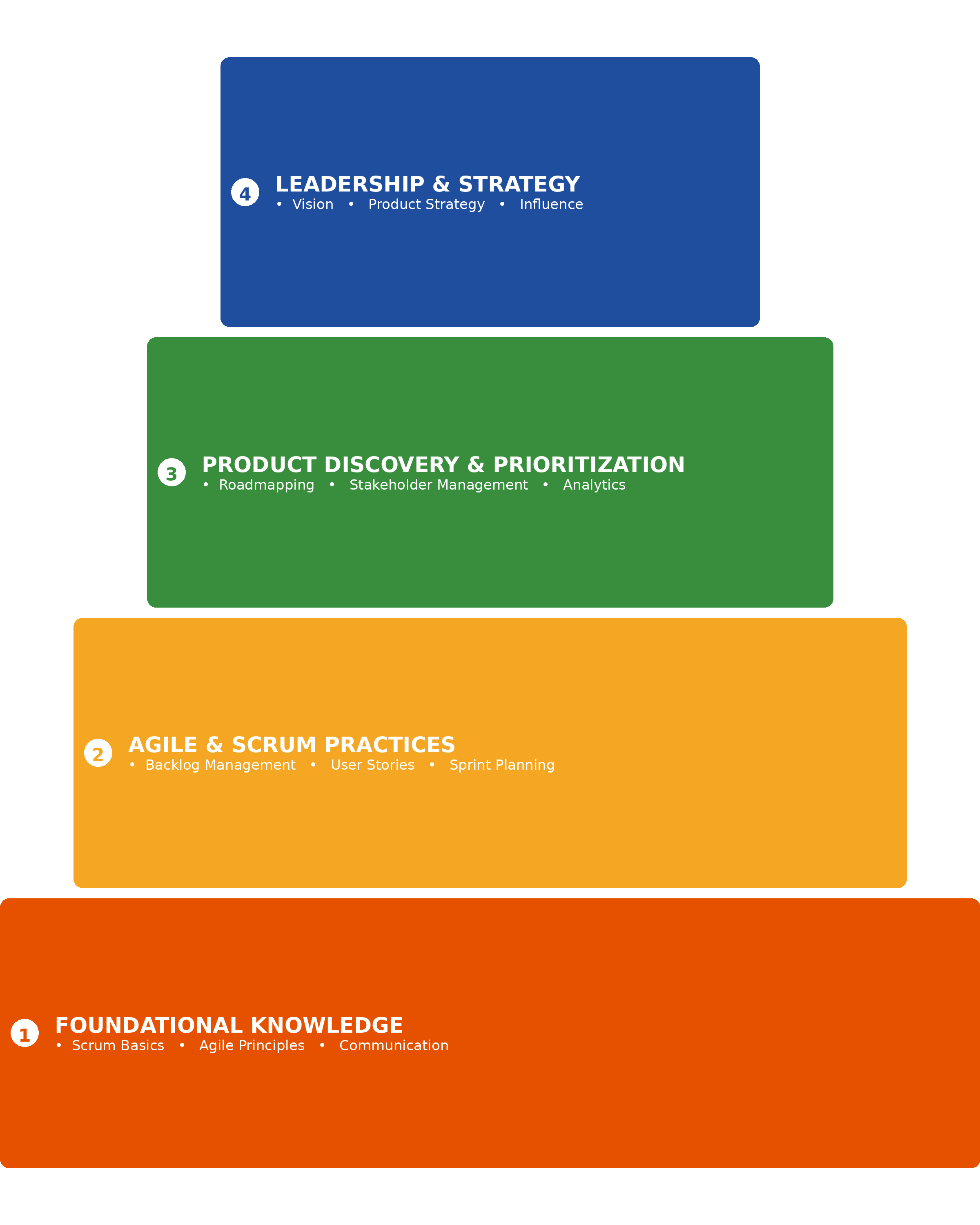
Core Skills Employers Value
Experience Employers Prefer
- Hands-on work with Agile/Scrum teams
- Supporting a team's transition into Scrum
- Improving delivery processes with data (velocity, cycle time, defect rate)
- Handling difficult team or stakeholder situations
- Coaching multiple teams at once (expected for senior roles)
Pay in India climbs sharply with experience and certification entry-level Scrum Masters typically start well under ₹10 LPA, while senior professionals and Agile coaches with SAFe or CSM credentials can cross ₹25–35 LPA.
Experience and Salary by Level.
Candidate Level |
Expected Experience |
Typical India Salary Range (2026) |
| Entry-Level Scrum Master | 0–2 years, often certified via CSM/PSM, limited real-world ownership | ₹5–8 LPA |
| Mid-Level Scrum Master | 3–7 years, has run multiple full sprint cycles independently | ₹12–22 LPA |
Senior Scrum Master / Agile Coach |
7+ years, coaches multiple teams or scaled programs | ₹25–35 LPA |
Do Scrum Master Certifications Matter for Hiring in 2026?
Certifications have not become irrelevant; however, the function of certifications has somewhat shifted, where they help you get shortlisted more quickly instead of being the sole factor that hires you. Organizations continue to use them as an easy way out to judge whether a candidate has minimum knowledge about Scrum or not, particularly if the person has little experience working in the Agile environment.
- CSM - Certified ScrumMaster - From Scrum Alliance, mandates a mandatory instructor-led course and is the most popular introductory level certification
- PSM - Professional ScrumMaster - From Scrum.org, has no mandatory training, a more difficult test (a passing percentage of 85%) and lifetime validity once received
- SSM - SAFe Scrum Master - From Scaled Agile Inc., designed for large corporations with several interdependent Scrum teams and yearly renewal requirements
Certification Comparison
Certification |
Provider |
Hiring Value |
| CSM | Scrum Alliance | Strong brand recognition; a common baseline requirement in job postings |
| PSM I | Scrum.org | Signals a deeper, self-directed grasp of the Scrum Guide; no renewal needed |
| SAFe Scrum Master (SSM) | Scaled Agile, Inc. | Preferred where the organization already runs SAFe at scale |
What Do Scrum Master Job Descriptions Include in 2026?
Most 2026 job postings repeat a similar core list, even as the emphasis shifts toward measurable outcomes.
Common Job Requirements
Job Requirement |
What It Means |
| Scrum Facilitation | Running stand-ups, sprint planning, reviews, and retrospectives effectively |
| Agile Coaching | Growing the team's Agile maturity over multiple sprints, not just one |
| Team Improvement | Using metrics (velocity, cycle time) to identify and fix delivery friction |
| Stakeholder Collaboration | Keeping Product Owners, leadership, and engineering aligned |
| DevOps/AI Awareness | Understanding CI/CD basics and using AI-assisted planning tools where relevant |
Common responsibilities you'll see across most listings: facilitating Scrum ceremonies, coaching Agile teams, removing blockers, supporting Product Owners, encouraging continuous improvement, improving team collaboration, tracking Agile progress, and working directly with stakeholders.
How Do Companies Evaluate Scrum Master Candidates?
The hiring process for Scrum Masters generally follows a predictable path:
- Resume screening - checking for certifications, experience in Agile and matching industry
- Certification validation - CSM, PSM or SAFe certification checks, although not considered a pass/fail criterion alone
- Agile experience - discussing about actual sprints, number of people in the team and deliverable results
- Behavioral and situation-based interviews - asking about handling blocked sprints or a Product Owner who keeps changing scope during a sprint
- Communication check - as the position involves influencing others, interviewer tries to assess the candidate's communication skills while discussing an example of how he/she handled a particular problem or situation
How Can Scrum Masters Prepare for Future Hiring Expectations?
If you want to stay competitive as hiring criteria shift, focus on:
- Gaining real world experience in coaching Agile teams, and not just running facilitation sessions
- Obtaining experience in Scrum throughout a full product development life cycle
- Improving facilitation skills for in-person and virtual/hybrid teams
- Developing an understanding of how to interpret and react to Agile metrics
- Gaining enough knowledge about product/technical aspects to understand the team’s terminology
- Improving leadership without authority skills – conflict management, negotiations
Skills to Develop in 2026
- Agile coaching
- Leadership
- Communication
- Metrics understanding
- Product/domain knowledge
- Conflict resolution
- Basic DevOps/CI-CD literacy
Final Thoughts
In the year 2026, the concept of hiring Scrum Masters is evolving from just being Scrum certified to being Agile oriented, a good coach, and developing teams. While job providers do require those people who know how to organize Scrum ceremonies, they are also looking for people who can help teams work together and bring value to the organization irrespective of their working in AI-driven and DevOps ecosystems. Certifications like CSM, PSM, and SAFe Scrum Master can get you jobs and further in your career, but practical experience is what differentiates you from others.
For a step-by-step view of the Scrum Master career path including education, certification choices, and experience-building strategies, explore upGrad Knowledge Hut Scrum Master roadmap guide and certification resources. Please Contact upGrad KnowledgeHut.
Frequently Asked Questions
Are Scrum Master jobs becoming harder to find in 2026?
Entry-level roles have gotten more competitive as more candidates enter through certifications, but demand for experienced Scrum Masters still outpaces supply, keeping the overall market strong.
Can a Scrum Master work outside the IT industry?
Yes. Scrum Masters are now hired in banking, healthcare, insurance, manufacturing, and non-profits, wherever teams have adopted Agile ways of working.
Can project managers transition into Scrum Master roles?
Yes, project managers often transition smoothly since they already understand planning, stakeholder management, and delivery tracking; a CSM or PSM certification can help formalise the shift.
Can developers or business analysts become Scrum Masters?
Yes. Many Scrum Masters come from technical or analyst backgrounds, which can actually help with facilitating technical discussions and spotting delivery risks early.
What is the difference between a Scrum Master and an Agile Coach?
A Scrum Master typically supports one or two teams with day-to-day facilitation, while an Agile Coach usually works across multiple teams or the whole organization on broader Agile maturity and transformation.
How long does it take to become a Scrum Master?
Certification alone (CSM or PSM) can be completed in a few days to a few weeks, but most employers also expect some hands-on exposure to Agile teams before hiring for the role.
Do Scrum Masters need technical skills?
Deep coding skills aren't required, but a working understanding of your team's domain whether that's software development, data science, or DevOps pipelines makes you far more effective.
Can Scrum Masters work remotely for global companies?
Yes, remote and hybrid Scrum Master roles are common in 2026, and strong virtual facilitation skills are now considered a core requirement rather than a bonus.
Which Scrum certification is best for someone just starting out?
CSM and PSM I are both considered strong entry points; CSM suits people who prefer structured, instructor-led learning, while PSM I suits self-directed learners comfortable studying the Scrum Guide independently.
What tools should Scrum Masters learn in 2026?
Jira, Azure DevOps, and Trello remain standard, alongside growing familiarity with AI-assisted planning and analytics tools used for sprint forecasting and backlog risk analysis.
What career opportunities are available after becoming a Scrum Master?
Common next steps include Agile Coach, Program Manager, Release Train Engineer (in SAFe environments), or broader Agile leadership and transformation roles.
Is a Scrum Master certification mandatory to get hired?
No, it's not always mandatory, but it significantly improves your chances of getting shortlisted, especially if you don't yet have hands-on Agile project experience.
1639 articles published
KnowledgeHut is an outcome-focused global ed-tech company. We help organizations and professionals unlock excellence through skills development. We offer training solutions under the people and proces...
Get Free Consultation
By submitting, I accept the T&C and
Privacy Policy
Ready to learn about Agile Certifications Roadmap?