
Top Companies Hiring Certified Scrum Masters in 2026
Updated on Jul 23, 2026 | 261 views
Share:
Table of Contents
View all
Master the Right Skills & Boost Your Career
Avail your free 1:1 mentorship session
Quick Overview
- Certified Scrum Masters are in demand across technology, consulting, banking, healthcare, and startup companies, with organizations actively hiring Agile professionals in 2026.
- Leading employers include Microsoft, Google, Amazon, IBM, Accenture, Deloitte, Capgemini, JPMorgan Chase, and UnitedHealth Group, where Scrum Masters help teams deliver projects using Agile practices.
- Employers typically look for CSM certification, hands on Scrum experience, leadership skills, and proficiency in tools such as Jira and Azure DevOps.
- In this guide, you'll learn which companies are hiring Certified Scrum Masters, the industries with the highest demand, the skills employers expect, and practical tips to improve your chances of landing a Scrum Master role in 2026.
The rising demand highlighted in this blog shows why CSM® Certification Training remains a popular choice for aspiring Scrum Masters.
Top Companies Hiring Certified Scrum Masters in 2026
The demand for Certified Scrum Masters is no longer limited to software companies. Today, organizations across multiple industries rely on Agile teams to build products, improve services, and manage complex projects.
The phrase Top Companies Hiring Certified ScrumMaster reflects how hiring now extends across technology, consulting, finance, healthcare, and startups.
1. Global Technology Companies
Large technology companies continue to invest heavily in Agile delivery. These organizations manage hundreds of engineering teams working on cloud platforms, enterprise software, cybersecurity, artificial intelligence, and digital services. Scrum Masters help these teams maintain a steady delivery pace while ensuring effective collaboration across multiple departments.
Some of the top technology companies hiring Certified Scrum Masters include:
Many searches for Top Companies Hiring Certified ScrumMaster roles begin with global technology employers because of their large Agile teams and ongoing digital projects.
- Microsoft
- Amazon
- IBM
- Oracle
- Cisco
- Salesforce
- SAP
These organizations usually hire Scrum Masters for product development, cloud engineering, platform modernization, customer experience initiatives, and enterprise software projects.
Experienced Scrum Masters may also work alongside Product Managers, Engineering Managers, Release Train Engineers, and Agile Coaches to improve delivery across multiple teams.
2. IT Services and Consulting Companies
Consulting companies remain one of the largest employers of Certified Scrum Masters. These organizations manage digital transformation projects for clients across banking, healthcare, manufacturing, retail, government, and telecommunications.
Leading consulting companies hiring Scrum Masters include:
Professionals exploring Top Companies Hiring Certified ScrumMaster opportunities should also consider consulting firms that manage Agile transformation projects across industries.
- Accenture
- Deloitte
- Capgemini
- Cognizant
- Infosys
- TCS
- Wipro
- HCLTech
- Tech Mahindra
Professionals working in consulting typically gain experience in managing distributed teams, coordinating with stakeholders from different business units, and supporting large scale Agile transformations.
3. Product Based Companies
Product-based companies depend on Agile teams to continuously improve their software and digital platforms. Instead of working on client projects, Scrum Masters support internal product teams responsible for developing new features, improving customer experience, and maintaining product quality.
Some well-known product-based employers include:
- Adobe
- Atlassian
- Intuit
- ServiceNow
- VMware
- PayPal
Since product development follows an ongoing cycle, Scrum Masters play an important role in helping teams prioritize work, adapt to customer feedback, and deliver value consistently.
4. BFSI Companies
Banks and financial institutions have significantly increased Agile adoption over the past few years. Digital banking, mobile applications, online payments, fraud prevention, and regulatory compliance projects all benefit from Agile delivery methods.
Major employers include:
When reviewing Top Companies Hiring Certified ScrumMaster opportunities in financial services, candidates should pay close attention to governance, compliance, and stakeholder-management requirements.
- JPMorgan Chase
- Goldman Sachs
- American Express
- Barclays
- HSBC
Because financial services involve strict regulatory requirements, employers value Scrum Masters who can balance Agile flexibility with governance and compliance expectations.
5. Healthcare and Life Sciences
Healthcare organizations are increasingly adopting Agile practices to improve patient services, modernize healthcare technology, and accelerate digital innovation.
Leading employers include:
- UnitedHealth Group
- Philips
- Siemens Healthiness
- Roche
As healthcare technology continues evolving, Agile professionals with experience in regulated environments are becoming increasingly valuable.
6. Startups and Unicorns
Many startups have adopted Agile from the beginning because it supports rapid experimentation, faster releases, and continuous product improvement.
Some fast growing companies hiring Certified ScrumMasters include:
The list of Top Companies Hiring Certified ScrumMaster employers also includes startups and unicorns that value adaptability, rapid delivery, and cross-functional collaboration.
- Stripe
- Airbnb
- Swiggy
- Razorpay
- PhonePe
- Flipkart
While startup environments can be fast paced, they also provide excellent learning opportunities and career growth for Agile professionals who enjoy solving new challenges.
Also read: Scrum Master Salary in 2026
Common Scrum Master Roles at Leading Companies
As Agile adoption continues to grow, organizations are creating a wider range of roles for Certified Scrum Masters. While the title "Scrum Master" remains the most common, experienced professionals often move into leadership positions where they guide multiple teams, mentor other Scrum Masters, and support enterprise-wide Agile transformation.
1. Scrum Master
The Scrum Master is responsible for ensuring that Scrum practices are followed effectively. They facilitate Scrum events, remove obstacles affecting the team, and encourage collaboration between developers, Product Owners, and stakeholders.
Typical responsibilities include:
- Facilitating Sprint Planning, Daily Scrum, Sprint Review, and Sprint Retrospective meetings
- Removing blockers that slow down the team's progress
- Coaching team members on Scrum principles
- Supporting Product Owners with backlog refinement
- Tracking sprint progress and team performance
- Encouraging continuous improvement
This is the most common role offered by technology companies, consulting firms, banks, and product organizations.
2. Senior Scrum Master
A Senior Scrum Master works with larger or more complex Agile teams and often supports multiple Scrum teams simultaneously. They are expected to handle organizational challenges, mentor junior Scrum Masters, and improve Agile practices across departments.
Typical responsibilities include:
- Coaching multiple Agile teams
- Mentoring junior Scrum Masters
- Managing dependencies between teams
- Improving Agile maturity
- Supporting leadership during Agile transformation
- Solving complex delivery challenges
This role is generally suitable for professionals with several years of Scrum experience.
3. Agile Coach
An Agile Coach focuses on improving Agile adoption across the organization rather than supporting a single team. They work with executives, managers, Scrum Masters, and delivery teams to strengthen Agile culture and improve collaboration.
Common responsibilities include:
- Coaching Scrum Masters and Product Owners
- Conducting Agile training sessions
- Helping teams adopt Agile best practices
- Supporting organizational change
- Measuring Agile maturity
- Recommending process improvements
Delivery Manager
A Delivery Manager ensures that projects are delivered on time while maintaining quality and customer satisfaction. Unlike traditional project management roles, Delivery Managers working in Agile environments collaborate closely with Scrum teams instead of directing day to day work.
Typical responsibilities include:
- Coordinating delivery across multiple teams
- Managing project timelines
- Working with business stakeholders
- Monitoring delivery risks
- Supporting release planning
- Ensuring customer commitments are met
4. Release Train Engineer
The Release Train Engineer is commonly found in organizations following the Scaled Agile Framework. This role coordinates several Agile teams working together on large programs.
Responsibilities often include:
- Facilitating Program Increment Planning
- Coordinating several Agile teams
- Managing cross team dependencies
- Tracking program level progress
- Supporting continuous improvement
- Working closely with senior leadership
5. Agile Program Manager
An Agile Program Manager oversees several related projects while ensuring alignment with business goals. They collaborate with senior management, Product Managers, Scrum Masters, and delivery teams to maintain visibility across multiple initiatives.
Their responsibilities may include:
- Managing multiple Agile programs
- Aligning delivery with business priorities
- Coordinating resources across teams
- Monitoring program performance
- Managing risks and dependencies
- Supporting strategic planning
6. Enterprise Agile Coach
The Enterprise Agile Coach is one of the most senior Agile leadership roles within an organization. Rather than working with individual teams, they guide companywide Agile transformation and help leadership establish long term Agile strategies.
Typical responsibilities include:
- Developing enterprise Agile strategies
- Coaching senior executives
- Standardizing Agile practices
- Improving organizational collaboration
- Supporting cultural transformation
- Building Agile communities within the organization
Choosing the right certification can strengthen your Agile career. Explore 8 Best Scrum Master Certifications to Pursue in 2026 to find the best fit for your goals.
Skills Top Companies Look for in Certified Scrum Masters
Understanding Top Companies Hiring Certified ScrumMaster requirements is easier when candidates know the technical and interpersonal skills employers commonly assess.
Earning a Certified ScrumMaster credential is a valuable first step, but employers in 2026 expect more than certification alone.
Technical Skills
1. Scrum Framework
A solid understanding of the Scrum framework is the foundation of every Scrum Master role. Employers expect candidates to know Scrum values, roles, events, and artifacts while ensuring teams apply them effectively.
2. Agile Methodologies
Employers value professionals who understand concepts such as continuous improvement, iterative development, customer feedback, and adaptive planning. Familiarity with Lean principles and Agile project delivery also helps candidates work across different teams.
3. Kanban
A Certified ScrumMaster should understand how Kanban boards help teams manage work in progress, identify bottlenecks, and improve delivery efficiency without overwhelming team members.
4. SAFe
Large enterprises often use the Scaled Agile Framework to coordinate multiple Agile teams working on the same program.
Knowledge of SAFe helps Scrum Masters understand how large organizations plan work, manage dependencies, and align multiple teams toward common business goals. Even if SAFe certification is not mandatory, basic familiarity is becoming increasingly valuable.
5. Jira
Jira is one of the most widely used Agile project management tools across industries.
Employers expect Scrum Masters to know how to:
- Create and manage Scrum boards
- Track sprint progress
- Monitor team velocity
- Organize product backlogs
- Generate sprint reports
- Support release planning
6. Azure DevOps
Organizations using Microsoft technologies frequently rely on Azure DevOps for planning, tracking, and managing software development projects.
Scrum Masters who understand Azure DevOps can collaborate more effectively with development teams, monitor work items, and support Agile planning throughout the project lifecycle.
7. Confluence
Confluence is commonly used for documenting Agile processes, meeting notes, sprint outcomes, and project knowledge.
Employers appreciate Scrum Masters who can maintain organized documentation that keeps team members and stakeholders informed throughout the project.
8. Sprint Planning
Successful sprint planning requires balancing business priorities with team capacity.
Scrum Masters facilitate planning sessions by ensuring that the team understands sprint goals, estimates work realistically, and commits to achievable outcomes.
9. Metrics and Reporting
Modern organizations use Agile metrics to evaluate team performance and identify improvement opportunities.
A Scrum Master should understand common metrics such as:
- Sprint velocity
- Sprint burndown
- Cycle time
- Lead time
- Team capacity
- Delivery predictability
As the Scrum Master role evolves with AI, A Complete Scrum Master Roadmap 2026 can help you build the right skills and stay on track with your career goals.
Soft Skills
Technical knowledge alone is not enough to succeed as a Scrum Master. Since the role focuses on people, communication, and collaboration, employers place significant importance on interpersonal skills.
1. Leadership
Scrum Masters lead by influence rather than authority. They guide teams, encourage accountability, and create an environment where individuals feel empowered to solve problems together.
2. Coaching
One of the primary responsibilities of a Scrum Master is helping teams continuously improve.
Employers value candidates who can coach team members, encourage learning, and support Agile best practices without becoming controlling or directive.
3. Conflict Resolution
Disagreements are common in cross functional teams. Different opinions often lead to better ideas when managed effectively.
Scrum Masters should be able to resolve conflicts professionally, encourage healthy discussions, and help teams reach decisions that support project goals.
4. Communication
Clear communication keeps Agile teams aligned.
Scrum Masters regularly interact with developers, Product Owners, managers, customers, and business stakeholders. They must communicate expectations, project updates, risks, and priorities in a simple and transparent manner.
5. Stakeholder Management
Many projects involve multiple stakeholders with different priorities and expectations.
A Scrum Master should be able to balance these expectations while protecting the development team from unnecessary distractions. Effective stakeholder management helps maintain focus and supports smoother project execution.
6. Facilitation
Facilitating productive meetings is one of the most visible responsibilities of a Scrum Master.
Employers expect professionals who can keep discussions focused, encourage participation from all team members, manage time effectively, and help teams make decisions without unnecessary delays.
7. Problem Solving
Every Agile project presents unexpected challenges, from changing priorities to technical issues and resource constraints.
Organizations look for Scrum Masters who remain calm under pressure, analyze situations objectively, and work with the team to identify practical solutions.
Explore the Best Agile Management Certification Training Courses to find the right program for your career goals and stay ahead in today's Agile driven workplace.
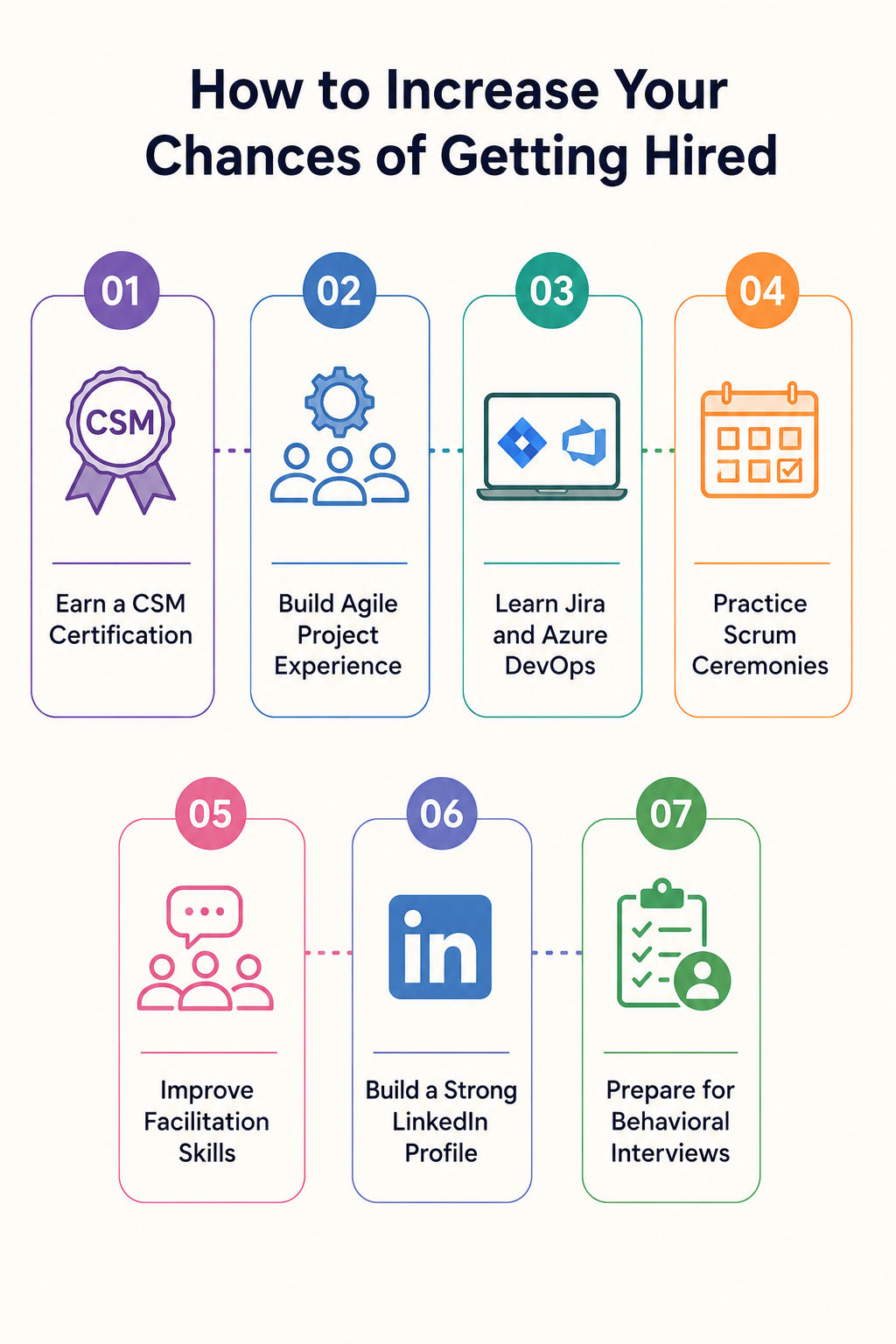
How to Increase Your Chances of Getting Hired
The demand for Certified Scrum Masters remains strong in 2026, but competition has also increased. Many professionals now hold Scrum certifications, which means employers are looking beyond credentials when evaluating candidates.
Candidates searching for Top Companies Hiring Certified ScrumMaster openings can improve their prospects by combining certification with practical Agile experience and tool proficiency.
The following strategies can significantly improve your chances of securing a Scrum Master role.
Earning a Scrum Master certification is just the beginning. Career Path of a Certified Scrum Master: Certifications & Job Roles explains the certifications and job roles that can support your career growth.
Final Thoughts
Certified ScrumMasters continue to be in demand across technology companies, consulting firms, financial institutions, healthcare organizations, and fast-growing startups. As more organizations adopt Agile ways of working, the need for professionals who can guide teams, improve collaboration, and support successful project delivery is expected to remain strong.
Overall, Top Companies Hiring Certified ScrumMaster opportunities remain available across a broad range of industries and organization sizes.
Contact our upGrad KnowledgeHut experts for personalized guidance on choosing the right course, career path, and certification to achieve your goals.
Frequently Asked Questions
Can freshers get hired as Certified Scrum Masters?
Yes, but it can be challenging since many Scrum Master roles require some experience working in Agile teams. Freshers can improve their chances by earning a CSM certification, learning tools like Jira, participating in Agile projects, and applying for junior Scrum Master or Agile Coordinator positions. Experience in roles such as Business Analyst, Quality Assurance, or Software Developer can also provide a good starting point.
Do startups hire Scrum Masters?
Yes. Many startups follow Agile practices because they need to release products quickly and respond to customer feedback. While smaller startups may not always have a dedicated Scrum Master, growing startups and unicorns often hire Scrum Masters to improve team collaboration, streamline delivery, and support product development as the business expands.
Are remote Scrum Master jobs available in 2026?
Yes. Remote and hybrid Scrum Master roles continue to be widely available in 2026. Organizations with distributed teams rely on Scrum Masters to facilitate virtual Scrum events, improve communication, and ensure teams remain aligned regardless of location. Experience with collaboration tools and remote facilitation is often an added advantage.
Which countries have the highest demand for Scrum Masters?
Those comparing Top Companies Hiring Certified ScrumMaster opportunities internationally should also consider regional demand, remote-work options, and industry concentration.
Demand for Certified ScrumMasters remains strong in countries with large technology and consulting sectors. The United States, Canada, the United Kingdom, Germany, Australia, the Netherlands, Singapore, and India continue to offer numerous opportunities across technology companies, consulting firms, banks, healthcare organizations, and product-based businesses.
How important is Jira experience for Scrum Master roles?
Jira has become one of the most used Agile project management tools. Most employers expect Scrum Masters to understand how to manage Scrum boards, monitor sprint progress, organize product backlogs, and generate reports. While expertise is not always mandatory, practical Jira experience can strengthen a candidate's profile and improve job prospects.
Do companies require SAFe certification along with CSM?
Not always. Many organizations accept a CSM certification for Scrum Master positions. However, companies managing large scale Agile programs may prefer candidates who also understand the Scaled Agile Framework. A SAFe certification becomes more valuable for senior roles involving multiple Agile teams or enterprise transformation initiatives.
Can Business Analysts transition into Scrum Master roles?
Yes. Business Analysts already possess many transferable skills, including stakeholder communication, requirement analysis, problem solving, and collaboration. By gaining knowledge of Scrum practices, earning a CSM certification, and participating in Agile projects, Business Analysts can successfully transition into Scrum Master positions.
What are the most common Scrum Master interview rounds?
The interview process usually begins with a recruiter screening, followed by one or more technical and behavioral interviews. Employers often assess Scrum knowledge, Agile experience, facilitation skills, conflict resolution abilities, stakeholder management, and communication skills. Some organizations may also include scenario-based or case study discussions.
Is prior software development experience required?
No. A software development background can be helpful, but it is not a mandatory requirement for becoming a Scrum Master. Professionals from project management, quality assurance, business analysis, operations, and product management backgrounds have successfully moved into Scrum Master roles by developing Agile knowledge and practical experience.
How long does it typically take to land a Scrum Master job after certification?
The timeline varies depending on your experience, skills, and the job market. Professionals with prior Agile experience may secure a role within a few months of earning their certification. Those without direct experience may take longer, but building hands on project experience, improving interview skills, and learning Agile tools can significantly increase their chances of getting hired.
1639 articles published
KnowledgeHut is an outcome-focused global ed-tech company. We help organizations and professionals unlock excellence through skills development. We offer training solutions under the people and proces...
Get Free Consultation
By submitting, I accept the T&C and
Privacy Policy
Ready to learn about Agile Certifications Roadmap?