
What a SAFe Scrum Master Does Differently from a Regular Scrum Master
Updated on Jul 28, 2026 | 174 views
Share:
Table of Contents
View all
Quick Overview
- A SAFe Scrum Master works across multiple Agile teams, while a regular Scrum Master focuses on a single Scrum team.
- Beyond Scrum ceremonies, SAFe Scrum Masters facilitate PI Planning, manage cross team dependencies, and collaborate with the Release Train Engineer (RTE) to align teams with business goals.
- The role is designed for large enterprises adopting the SAFe framework and requires a broader focus on coordination and enterprise agility.
- In this guide, you'll learn how a SAFe Scrum Master differs from a regular Scrum Master, their responsibilities, required skills, and career opportunities.
"If you're ready to lead Scrum teams in a scaled Agile environment, the AI-Empowered SAFe® Scrum Master (6.0) course helps you build the skills needed to succeed in modern enterprises."
Master the Right Skills & Boost Your Career
Avail your free 1:1 mentorship session
Scrum Master vs SAFe Scrum Master
The quickest way to understand the Difference between SAFe Scrum Master and Regular Scrum Master is to compare the scope of their work. While both help teams follow Agile practices, the scale of responsibility is very different.
Aspect |
Regular Scrum Master |
SAFe Scrum Master |
| Team Scope | One Scrum team | Agile Release Train with multiple Agile teams |
| Framework | Scrum | SAFe |
| Planning | Sprint Planning | Program Increment Planning and Sprint Planning |
| Dependencies | Within one team | Across multiple teams |
| Stakeholders | Product Owner | Product Management, Release Train Engineer, Business Owners |
| Scaling | Limited to one team | Enterprise-wide Agile delivery |
| Coaching Scope | Individual Scrum team | Team plus Agile Release Train |
| Metrics | Velocity, Sprint progress | Flow metrics, predictability, ART health |
| Organization Size | Small and medium organizations | Large enterprises |
A regular Scrum Master concentrates on helping one team become more effective. Their primary objective is improving collaboration and ensuring Scrum practices are followed consistently.
A SAFe Scrum Master takes on additional responsibilities because multiple teams contribute to the same business objectives. They coordinate planning across teams, monitor dependencies, support enterprise level events, and collaborate with several stakeholders simultaneously.
For example, imagine an ecommerce company launching a new mobile application. A regular Scrum Master may help one development team build the payment feature. A SAFe Scrum Master ensures that the payment, security, customer account, and testing teams remain synchronized, so the complete product can be released successfully.
This broader scope is the biggest Difference between SAFe Scrum Master and Regular Scrum Master.
"Want to know if SSM certification is the right fit for you? Read SAFe Scrum Master (SSM) Certification: Requirements, Benefits for a complete overview of its requirements and professional benefits."
What Does a Regular Scrum Master Do?
A regular Scrum Master helps one Scrum team deliver value consistently by encouraging Agile practices, removing obstacles, and fostering continuous improvement. Their success is measured by how effectively the team collaborates and delivers working software.
Core Responsibilities
A Scrum Master facilitates Sprint Planning, Daily Scrum, Sprint Reviews, and Retrospectives while helping the team follow Scrum practices consistently. They remove impediments, coach team members, encourage self-management, and promote continuous improvement throughout every sprint.
Rather than assigning work, the Scrum Master creates an environment where the team can organize its own work and solve problems collaboratively.
Typical Daily Activities
A typical day often begins with the Daily Scrum, followed by discussions to remove blockers, coaching team members, tracking sprint progress, and communicating with the Product Owner when priorities change. The Scrum Master also monitors team health and facilitates conversations that improve collaboration.
For example, if developers are waiting for access to a testing environment, the Scrum Master works with the appropriate teams to resolve the issue quickly, so development can continue without unnecessary delays.
Although they guide the team's Agile journey, Scrum Masters do not function as traditional project managers, and they do not assign work to individual team members.
"Before choosing a SAFe certification, read SAFe Certifications: List of Best SAFe Certifications 2026 to compare the leading credentials and identify the best fit for your experience level."
What Does a SAFe Scrum Master Do Differently?
The Difference between SAFe Scrum Master and Regular Scrum Master becomes much clearer when Agile is scaled across an enterprise. Along with supporting Scrum teams, the SAFe Scrum Master helps multiple teams work together toward common business objectives.
Supports an Agile Release Train
A SAFe Scrum Master works within an Agile Release Train where several Agile teams collaborate to deliver a larger solution. Instead of focusing only on one team's success, they help ensure every participating team stays aligned with shared goals and delivery timelines.
For example, if one team's work depends on another team's API development, the SAFe Scrum Master helps coordinate communication, so neither team experiences unnecessary delays.
Facilitates Program Increment Planning
Program Increment Planning is one of the defining responsibilities of a SAFe Scrum Master. They prepare teams before the event, facilitate breakout discussions, help visualize dependencies, and ensure realistic commitments are made for the upcoming Program Increment.
Planning Timeline
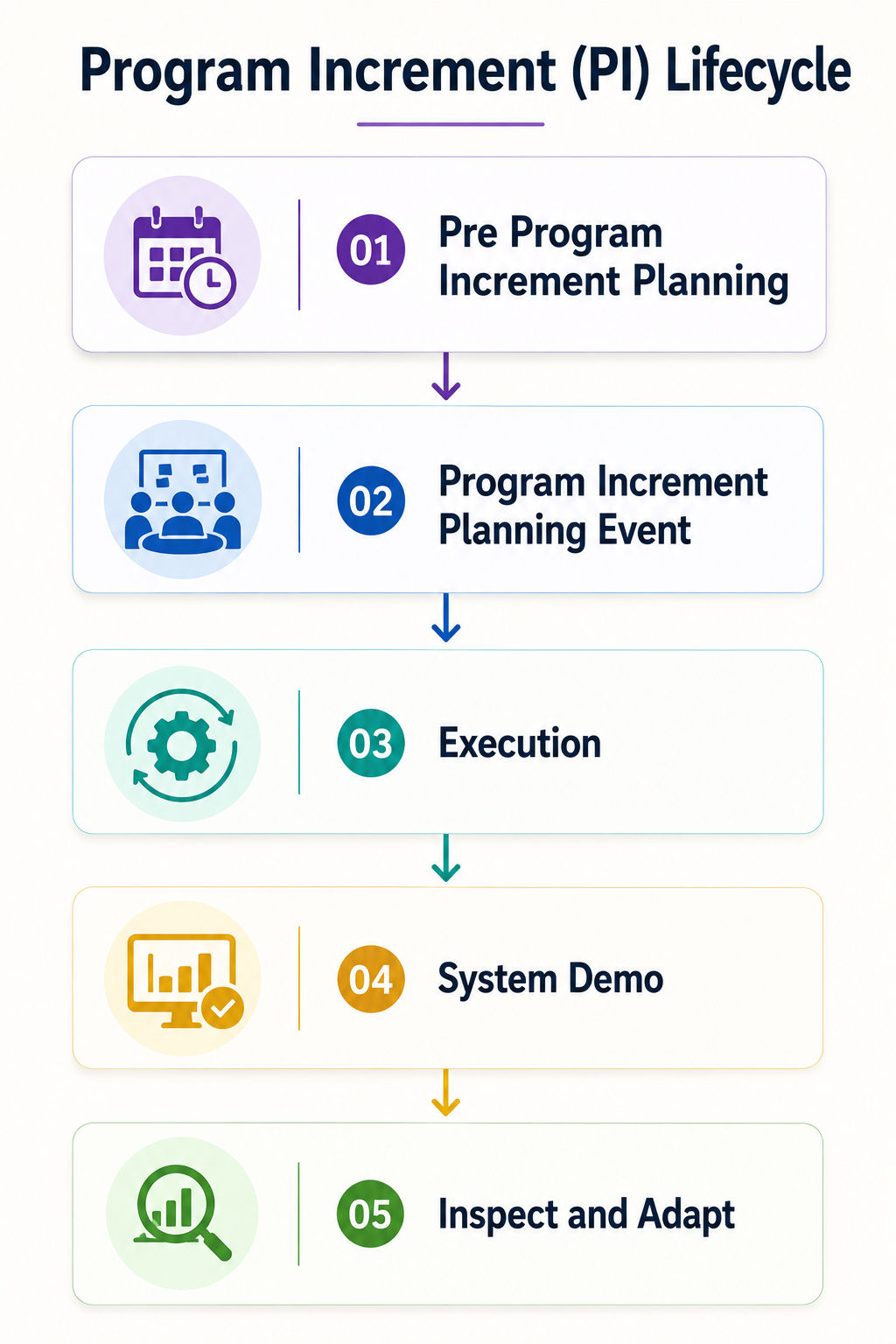
Unlike Sprint Planning, Program Increment Planning brings together multiple teams to create a coordinated delivery plan.
Manages Cross Team Dependencies
Enterprise Agile introduces dependencies that extend beyond a single Scrum team. A SAFe Scrum Master continuously identifies these dependencies, tracks progress, escalates risks when necessary, and works with other Scrum Masters to resolve issues before they affect delivery.
This coordination is another major Difference between SAFe Scrum Master and Regular Scrum Master because traditional Scrum environments typically manage dependencies within one team.
Works Closely with the Release Train Engineer
A SAFe Scrum Master collaborates regularly with the Release Train Engineer, Product Management, Product Owners, and Business Owners to ensure delivery remains aligned with organizational priorities.
While the Release Train Engineer focuses on coordinating the entire Agile Release Train, the SAFe Scrum Master ensures their assigned teams contribute effectively to those broader objectives.
Coaches Teams on Lean Agile Principles
Beyond Scrum practices, SAFe Scrum Masters introduces Lean Agile thinking throughout the delivery process. They encourage continuous improvement, support built in quality, promote DevOps practices, and help teams optimize workflow instead of simply completing tasks.
This broader coaching responsibility reflects the growing Difference between SAFe Scrum Master and Regular Scrum Master in enterprise environments.
Supports Enterprise Transformation
A SAFe Scrum Master contributes to organizational change by helping teams adopt new ways of working, improving Agile maturity, and encouraging continuous learning. Rather than focusing only on sprint execution, they support long term Enterprise Agile transformation.
For example, during a companywide Agile adoption initiative, the SAFe Scrum Master may coach several teams while working with leadership to improve collaboration across departments.
The ability to connect individual team success with enterprise objectives is what truly defines the Difference between SAFe Scrum Master and Regular Scrum Master in modern organizations.
"If you're evaluating the return on investment of SAFe certification, Is SAFe® 4.5 Certification Worth The Price? offers a detailed look at its value for Agile professionals."
Detailed Responsibilities Comparison
Although both roles are based on Scrum principles, the day-to-day responsibilities differ considerably once Agile is scaled across an enterprise. Understanding the Difference between SAFe Scrum Master and Regular Scrum Master helps professionals identify which role best matches their career aspirations and the type of organization they want to work in.
Responsibility |
Scrum Master |
SAFe Scrum Master |
| Sprint Planning | Facilitates planning for one Scrum team | Facilitates Sprint Planning while aligning it with Program Increment objectives |
| Daily Scrum | Guides daily team collaboration | Supports Daily Scrum and monitors alignment with the Agile Release Train |
| Sprint Review | Reviews completed work with stakeholders | Coordinates reviews while considering program level objectives |
| Retrospective | Facilitates continuous improvement for one team | Encourages improvements across teams and the Agile Release Train |
| Program Increment Planning | Not applicable | Plays a key role in planning and coordination |
| ART Sync | Not required | Participates in Agile Release Train synchronization meetings |
| Dependency Management | Manages team level dependencies | Coordinates dependencies across multiple Agile teams |
| Lean Coaching | Coaches Scrum practices | Coaches Lean Agile principles across teams |
| Enterprise Collaboration | Limited to one team | Collaborates with Product Management, Release Train Engineer, Business Owners, and multiple teams |
| Inspect and Adapt | Team retrospective focused | Supports enterprise wide Inspect and Adapt workshops |
| Program Risks | Handles team level risks | Identifies and escalates program level risks |
| Flow Metrics | Focuses on team velocity | Monitors predictability, flow metrics, and Agile Release Train health |
The biggest Difference between SAFe Scrum Master and Regular Scrum Master is that one role focuses on optimizing a single team, while the other ensures that many teams deliver value together as one coordinated system.
Skills Required for Each Role
Every Scrum Master needs strong leadership and communication skills. However, Enterprise Agile introduces additional responsibilities that require broader business awareness and systems of thinking. As organizations continue scaling Agile, the Difference between SAFe Scrum Master and Regular Scrum Master becomes increasingly visible through the skills employers expect.
Scrum Master Skills
A regular Scrum Master should be skilled in facilitating Scrum ceremonies, coaching Agile teams, resolving conflicts, and encouraging continuous improvement. Strong communication and an Agile mindset help teams remain productive while adapting to changing priorities.
These skills enable Scrum Masters to create high performing teams that consistently deliver customer value.
Additional SAFe Skills
A SAFe Scrum Master builds on traditional Scrum knowledge by developing systems thinking, understanding Lean Portfolio concepts, coordinating Agile Release Trains, managing program execution, and facilitating enterprise collaboration. They also monitor dependencies, improve delivery flow, and support organizational transformation.
For example, when three teams depend on the same shared platform, a SAFe Scrum Master works with other Scrum Masters and the Release Train Engineer to coordinate priorities before delays occur.
As professionals develop these advanced capabilities, the Difference between SAFe Scrum Master and Regular Scrum Master becomes less about Scrum knowledge and more about enterprise leadership.
Certifications That Prepare You for Each Role
Choosing the right certification depends on your career goals and the type of organizations you want to work with. While all Scrum certifications teach Agile principles, they prepare professionals for different responsibilities.
Certification Area |
Scrum Master |
SAFe Scrum Master |
| Primary Focus | Team level Scrum | Enterprise Agile delivery |
| Framework | Scrum | SAFe |
| Best For | Beginners and team facilitators | Professionals working in large enterprises |
| Typical Employers | Startups and medium sized organizations | Large enterprises implementing SAFe |
Some of the most recognized certifications include:
- Certified ScrumMaster (CSM) for professionals beginning their Scrum journey.
- Professional Scrum Master (PSM) for those seeking deeper Scrum expertise.
- SAFe Scrum Master (SSM) for professionals supporting Agile Release Trains and Enterprise Agile initiatives.
Rather than comparing certifications in depth, it is better to choose one based on your career objectives. Professionals interested in enterprise coordination and large-scale Agile transformation often find the SAFe Scrum Master certification more aligned with their long-term goals.
"Planning your SAFe certification journey? Read Scaled Agile Certification Cost - Complete Pricing Breakdown for a detailed breakdown of pricing across certification levels and related expenses."
Career Path Comparison
Career growth differs significantly between the two roles because Enterprise Agile introduces additional leadership opportunities. Understanding the Difference between SAFe Scrum Master and Regular Scrum Master also means understanding where each career path can lead.
This path expands into enterprise coordination, organizational transformation, and strategic leadership.
For example, an experienced SAFe Scrum Master who has successfully facilitated several Program Increment Planning events and coordinated multiple Agile teams is well positioned to become a Release Train Engineer. From there, opportunities often extend into Agile consulting and enterprise transformation leadership.
The Difference between SAFe Scrum Master and Regular Scrum Master becomes especially important when planning a long term career. Professionals who enjoy working across multiple teams, influencing organizational strategy, and leading large scale Agile initiatives often find the SAFe career path offers broader leadership opportunities.
Which Role Is Right for You?
Choosing between the two roles depends on your career goals, the type of organization you want to work for, and the level of responsibility you want to take on. While both roles build on Scrum principles, the Difference between SAFe Scrum Master and Regular Scrum Master becomes more apparent as organizations scale Agile across multiple teams.
If you enjoy working closely with one Scrum team, improving team collaboration, and becoming an expert in Scrum practices, a regular Scrum Master role is an excellent starting point. It provides a strong foundation in Agile delivery and servant leadership.
On the other hand, if you want to coordinate work across multiple teams, participate in enterprise planning, and contribute to large scale Agile transformation, becoming a SAFe Scrum Master offers broader opportunities. Understanding the Difference between SAFe Scrum Master and Regular Scrum Master can help you choose a career path that aligns with your long-term ambitions.
Choose a Regular Scrum Master Role If You
- Want to work with a single Scrum team.
- Are beginning your Agile career.
- Prefer team level coaching and facilitation.
- Plan to work in startups or medium sized organizations.
- Want to build a strong foundation in Scrum before moving into enterprise roles.
Choose a SAFe Scrum Master Role If You
- Want to work in large enterprise organizations.
- Enjoy collaborating across multiple Agile teams.
- Are interested in Program Increment Planning and Agile Release Trains.
- Aspire to become a Release Train Engineer or Agile Coach.
- Want to lead enterprise-wide Agile initiatives and organizational transformation.
There is no universally better role. The right choice depends on where you see your career growing over the next several years. Many professionals begin as Scrum Masters and later transition into SAFe Scrum Master roles as they gain experience with Enterprise Agile.
"Not sure which Agile certification is right for you? Explore Best Agile Management Certification Training Courses to compare the top credentials based on your career goals and experience."
Conclusion
The Difference between SAFe Scrum Master and Regular Scrum Master goes far beyond job titles. While both roles share the same Scrum foundation, they operate at different levels of organizational complexity.
This expanding scope is the most important Difference between SAFe Scrum Master and Regular Scrum Master and explains why SAFe Scrum Masters often progress into leadership roles such as Release Train Engineer, SAFe Practice Consultant, and Enterprise Transformation Leader.
Contact our upGrad KnowledgeHut experts for personalized guidance on choosing the right course, career path, and certification to achieve your goals.
Frequently Asked Questions
What is the biggest Difference between SAFe Scrum Master and Regular Scrum Master?
The biggest difference is the scope of responsibility. A regular Scrum Master supports one Scrum team, while a SAFe Scrum Master works within an Agile Release Train, coordinating multiple teams, managing dependencies, and contributing to enterprise level planning and collaboration.
Can an experienced Scrum Master transition to a SAFe Scrum Master role?
Yes. Many professionals move into SAFe Scrum Master roles after gaining experience as Scrum Masters. Learning the SAFe framework, understanding Program Increment Planning, and developing cross team coordination skills make this transition much smoother.
Does a SAFe Scrum Master manage multiple Scrum teams?
A SAFe Scrum Master may support more than one Agile team depending on the organization, but the primary responsibility is ensuring teams collaborate effectively within an Agile Release Train rather than directly managing multiple teams.
Is SAFe Scrum Master certification worth pursuing in 2026?
Yes. As more enterprises adopt the SAFe framework, certified SAFe Scrum Masters are increasingly sought after. Combined with practical experience, the certification can open opportunities for enterprise leadership and Agile transformation roles.
Which role offers better salary opportunities?
Salary depends on experience, location, and industry, but SAFe Scrum Masters often earn more because they work in larger organizations and handle broader enterprise responsibilities involving multiple teams and stakeholders.
What tools does a SAFe Scrum Master commonly use?
SAFe Scrum Masters frequently use Jira, Azure DevOps, Confluence, Miro, Microsoft Teams, Slack, and Agile reporting dashboards. Many organizations also use AI powered tools for planning, reporting, and delivery analytics.
Does every enterprise using Scrum need SAFe?
No. SAFe is most beneficial for organizations coordinating multiple Agile teams on large and complex initiatives. Smaller organizations with one or two Scrum teams may find the standard Scrum framework sufficient for their needs.
Can a SAFe Scrum Master become a Release Train Engineer?
Yes. Release Train Engineer is one of the most common career progression paths for experienced SAFe Scrum Masters. Experience with Program Increment Planning, dependency management, and enterprise collaboration provides an excellent foundation for the role.
Which industries hire the most SAFe Scrum Masters?
Information technology, banking, financial services, healthcare, retail, manufacturing, telecommunications, and consulting firms are among the largest employers of SAFe Scrum Masters as they continue expanding Enterprise Agile practices.
Is SAFe Scrum Master a leadership role?
Yes. Although it is a servant leadership role rather than a management position, a SAFe Scrum Master influences team performance, facilitates collaboration across Agile Release Trains, coaches teams on Lean Agile practices, and supports enterprise wide Agile transformation.
1639 articles published
KnowledgeHut is an outcome-focused global ed-tech company. We help organizations and professionals unlock excellence through skills development. We offer training solutions under the people and proces...
Get Free Consultation
By submitting, I accept the T&C and
Privacy Policy
Ready to learn about Agile Certifications Roadmap?