
- Home
- Blog
- Artificial Intelligence
- What Is AI-Powered Product Management? A Complete Overview for 2026
What Is AI-Powered Product Management? A Complete Overview for 2026
Updated on Jul 29, 2026 | 186 views
Share:
Table of Contents
View all
- What Is AI-Powered Product Management?
- How AI-Powered Product Management Differs from Traditional Product Management
- Why AI-Powered Product Management Matters in 2026
- How Does AI Work in Product Management?
- What Are the Benefits of AI-Powered Product Management?
- What Are the Challenges and Limitations of AI in Product Management?
- Conclusion
Quick Overview
- AI-powered product management combines generative AI, machine learning, predictive analytics, and automation to streamline the product lifecycle and support faster, data-backed decisions.
- It helps product managers analyse customer feedback, market trends, and product data while automating repetitive tasks such as documentation, research summaries, and reporting.
- By turning complex data into actionable insights, AI enables teams to identify opportunities, prioritise features, and respond more quickly to changing customer needs.
- This allows product managers to spend less time on manual work and more time on strategy, innovation, customer value, and business growth.
- This guide explains AI powered product management, how AI is used across the product lifecycle, its key benefits and limitations, and the skills product managers need to work effectively with AI in 2026.
Build practical AI product management skills with the upGrad KnowledgeHut AI Product Management Course, covering AI strategy, product development, and real-world applications.
What Is AI-Powered Product Management?
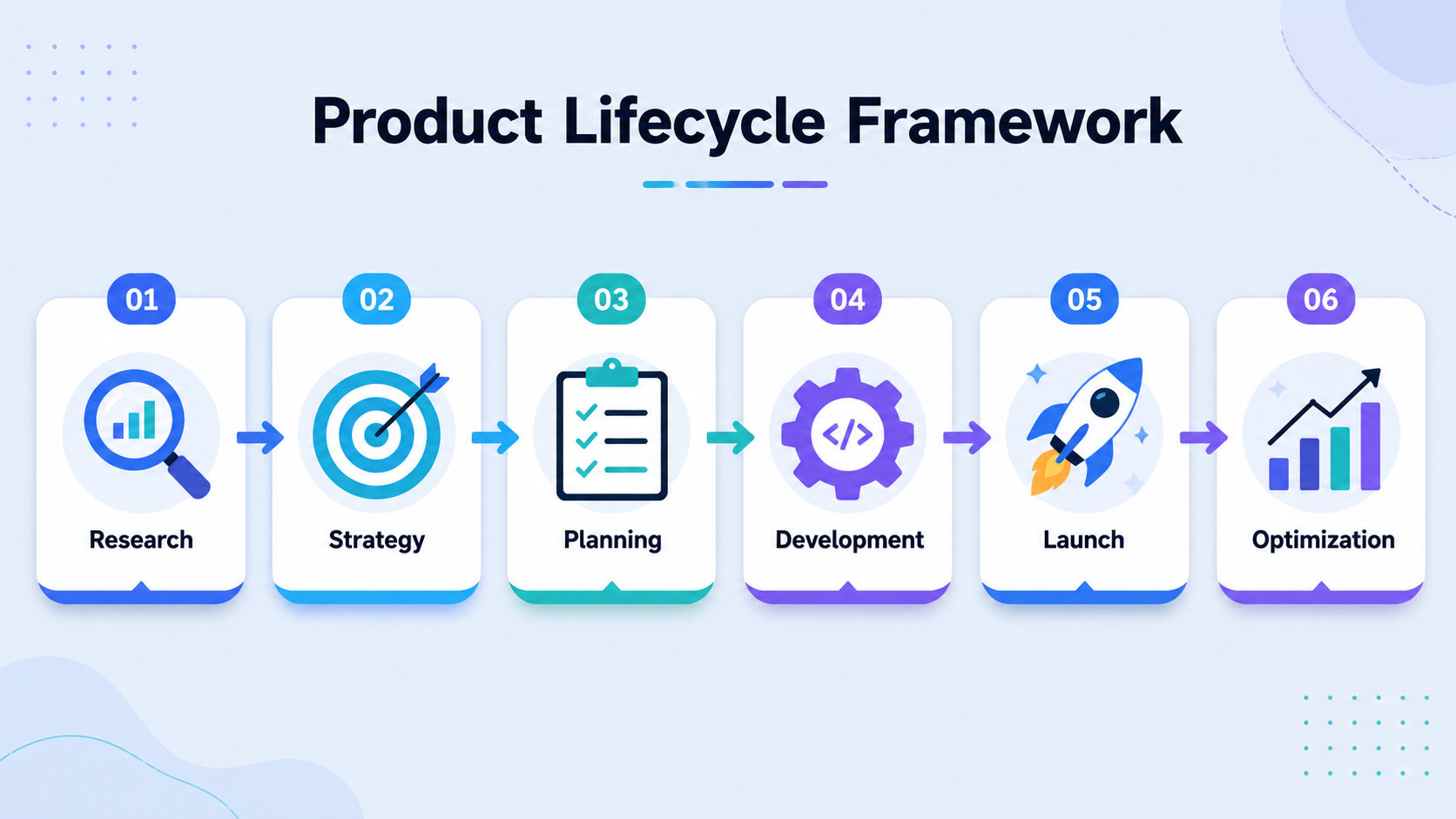
AI-powered product management is the use of artificial intelligence, machine learning, generative AI, predictive analytics, natural language processing, and automation to improve how products are researched, planned, developed, launched, and optimised.
It means giving product managers AI-enabled capabilities that help them understand customers faster, analyse more information, make better-informed decisions, automate repetitive work, and continuously improve products.
AI product management does not necessarily mean building an AI product. A product manager can use AI to manage a traditional SaaS, fintech, e-commerce, healthcare, or consumer product more efficiently.
Also Read: AI PM vs CSPO vs POPM
Core Technologies Behind AI-Powered Product Management
Component |
Role in Product Management |
| Generative AI | Creates documents, summaries, user stories, concepts, and product briefs |
| Machine Learning | Finds patterns in user behavior and predicts future outcomes |
| Natural Language Processing | Analyzes customer feedback, surveys, reviews, and conversations |
| Predictive Analytics | Forecasts trends, churn risks, and user behavior |
| Automation | Reduces repetitive product management tasks |
Also Read: How to Become an AI Product Manager
How AI-Powered Product Management Differs from Traditional Product Management
Traditional product management depends on manual work like reviewing customer feedback, prioritizing features, and creating documentation. Decisions are often based on past data, which can delay problem-solving.
AI-powered product management speeds up these tasks by analyzing data, identifying trends, suggesting priorities, and generating documents. This helps product teams make faster, more informed decisions.
Traditional Product Management |
AI-Powered Product Management |
| Manual research analysis | AI assisted customer insight extraction |
| Spreadsheet prioritization | Predictive prioritization models |
| Time consuming documentation | AI generated documentation |
| Reactive decisions | Predictive recommendations |
| Limited data processing | Real time analysis of large datasets |
Also Read: AI Product Manager vs Traditional Product Manager
Why AI-Powered Product Management Matters in 2026
AI-powered product management is becoming more important because product teams have to move faster while handling more data and growing customer demands.
The biggest reasons include:
- More complex products: Products now span multiple platforms, integrations, and user groups.
- Faster competition: Companies release updates and new features more quickly than ever.
- Higher customer expectations: Users expect personalized experiences, smooth performance, and regular improvements.
- Too much data: Feedback, analytics, and market data are growing faster than teams can review manually.
Because of these changes, product managers are doing more than collecting information. The role now involves using AI to organize data, validate insights, and make smarter product decisions.
Also Read: How AI is Changing Product Management in 2026
How Does AI Work in Product Management?
At every stage, artificial intelligence helps product teams gather information, identify opportunities, eliminate inefficiencies, and improve decision quality.
AI in Product Discovery and User Research
Product discovery is often one of the most time-consuming phases of product management. AI dramatically accelerates this process by analyzing large volumes of customer and market data.
AI can assist with:
- Sentiment analysis
- Customer interview summaries
- Market trend identification
- Competitor analysis
- Persona generation
- Survey analysis
- Voice-of-customer insights
| PM Activity | AI Assistance |
| Customer interviews | Transcript analysis and summaries |
| Surveys | Pattern identification |
| Reviews | Sentiment clustering |
| Market research | Trend detection |
Instead of manually reviewing thousands of comments, product managers can quickly understand what customers need, what frustrations exist, and where opportunities for improvement are emerging.
AI for Product Strategy and Decision-Making
Many organizations wonder whether AI can help create product strategy. The answer is yes, but with an important caveat.
AI can provide evidence, forecasts, and recommendations. Strategic judgment must remain human-led.
AI contributes to strategy through:
- Opportunity identification
- Market forecasting
- Competitive intelligence
- Business impact analysis
- Scenario modeling
- Risk assessment
An experienced AI product manager uses AI-generated insights as an input rather than a replacement for strategic thinking. The strongest product teams combine human creativity, business context, and customer empathy with AI-generated evidence.
AI for Product Roadmapping and Prioritization
Feature prioritization has traditionally involved stakeholder debates, spreadsheets, and subjective scoring methods. AI introduces a more objective and scalable prioritization process.
AI can support:
- Feature scoring
- Impact prediction
- Customer demand analysis
- Resource optimization
- Revenue forecasting
- Risk identification
AI-Assisted Prioritization Process
- Collect customer signals
- Analyze business impact
- Score opportunities
- Generate roadmap recommendations
- Human review and approval
While AI may recommend priorities, leadership teams ultimately determine what aligns best with the organization's vision and business goals.
Also Read: How to Build an AI Product Roadmap
AI in Product Development Collaboration
Collaboration between product managers, designers, and engineers becomes significantly smoother when AI removes documentation bottlenecks.
Common use cases include:
- User story generation
- Requirement documentation
- Acceptance criteria creation
- Sprint planning support
- Backlog refinement
- Meeting summaries
For example, an AI product management platform can convert customer requirements into detailed user stories and acceptance criteria in minutes rather than hours, allowing teams to focus more on solving problems and less on administrative work.
AI in Product Analytics and Optimization
Product launches are only the beginning. Continuous optimization determines long-term success. AI enhances product analytics by uncovering patterns that are difficult for humans to identify manually.
Applications include:
- Predictive churn analysis
- User behavior pattern detection
- Experiment recommendations
- Feature adoption insights
- Revenue forecasting
- Retention optimization
Instead of simply reporting what happened, AI can predict what is likely to happen next and suggest corrective actions before problems escalate.
Strengthen your AI expertise with upGrad KnowledgeHut AI Certification Course and prepare for the growing role of AI in product management, strategy, and data driven decision making.
What Are the Benefits of AI-Powered Product Management?
AI-powered product management is not just about working faster. It helps product managers spend less time on repetitive tasks and more time on strategy, customer research, and making informed decisions.
1. Faster Product Decisions
AI quickly analyzes large amounts of data, making it easier to find useful insights without spending hours reviewing reports or customer feedback.
This helps teams:
- Make decisions faster
- Spot customer pain points sooner
- Prioritize features more effectively
- Respond quickly to changing market needs
2. Better Customer Understanding
Customer feedback comes from many places, such as reviews, surveys, support tickets, and social media. AI brings this information together and highlights the patterns that matter most.
It can help identify:
- Common customer problems
- Changing user preferences
- Popular feature requests
- Customer satisfaction trends
- Possible reasons for churn
This gives product managers a clearer picture of what customers really need.
3. Higher Team Productivity
AI handles many routine tasks, allowing product teams to focus on higher-value work.
Task |
How AI Helps |
| Product documents | Creates first drafts |
| Feedback analysis | Summarizes customer insights |
| Meeting notes | Generates summaries |
| User stories | Drafts requirements |
| Reports | Highlights key metrics |
AI creates a starting point, but product managers still review, edit, and approve the final work.
4. More Data-Driven Decisions
AI combines product analytics, customer feedback, and business data to support better decision-making.
Instead of relying only on assumptions, teams can:
- Prioritize features with confidence
- Identify market trends earlier
- Improve forecasting
- Support decisions with real data
AI provides valuable insights, while product managers use experience and business knowledge to make the final decisions.
What Are the Challenges and Limitations of AI in Product Management?
AI can make product management faster and more efficient, but it also has limitations. Organizations need to understand where AI helps and where human expertise is still required.
1. AI Cannot Replace Product Judgment
AI can identify patterns, suggest ideas, and support predictions, but it cannot fully understand business context or human behavior.
Product managers still need to consider:
- Customer emotions
- Market changes
- Brand direction
- Business goals
- Long-term product vision
AI supports decision-making, but final strategic choices still require human experience and judgment.
2. Data Quality and Bias Issues
AI depends heavily on the quality of the data it receives. Poor or incomplete data can lead to inaccurate recommendations.
Common challenges include:
- Incomplete information
- Biased data
- Incorrect customer insights
- Poor tracking methods
- Misleading patterns
AI-generated insights should always be reviewed and validated before making important product decisions.
3. Privacy and Security Concerns
AI systems often process customer data and business information, making privacy and security important considerations.
Organizations need to focus on:
- Secure data handling
- Clear access controls
- Data governance
- Regulatory compliance
- Responsible AI practices
A successful AI strategy requires proper policies, transparency, and regular monitoring to build trust and reduce risks.
Conclusion
AI powered product management is transforming how teams research, plan, develop, and optimise products by helping them analyse customer data, identify trends, automate routine tasks, and make faster decisions
However, AI works best when combined with human judgment, creativity, and a strong understanding of customer needs. For product professionals, developing practical AI skills in 2026 can create new career opportunities while helping teams deliver better products and stronger business outcomes.
Have A Query? Get in Touch With Our Customer Support | upGrad KnowledgeHut
Frequently Asked Questions (FAQs)
What skills are required for AI product management?
AI product management requires a combination of product and technical skills. Important areas include product strategy, customer research, prioritisation, data analysis, generative AI, machine learning basics, prompt engineering, experimentation, and responsible AI. Strong communication and stakeholder management skills are equally important.
How do I become an AI product manager in 2026?
A practical path starts with learning core product management concepts and then building AI knowledge around generative AI, machine learning, data, AI product strategy, and responsible AI. Working on real projects can help you understand how AI moves from an idea to a useful product feature. A portfolio demonstrating these skills can also strengthen your profile when applying for AI product roles.
What tools are used in AI powered product management?
AI product managers may use generative AI assistants, product analytics platforms, customer feedback tools, project management software, prototyping platforms, and experimentation tools. The right toolkit depends on the organisation and product. Rather than learning every AI tool, PMs should focus on understanding which tools solve specific product problems effectively.
How can AI help with product requirements?
AI can turn rough product ideas, customer feedback, or business requirements into an initial product requirements document, user stories, acceptance criteria, and feature descriptions. This can reduce documentation time and create a useful starting point for team discussions. Product managers should still review the output for accuracy, completeness, and business context.
How can AI help with product roadmap planning?
AI can support roadmap planning by analysing customer requests, product usage data, business priorities, and historical performance. It can highlight patterns and suggest which opportunities may deserve further investigation. However, roadmap decisions should still consider strategic goals, technical feasibility, available resources, and stakeholder priorities.
How can AI help product managers understand customer feedback?
AI can process large volumes of reviews, surveys, support tickets, interviews, and other customer comments to identify recurring themes. It can group similar feedback, analyse sentiment, and highlight common pain points or feature requests. This allows PMs to spend more time investigating meaningful insights instead of manually sorting every response.
How is generative AI used by product managers?
Generative AI can assist product managers with research summaries, user stories, product briefs, meeting notes, competitor analysis, brainstorming, and first drafts of documentation. It is particularly useful for reducing repetitive work and accelerating early stage thinking. PMs still need to fact check, refine, and add strategic context to the generated output.
How can AI improve product manager productivity?
AI can reduce the time product managers spend on repetitive tasks such as writing meeting summaries, analysing feedback, preparing reports, drafting user stories, and organising research. This gives PMs more time for customer conversations, strategy, stakeholder management, and decision making. The biggest productivity gain comes from using AI for the right tasks rather than trying to automate everything.
Is AI powered product management a good career in 2026?
AI powered product management can be an attractive career path for professionals who enjoy combining business strategy, customer needs, technology, and data. As organisations adopt AI across products and workflows, PMs who understand how to apply AI responsibly can bring valuable skills to product teams. The strongest career advantage comes from combining AI knowledge with solid product management fundamentals.
What should I learn to become an AI product manager?
Start with product discovery, customer research, product strategy, roadmapping, prioritisation, analytics, and Agile practices. Then build knowledge of generative AI, machine learning fundamentals, AI product development, data, prompt engineering, experimentation, and responsible AI. Applying these skills through real product projects can help turn theoretical knowledge into practical experience.
1639 articles published
KnowledgeHut is an outcome-focused global ed-tech company. We help organizations and professionals unlock excellence through skills development. We offer training solutions under the people and proces...
Get Free Consultation
By submitting, I accept the T&C and
Privacy Policy